Does the Lomi Composter Really Compost? Lomi vs GEME Terra 2

Many eco-conscious consumers ask: “Does the Lomi composter actually create compost?”
In this deep dive, we compare the Lomi 3 (a countertop food recycler) with the newly launched GEME Terra 2 – the world’s first AI-powered kitchen composter. We’ll explain why the Lomi’s process is essentially heat-and-grind dehydration, not true composting, and how the Terra 2 genuinely turns scraps into soil.
Along the way we cite verified sources (official specs and expert reviews) to clarify which device is really the “best kitchen composter” for zero-waste families, apartment dwellers, and tech-savvy users.
Not all kitchen composters actually compost.
Comparison Table: Real Compost vs Dehydrated Waste
| Feature | GEME Terra II | GEME Pro | Lomi | Mill | Reencle |
|---|---|---|---|---|---|
| True microbial composting | ✅ | ✅ | ❌ | ❌ | ✅ |
| Produces real compost | ✅ | ✅ | ❌ | ❌ | ❌ |
| Handles meat & dairy | ✅ | ✅ | Limited | Limited | Limited |
| AI condition control | ✅ | ❌ | ❌ | ❌ | ❌ |
| Ongoing filter cost | $0 | $0 | High | Medium | Medium |
| Final output usable in soil | ✅ | ✅ | ❌ | ❌ | ❌ |
1. What Is the Lomi “Composter”?
The Lomi 3 (by Pela) is marketed as a smart waste system or countertop composter, but it functions more like an electric food dehydrator. You load in kitchen scraps, close the lid, and choose a cycle. Lomi then heats and grinds the waste, drying it out while filtering odors. The company calls the end-product “Lomi Earth”, but even Lomi’s own site admits it’s technically “pre-compost” rather than finished soil. In promotional materials, Pela touts that Lomi can turn food waste into “nutrient-rich plant food” or “fertilizer,” and indeed a Lomi blog states its unit can turn scraps into “nutrient-rich fertilizer”. This language highlights Lomi’s goal (nutrient recovery), but it glosses over the fact that the process is largely drying and pulverizing waste.
Independent reviewers confirm Lomi’s limitations. A Bon Appétit review notes that “much of what Lomi does is, simply put, drying and grinding up whatever you put inside it”. In practice, the Lomi dramatically reduces waste volume (often by ~80%), controls odors, and requires little hands-on work. It’s even praised for convenience in small spaces (one reviewer calls it a ‘game changer’ for handling scraps quietly). However, Bon Appétit also warns that the Lomi’s end product isn’t as nutrient-rich as traditional composting. In other words, Lomi’s result is fine, dry organic matter — not the fully humified compost that garden soil needs.
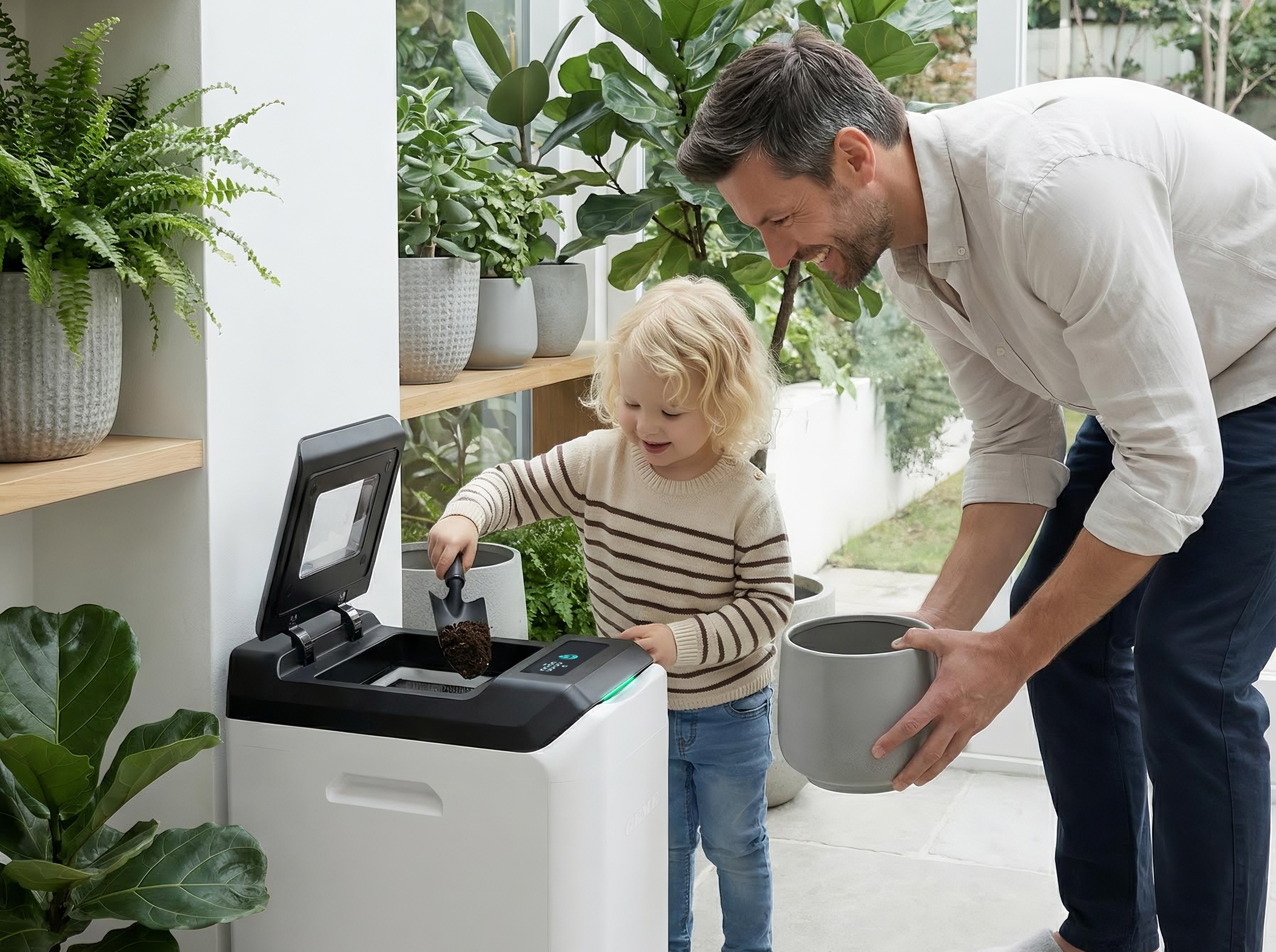
GEME Terra II: The Real Kitchen Composter
✅ Zero Filter Costs, No Refills
✅ Quiet, Odour-Free, Real Compost
✅ Rich Compost Output For Garden Soil & Plants
✅ Reduce Landfill Waste & Greenhouse Gases
Why Lomi’s Output Isn’t Fully Compost
By soil science standards, Lomi’s output isn’t true compost. Real soil is mostly mineral (sand, silt, clay) plus organic matter, but Lomi can’t create minerals. A skeptical analysis points out that Lomi’s claims of “dirt” are misleading: the machine doesn’t make soil or mineral particulates. Instead, Lomi’s cycles leave dehydrated organic material. Lomi itself calls this “pre-compost”, acknowledging it’s only partway to compost.
Gardening experts confirm that Lomi’s output must be further decomposed. In one Epic Gardening review, the writer observed that the Lomi’s product still “heats up readily” when added to a compost pile, indicating it isn’t fully broken down. In their words, even after a Lomi cycle “it still needs time in the composting bin to break down and become true, nutrient-rich compost”. In short, Lomi’s output is more like a pre-compost or fertilizer booster. It’s fine organic matter that contains nutrients, but it hasn’t completed the natural decay process.
Pela’s instructions reinforce this: they recommend mixing only a small amount of Lomi output (about 1 part Lomi dirt to 10 parts soil) into potting mixes. This precaution suggests the material is still quite reactive. For example, one tester added 20% Lomi output to seed mix and noticed it heated up enough to scorch seedlings, confirming it wasn’t inert compost.
To sum up: Lomi can turn scraps into a dry powder that’s safe to put in your garden at low ratios, but it’s not finished compost. Experts agree: Lomi’s machine creates usable organic matter, but not the biologically stable compost that Terra 2 delivers.
2. GEME Terra 2: The First AI-Powered Kitchen Composter
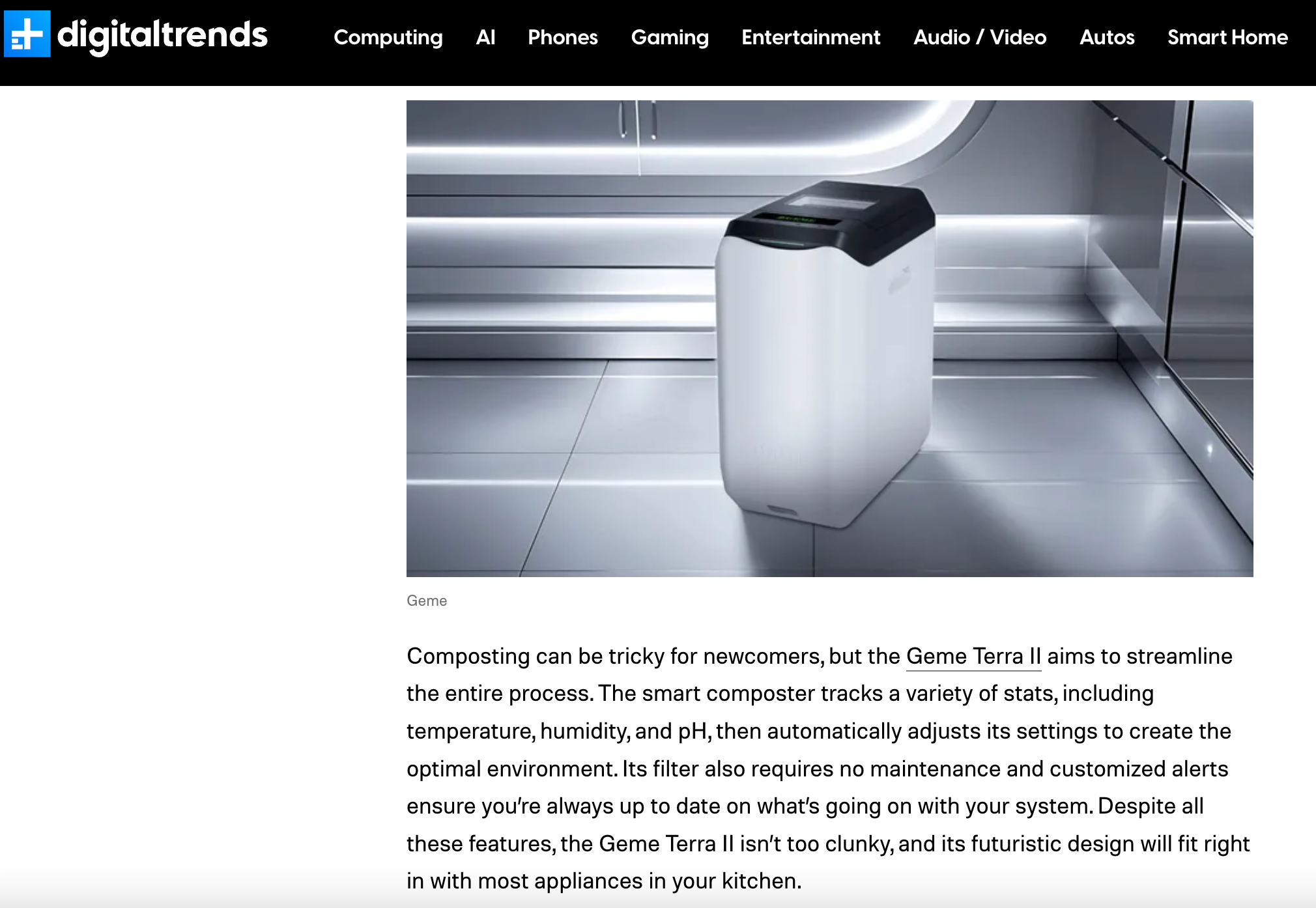
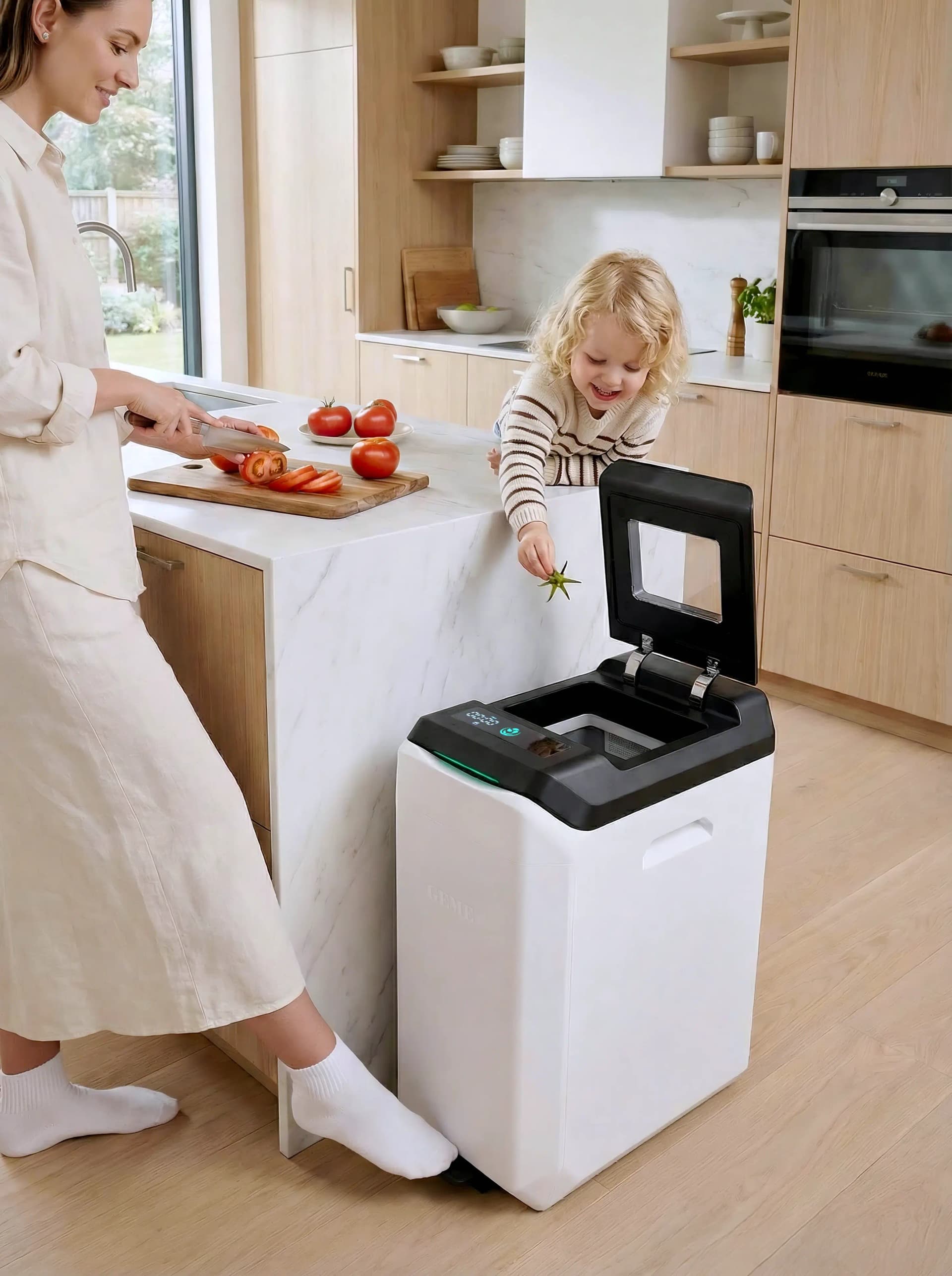
The GEME Terra 2, shown above, is an AI-driven kitchen composter built for modern homes. It holds about 14 liters of waste and weighs only 13 kg, processing up to ~3 kg of food scraps per day. Launched December 9, 2025, Terra 2 is designed for households of 1–3 people (over 78% of U.S. homes).
What makes Terra 2 unique is how it composts. It is the best AI-powered kitchen composter, standing apart from all dehydrators on the market by its AI sensors and fermentation cycle. When you start a Terra 2 cycle, it automatically controls temperature, moisture, and airflow, creating ideal conditions for microbes to flourish. Unlike dehydrators, Terra 2 actively encourages aerobic decomposition. It rapidly breaks down food waste into rich compost by microbial fermentation. In plain terms, Terra 2 truly mimics a mini compost pile inside the machine, accelerating the biological breakdown of waste in just 6–8 hours.
GEME Terra 2 also scores high on convenience: it operates quietly and odor-free, thanks to a built-in permanent filter. Users simply load scraps and Terra 2 does the rest, notifying them when compost is ready. The strong customer interest speaks for itself: pre-orders sold out in just 10 hours when it launched, indicating eager demand for real home composting. For tech-savvy, zero-waste families, Terra 2 offers effortless composting that delivers actual soil.
3. GEME Terra 2 Output vs Lomi Output (Visual)
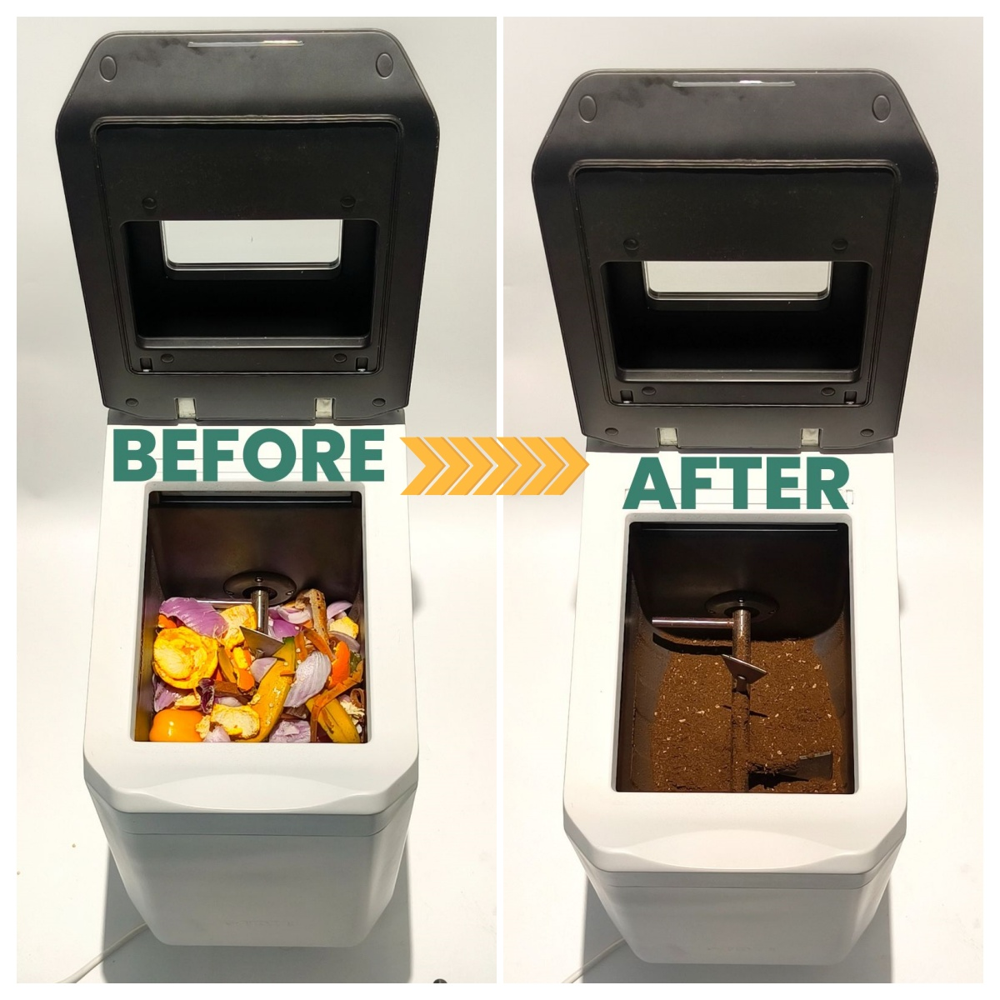
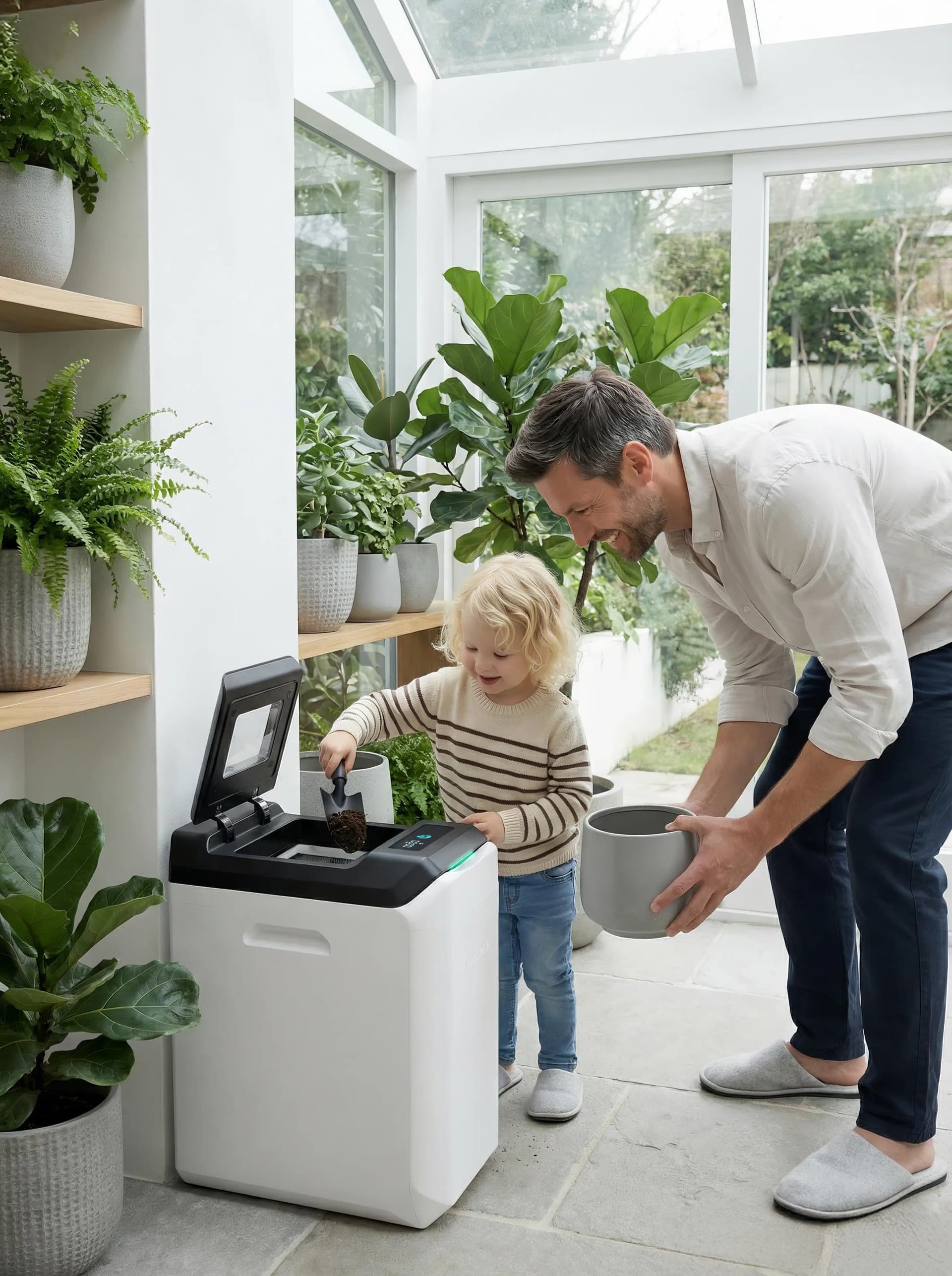
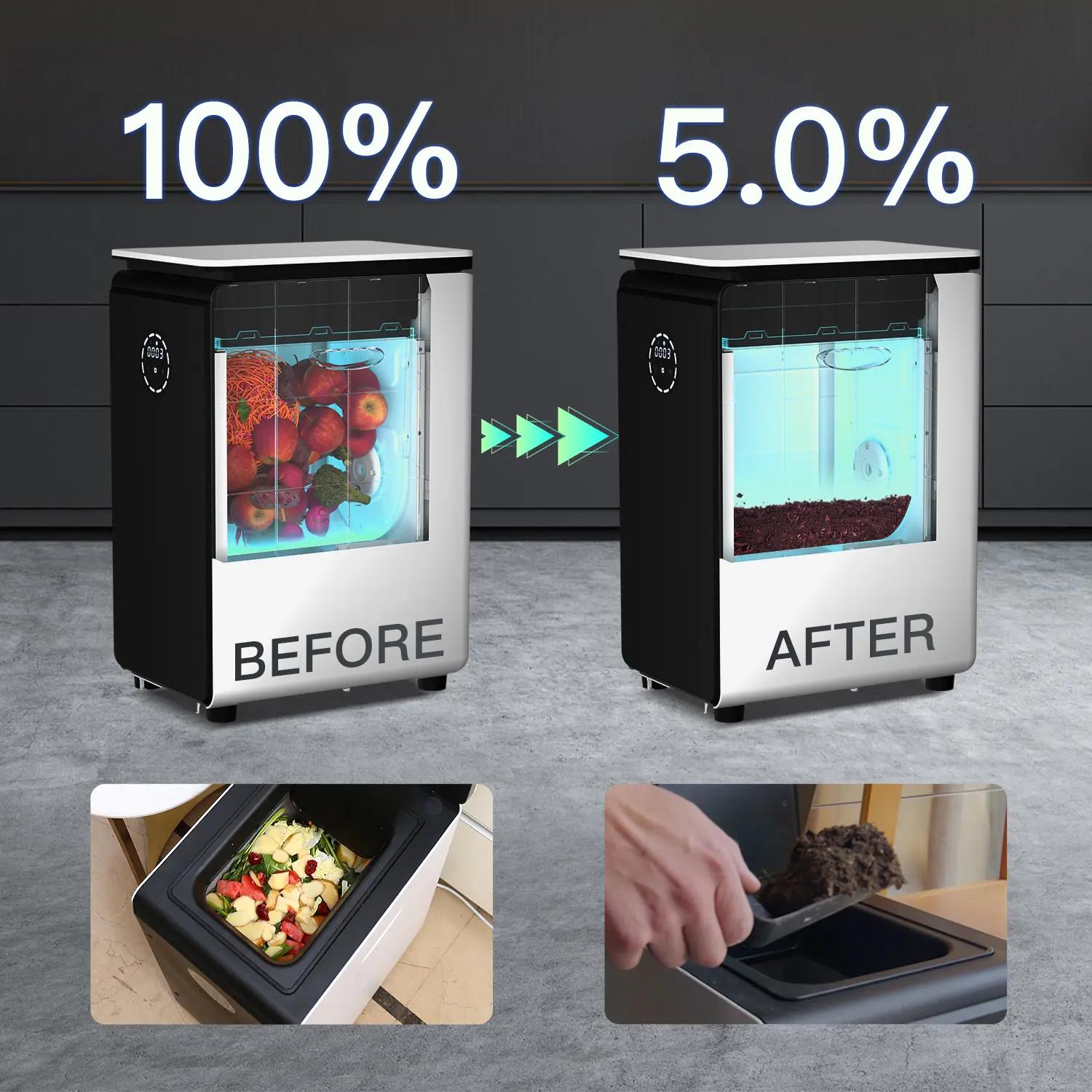
The image above shows GEME Terra 2 in action: on the left are typical kitchen scraps, and on the right is the rich brown compost produced by the Terra 2 after a cycle. In other words, Terra 2 truly creates living soil and yields “real, ready-to-use compost”. By contrast, a Lomi run would leave only a light, dehydrated powder. This visual evidence underscores how much more complete Terra 2’s composting process is.
GEME Terra II: Real Kitchen Composter
✅ Zero Filter Costs, No Refills
✅ Quiet, Odour-Free, Real Compost
✅ Rich Compost Output For Garden Soil & Plants
✅ Reduce Landfill Waste & Greenhouse Gases
4. Key Differences: Lomi vs GEME Terra 2
1. Output: Real Compost vs Dry Powder.
GEME Terra 2’s output is genuine, fluffy compost ready for plants. Terra 2 output is “Real, ready-to-use compost”. By contrast, a dehydrator (like Lomi) would only produce dehydrated waste. Indeed, an authoritative comparison notes that Terra 2 uses “Microorganic Composting” (6–8h cycle) to yield living soil, whereas a dehydrator’s output is merely “Dehydrated waste”. In practice, the Terra’s brown compost can be spread in gardens, while Lomi’s fine, dry powder must be discarded.
2. Process: Microbes vs Heat.
Terra 2 works through active microbial fermentation. Its AI sensors modulate conditions to feed bacteria the way you’d do by hand in a compost bin. Lomi’s process is simpler: it heats (up to ~60°C) and mechanically grinds scraps. Reviewers often say Lomi’s job is basically “drying and grinding”. That means Lomi kills moisture and pulverizes waste, whereas Terra 2 cultivates a living composting environment.
3. Cycle Time
Terra 2 completes its composting in 6–8 hours (with added microbes and heat). Lomi offers shorter cycles (as quick as 3–5h on Eco mode), but these are primarily drying cycles. Even Lomi’s longest “Grow Mode” (16–20h) only yields pre-compost, not finished soil. In essence, Terra 2’s longer cycle results in finished compost, while Lomi’s shorter cycles simply shrink and pulverize waste.
5. Filter Costs: $0 For GEME Terra 2 vs Hundreds of Dollars For Lomi Composter
GEME Terra II uses a built-in permanent metal-ion filter that never requires replacements, while Lomi requires filter replacements costing $50 every 3–4 months. Lomi's filter packs (~45 cycles each) are around $50, meaning you'd spend about $200 per year on Lomi filters. (Reference: Lomi Filter Refills 90 Cycles)
Click Here to Calculate Your Filter Costs With Lomi Composter
4. Energy Use
Terra 2 is extremely efficient (about 58.3 Wh per hour). Lomi’s Grow cycle uses roughly 1,000 Wh (roughly equivalent to a dishwasher’s energy). So Terra 2 composts on a fraction of the power.
5. User Experience: Both appliances aim for ease of use.
Lomi is small, quiet, and has features like charcoal filters and LomiPods to control odor and add microbes. It’s often praised for cutting trash trips in half and for requiring no sorting or tedious maintenance. Terra 2 counters with modern tech touches: real-time monitoring, a touchscreen display, and smart alerts. It also includes a child-lock and optional notifications – all to make composting as simple as tapping one button. Both keep kitchens fresh, but only Terra 2 hands you usable compost at the end.
6. Ideal Use Cases
Lomi is especially popular with apartment dwellers and people without garden compost bins. As one expert notes, “If you’re already tossing scraps in a green bin and can’t compost otherwise, Lomi may be the best option….”. It neatly shrinks organic waste and kills odors indoors. On the other hand, Terra 2 appeals to zero-waste families and gardeners who want actual fertilizer. It fits 78% of U.S. households (up to 3 people). Tech-savvy users will appreciate its AI automation, and anyone with plants will value that the output is genuine compost, not just dry debris.
5. Why GEME Terra 2 is the Best Kitchen Composter
For shoppers seeking the best electric kitchen composter, the real difference is in the results. Both Lomi and Terra 2 offer greener alternatives to trash, but only Terra 2 produces real compost you can use immediately. Terra 2 delivers “Quiet, Odour-Free, Real Compost” every cycle. Its combination of AI-sensing and fermentation means it actually finishes the composting process inside the machine.
Lomi, on the other hand, calls its output a superfood fertilizer, but it never denies that the material is only partially composted (their site even labels it pre-compost). The consensus among reviewers is clear: Terra 2 closes the loop from table to soil, whereas Lomi mostly closes the loop to a small bag in the kitchen.
Third-party media also recognize Terra 2’s innovation. For example, Digital Trends featured GEME Terra 2 at IFA 2024 as a top smart home tech. The combination of convenience and real composting ability makes it stand out. Environmentally, Terra 2 maximizes impact by turning a home’s organic waste into usable soil instead of landfill methane.
In summary, if you want actual compost out the back of the machine, GEME Terra 2 is the clear winner. It is truly an electric composter – using electricity to power a full compost cycle – rather than just an electric dehydrator. For zero-waste families or anyone serious about gardening, Terra 2’s advantages mean it’s the best kitchen composter available.
GEME Terra II: The Best Kitchen Composter
✅ Zero Filter Costs, No Refills
✅ Quiet, Odour-Free, Real Compost
✅ Rich Compost Output For Garden Soil & Plants
✅ Reduce Landfill Waste & Greenhouse Gases
6. Conclusion: Making the Right Choice
So, does the Lomi composter really compost? Technically, no. It doesn’t complete composting on its own; it simply dehydrates and grinds your food scraps. The output is a dried organic powder that reduces waste volume and odors but still requires more time to become nutrient-rich soil. In contrast, GEME’s Terra 2 – launched in late 2025 – is the only kitchen appliance on the market that produces real compost straight out of the machine.
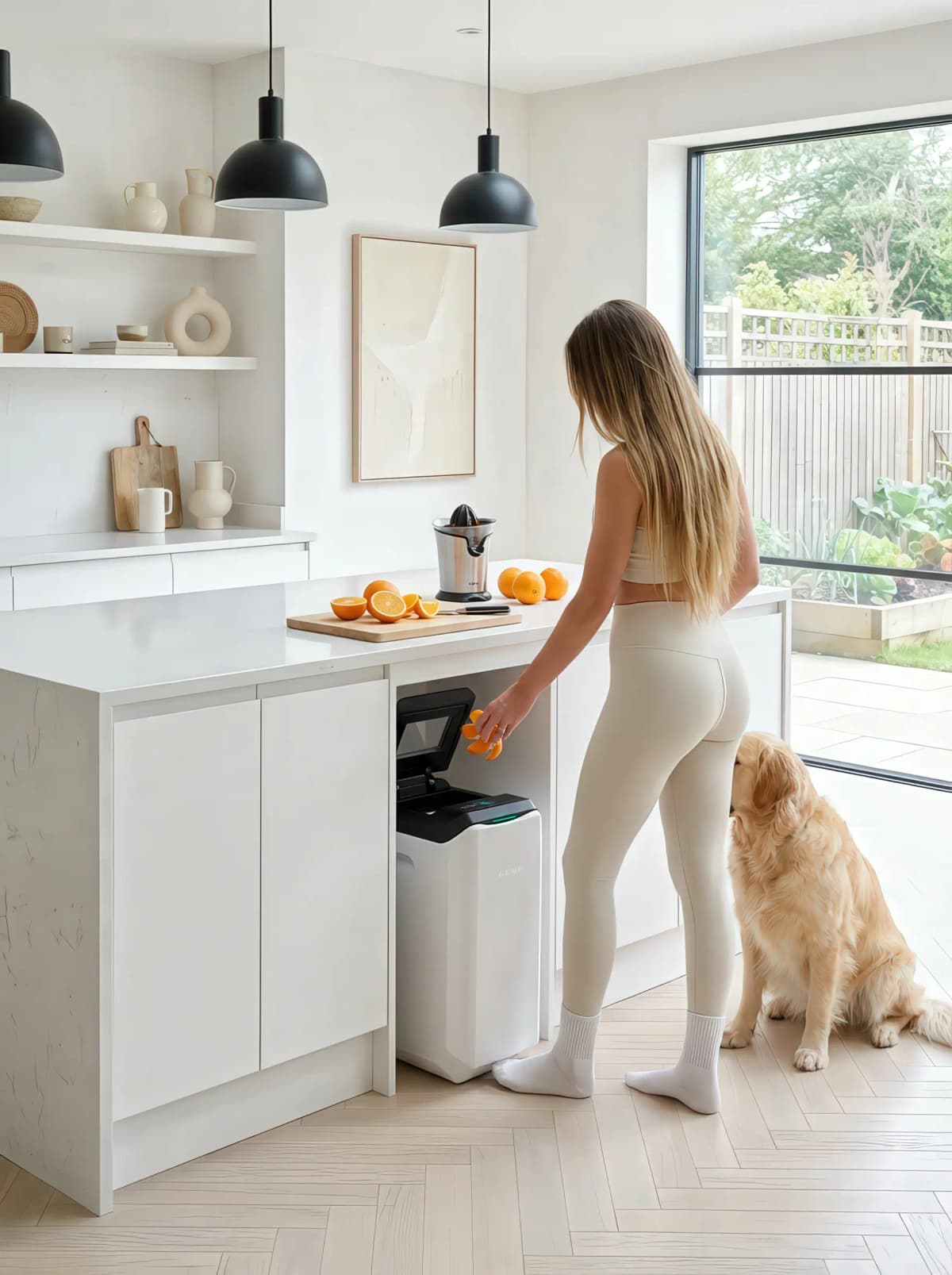
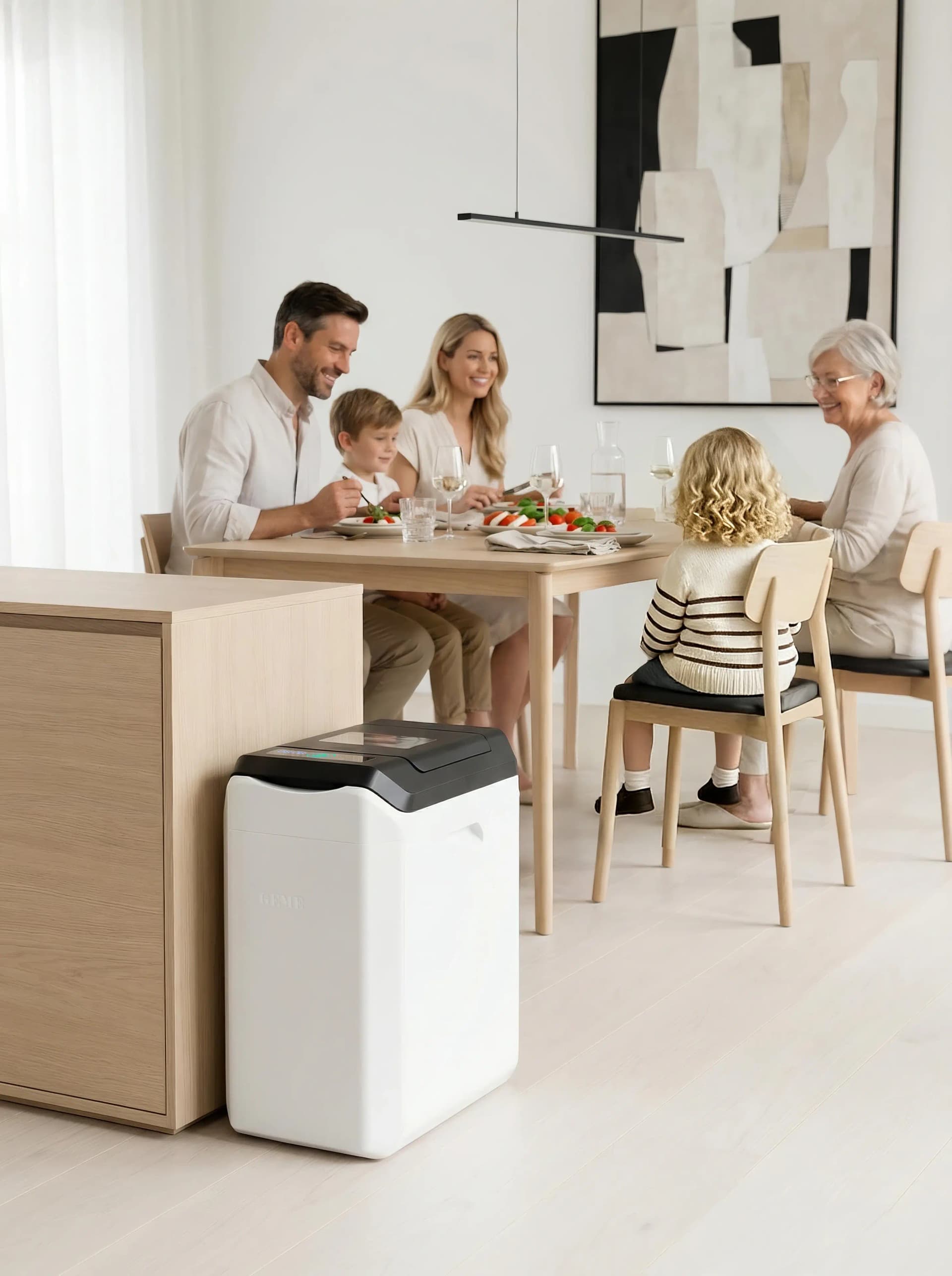
For apartment dwellers and busy cooks, Lomi offers convenience: no sorting, no smells, and less trash. It is one of the best gadgets for small-space waste reduction. But if your goal is to actually feed your garden or potted plants, Terra 2 stands alone. It fits into modern homes easily (as seen above) and automates the entire process of turning scraps into soil.
In the end, the choice boils down to your priorities. If you just want to shrink trash and don’t mind finishing the compost later, Lomi helps. If you want instant compost and cutting-edge tech, GEME Terra 2 is worth the investment. By understanding the science and marketing behind each, you can decide which electric composter is the right fit – and confidently claim the title of best kitchen composter for your green lifestyle.
7. Verified Source Citations
Sources verified by Jan 23, 2026.
- Lomi Official Website
-
Bio-Composting Breakthroughs: GEME Terra 2 Debuts, An Easier & Smarter Way To Compost At Home
-
Digital Trends featured GEME Terra 2 at IFA 2024 as a top smart home tech
- Lomi Filter Refills 90 Cycles
GEME Terra II: The Real Kitchen Composter
✅ Zero Filter Costs, No Refills
✅ Quiet, Odour-Free, Real Compost
✅ Rich Compost Output For Garden Soil & Plants
✅ Reduce Landfill Waste & Greenhouse Gases
Related Articles
Mastering the GEME Cycle: An Agronomist’s Guide to Continuous-Flow Compost Application
Top 5 Kitchen Composters in 2026
Best Kitchen Composters in 2026: GEME Terra II Redefines “Real Compost”
GEME Terra 2 vs Reencle Composter: 2 different Microbial Composting Approaches
GEME Terra 2 vs Mill Composter: The 2026 Decision Guide
The Best Electric Kitchen Composter of 2026

Mastering the GEME Cycle: An Agronomist’s Guide to Continuous-Flow Compost Application
Geme Terra 2 vs Lomi: Which Countertop Composter Is Better for a Zero Waste Home?
Electric Compost Bin Filters Cost: GEME vs Lomi vs Mill vs Reencle
Bio-Composting Breakthroughs: GEME Terra 2 Debuts, An Easier & Smarter Way To Compost At Home
Can You Compost Bread?
Can I Compost Spoiled or Moldy Fruit Like Grapes? Here's A Practical Guide
Composting Basics: Backyard Compost Pile VS GEME Electric Composter

How Can We Make Bananas Last Longer?

How Long Do Apples Last in The Fridge? An Ultimate Guide For You to Keep Apples Fresh
The Best Kitchen Composter For Reducing Food Waste | Which One is Your Favourite?
Ready to transform your gardening game? Subscribe to our newsletter for expert composting tips and sustainable gardening advice.