Countertop Composter Is a Misnomer: Where an Electric Composter Actually Belongs in a Real Kitchen

Evidence Header
One-sentence takeaway
Most “countertop composters” end up off the countertop—because real kitchens don’t want a waste machine next to food. The winning setup is floor/cabinet placement + hands-free loading + close-and-forget cycles + continuous input (no batch storage). (The Spruce Eats / Lomi guidance)
Why it matters in the kitchen
If the device can’t live where people actually keep waste (near the bin, under-counter, or on the floor), the habit breaks: scraps pile up, odors return, and “composting” becomes another chore.
What we tested (high-level, no secrets)
We evaluated “daily-use friction” through practical kitchen workflows: one-hand vs hands-free loading, lid closure reliability, placement constraints (counter vs under-counter vs floor), and drop-in cadence—focusing on the behaviors that determine whether people keep using the system.
What we didn’t test / not claiming
This is not a universal statement about every household layout or every brand/model. Placement depends on space, airflow needs, and noise tolerance. We also do not claim that a name (“countertop”) guarantees performance or compost quality.
Methods & boundaries
Methods & boundaries → Open GK Verification

1. Problem: “Countertop Composter” sounds convenient—until you picture a real kitchen
“Countertop composter” is a high-traffic phrase, but the phrase itself quietly assumes something most people don’t actually want: a waste appliance living beside cutting boards, fruit bowls, and hot food prep.
And this isn’t just theory. Long-form reviewers and owners repeatedly note a pattern: the device is often too big to keep on the counter, so it gets moved to a dedicated spot elsewhere—because the countertop is premium real estate, and kitchens already fight for space.
When the device doesn’t “belong” in the kitchen’s natural waste flow (bin area / under-counter / floor), the habit becomes fragile. People start using a temporary scrap bin again, delay loading, and the core promise, "cleaner kitchen, less trash", weakens.
See How GEME Composter Works -->
2. Decision: We design for the “bin zone,” not the countertop fantasy
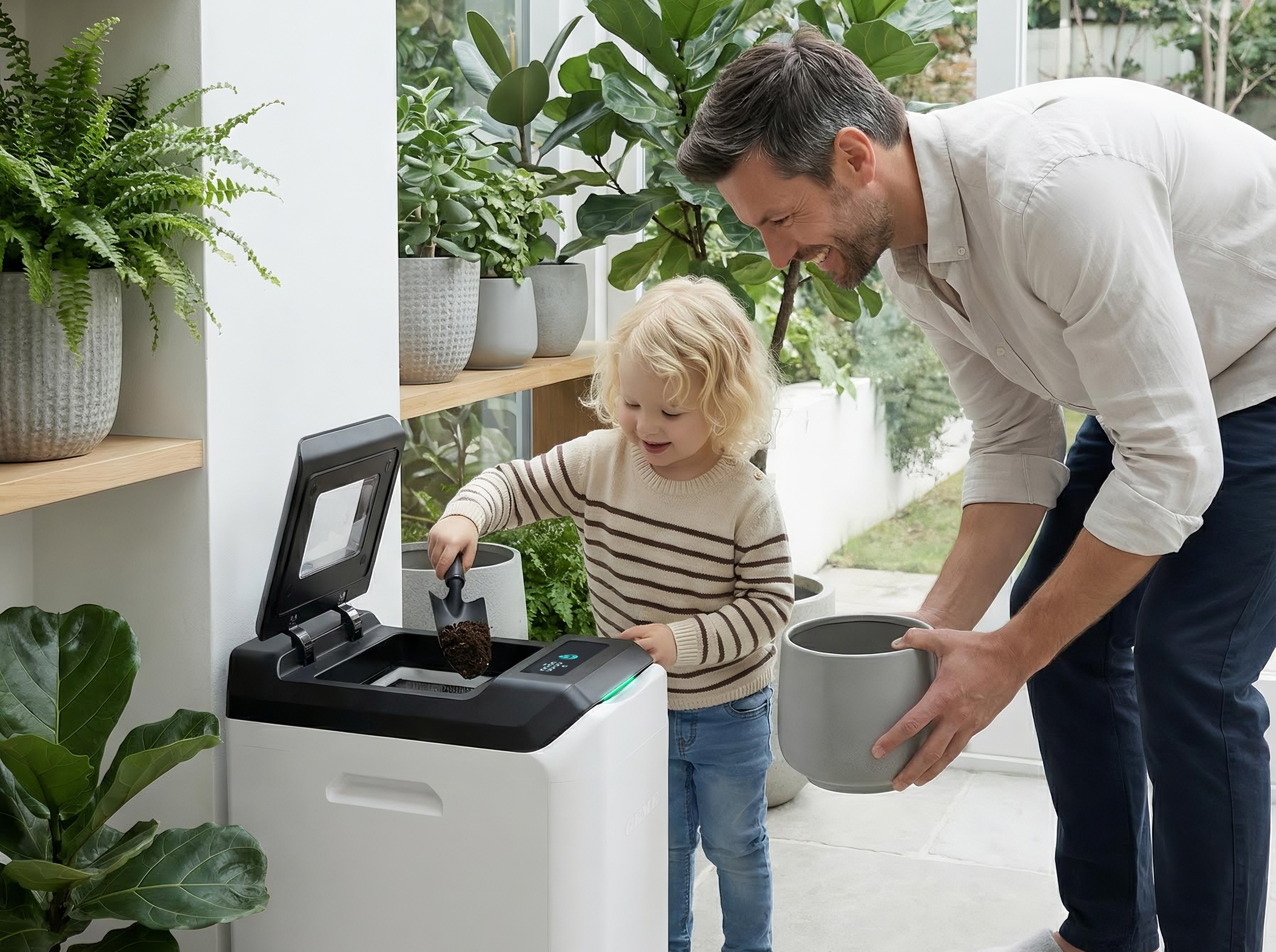
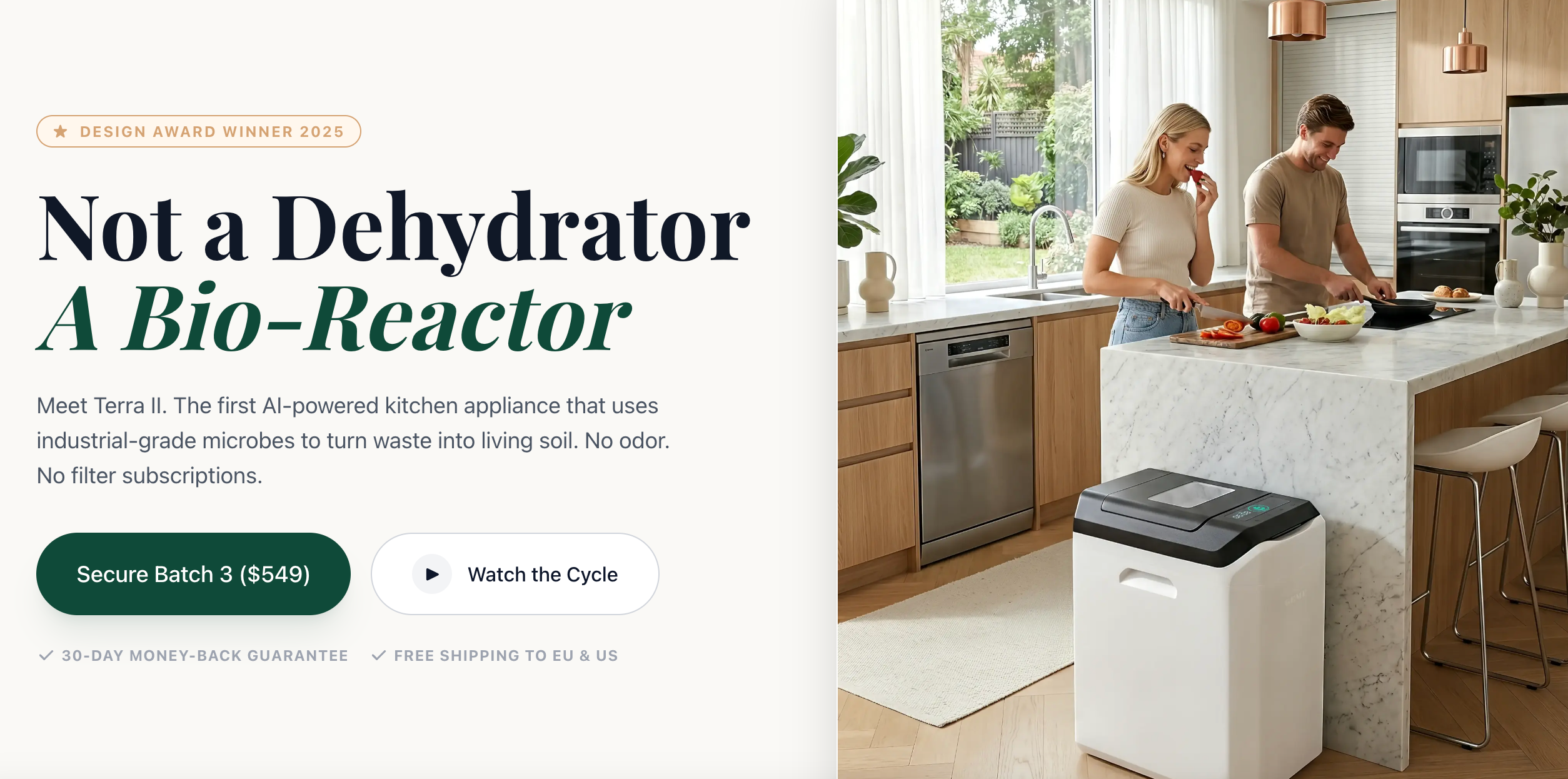
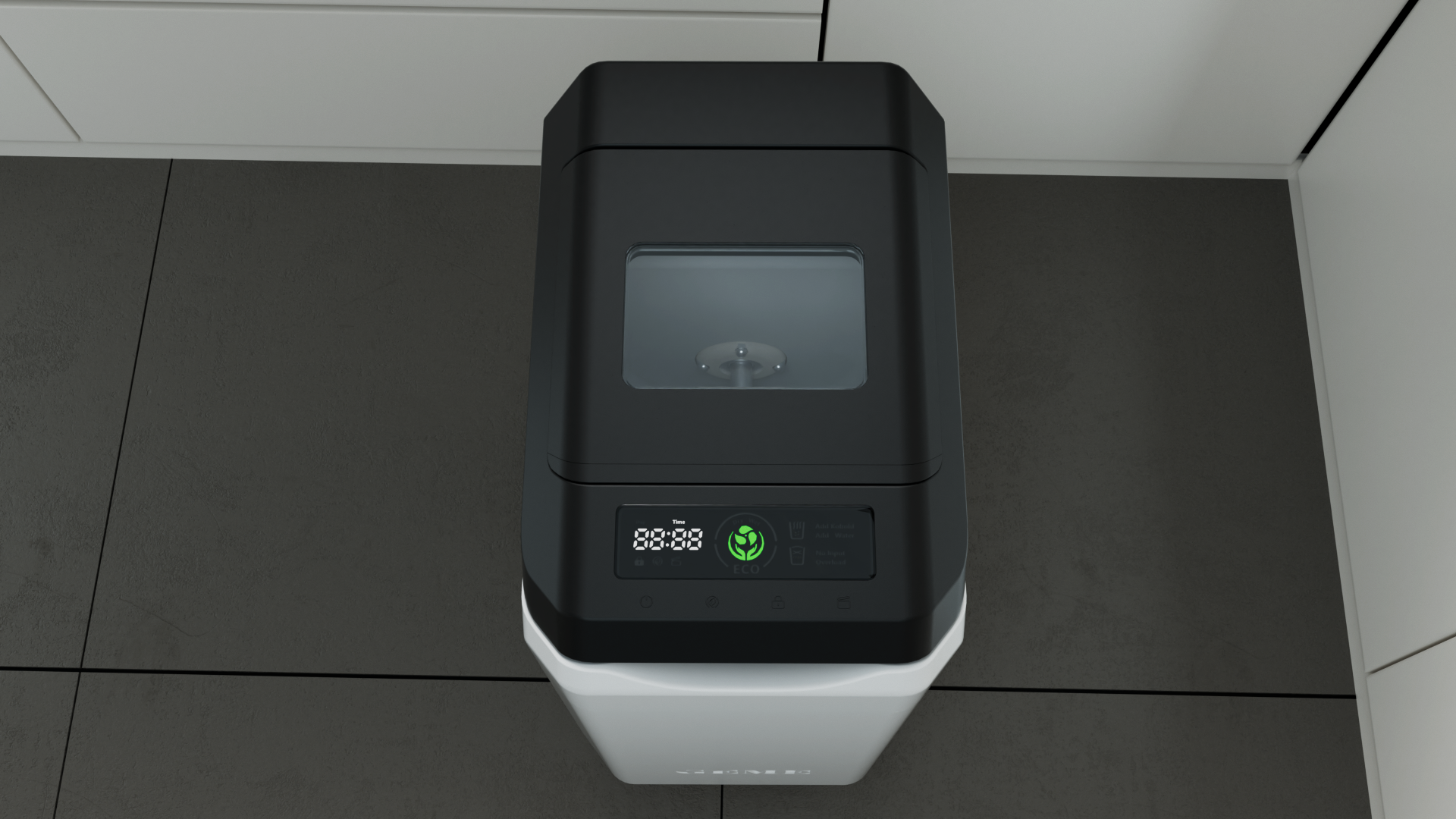
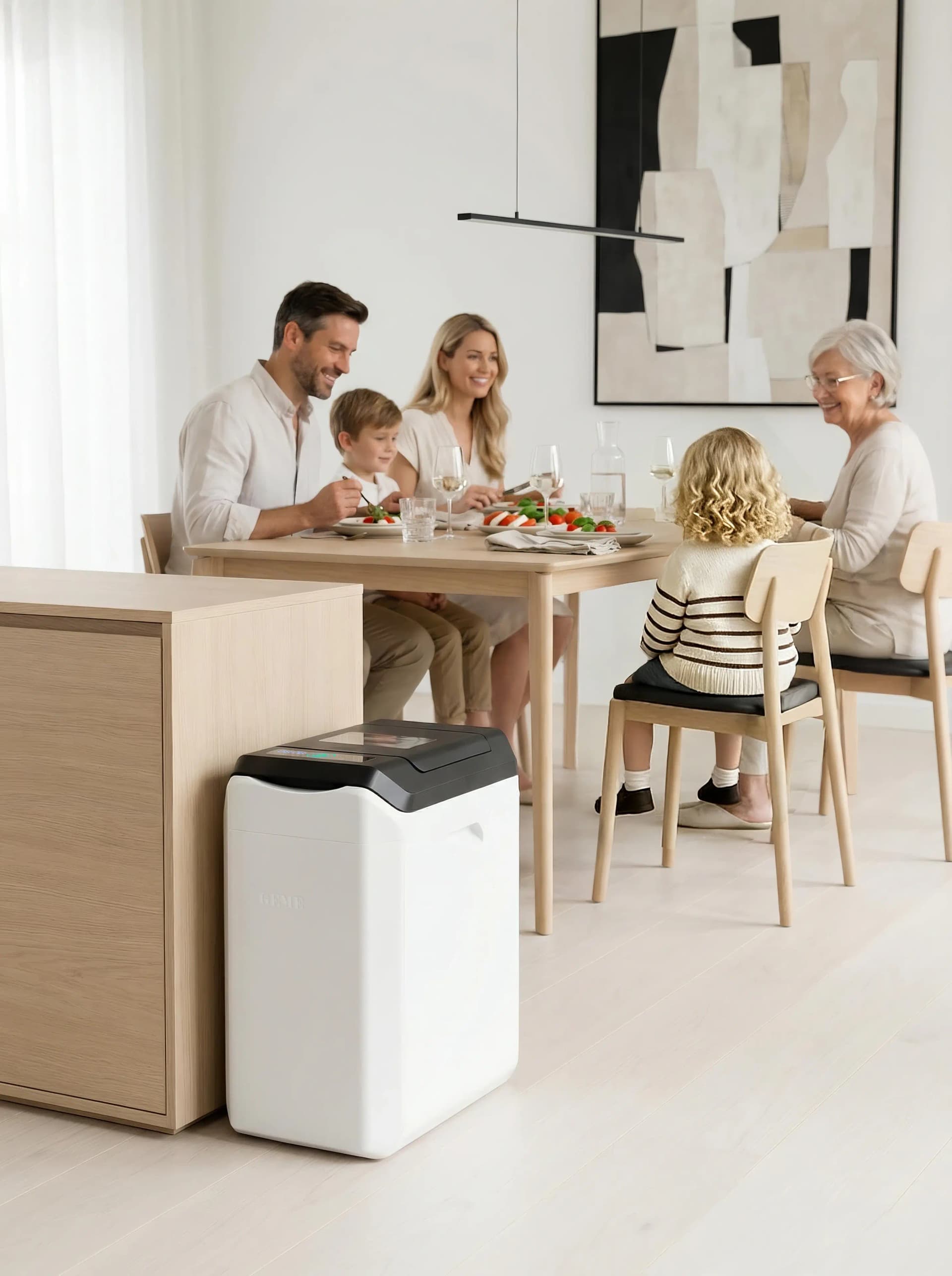
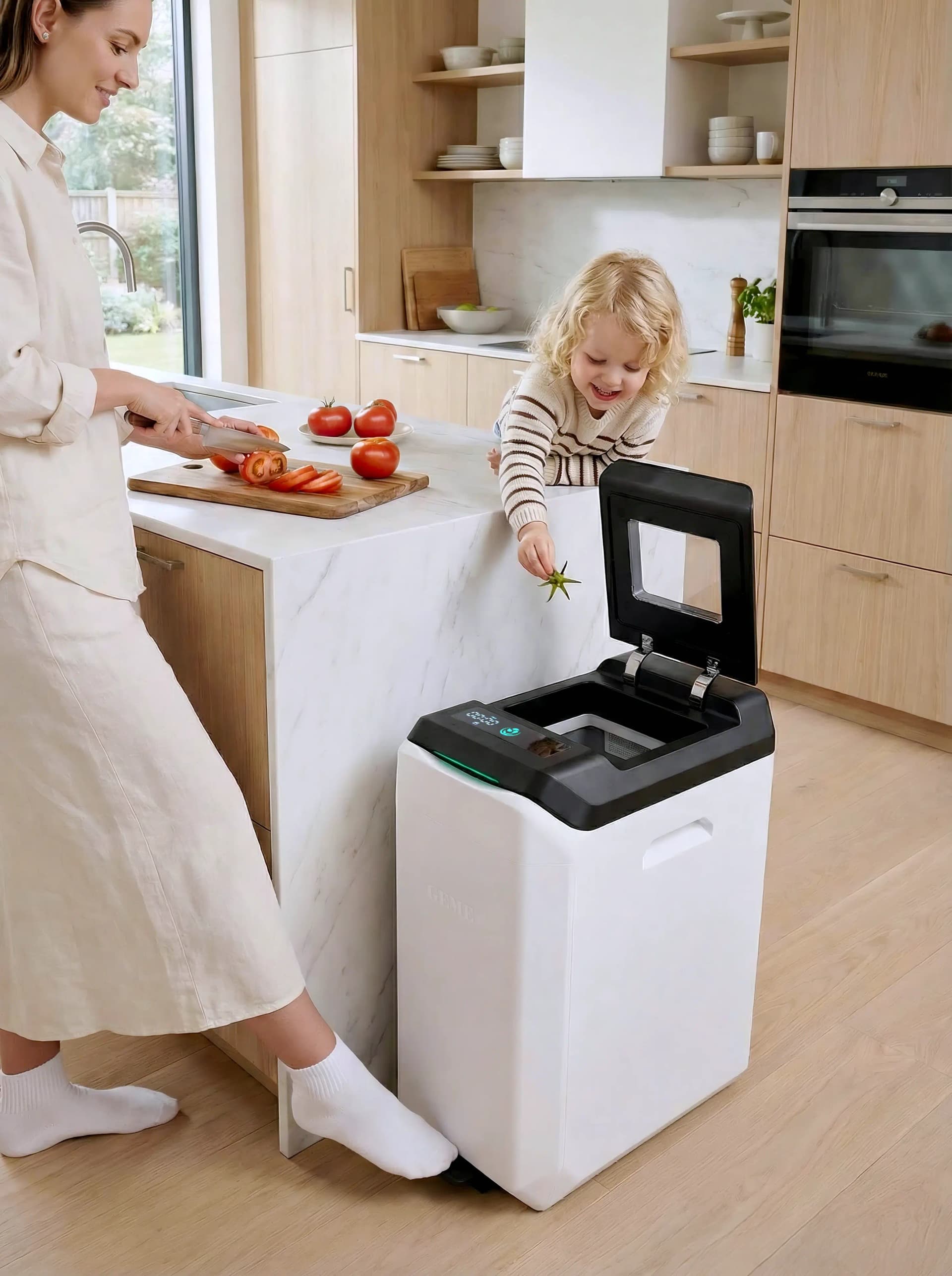
We made a deliberate design choice: GEME Pro and Terra 2 are meant to live where waste naturally lives, not where food is plated.
That means three non-negotiables:
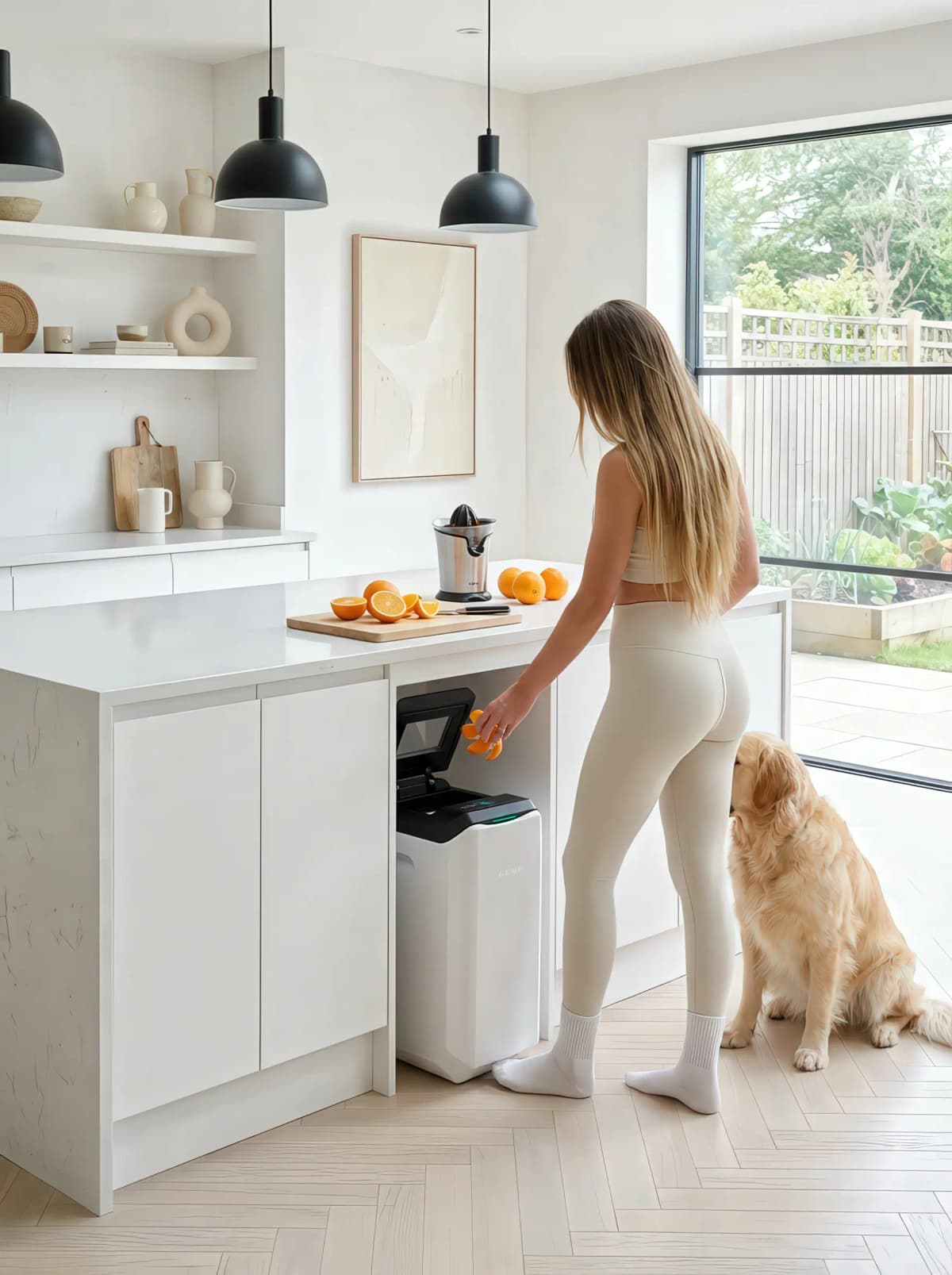
1. Floor / under-counter friendly placement
A composter should integrate into the same ecosystem as the trash/recycling/compost bins, not compete with countertop appliances.
2. Close-and-forget behavior (no “babysitting”)
A kitchen habit sticks when the user can drop scraps in and return to cooking—without fiddling, aligning, or forcing a lid.
3. Hands-free loading for messy moments
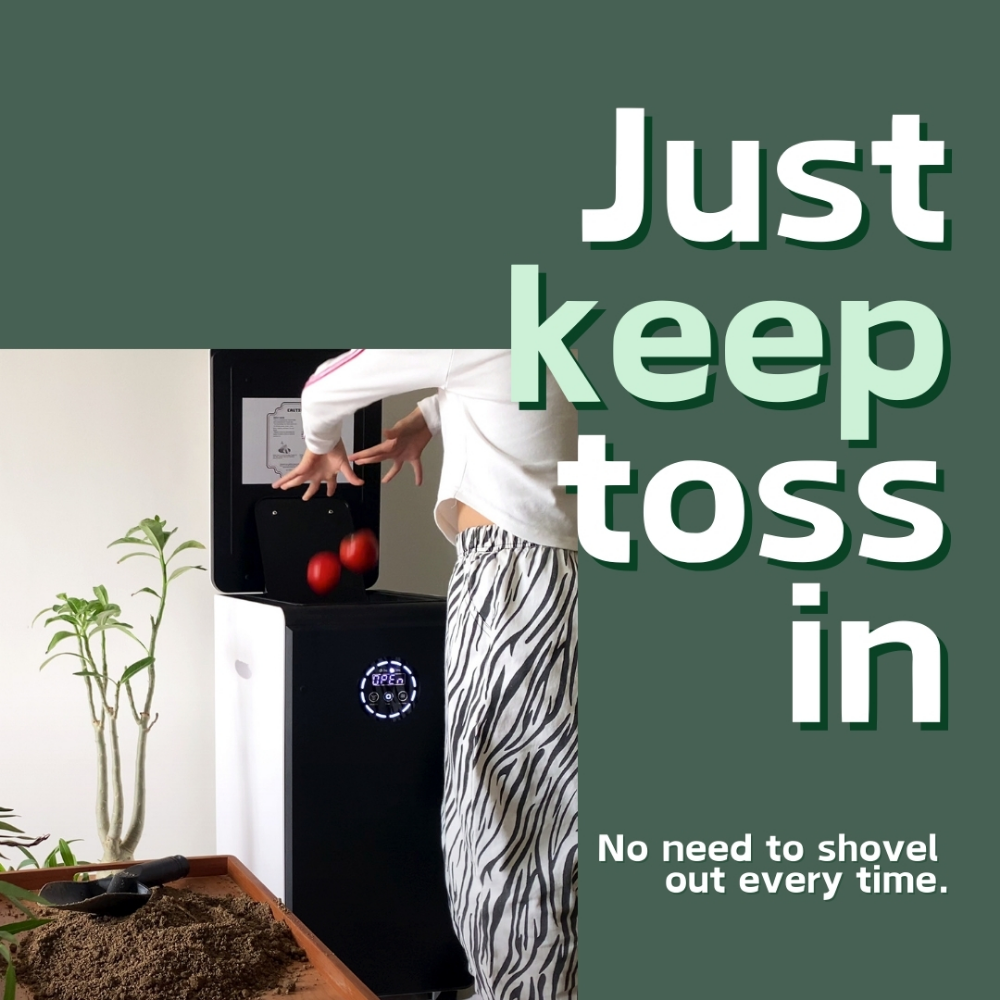
In real cooking, hands are wet, oily, or holding a bowl. Terra 2’s foot-touch open → auto-close is built around that reality: one touch, open; step away, close—no “two hands + perfect alignment” ritual.
Beyond placement, the bigger everyday difference is workflow. GEME Pro and Terra 2 support continuous input, you can drop scraps in as you cook and move on, instead of storing waste inside the device and processing it as discrete batches. Many dehydrator-style systems are described and even instructed as “batch” workflows (e.g., “add one on top of your batch… and run your Lomi”). That matters because kitchens don’t generate waste in neat cycles; they generate it in moments.
Just as important: continuous systems shouldn’t demand constant cleaning. With GEME Pro and Terra 2, the goal is a stable aerobic process you maintain, not a container you have to “reset” after each run. When scraps sit inside a bucket between cycles, odor control becomes more dependent on user timing and cleaning cadence. Lomi itself warns that you may “waft up some unwanted smells when you open the lid” and specifically doesn’t suggest letting scraps sit inside for more than two days. And their own troubleshooting advice includes routine bucket cleaning (e.g., “clean your bucket thoroughly every 3 cycles”), a reasonable requirement, but still a friction point that many real kitchens won’t keep up with.
3. Evidence: Real-world signals show countertop placement often fails, friction shows up as “where do I put it?” and “can I close it?”
- Many owners don’t keep it on the counter because it’s too big (and the counter is sacred).
One year-long reviewer explicitly says it’s too big to leave on the counter and recommends a dedicated spot.
Another detailed owner review describes it as heavy and taking a lot of countertop space, disagreeing with “small enough to put away” style messaging.
Even more neutral reviews compare it to large countertop appliances and describe people storing it under the sink or on other surfaces, again, not the countertop ideal.
- Lid closure friction is a real failure mode because loading is messy and alignment-sensitive.
User help threads and troubleshooting Q&A show “lid won’t shut / won’t lock” as a recurring pain point (often involving debris, alignment, sensors, latch fit).
Whether it’s a one-off or systemic doesn’t matter from a habit perspective: if closing the lid becomes a mini-task, usage drops.
- The real benchmark isn’t the marketing word (“countertop”), it’s daily compliance.
A “kitchen composter” wins when it fits the workflow people actually repeat: scrape plate → quick open → drop → close → done. Not “find counter space → clear around it → align lid → press down → hope it locks.”
This is exactly why we bias toward floor-standing + hands-free interaction: it matches the same “bin zone” choreography that already exists in kitchens.
- Batch storage + cleaning cadence adds friction (even when odor filters work).
When a system encourages “batch” operation, scraps may sit inside between cycles; the brand’s own guidance cautions against leaving scraps inside too long due to smells when opening the lid. Routine cleaning guidance (e.g., clean the bucket every few cycles) is reasonable, but it’s still a habit tax that many kitchens won’t consistently pay.
4. So what: What to do if you’re choosing (or re-placing) an electric composter
If you’re shopping or reconfiguring your setup, ask these four questions:
1. Where will it live?
If the honest answer isn’t “near my bin zone,” the habit will break.
2. Can I load it with one hand—or none?
This is why hands-free open/close matters. It’s not a gimmick; it’s habit insurance.
3. Does the lid close reliably when the rim is messy?
Food scraps aren’t clean. Your interface must tolerate real life.
4. Does the product teach boundaries clearly?
Oil, salt, and liquids don’t require myths; they require boundaries and methods. We publish ours in GK.
5. Next steps
-
Start with the 3-minute truth → (Real compost vs dehydrator)
-
Browse comparisons → (Choose what to compare)
-
Methods & boundaries → (Open GK Verification)
-
Ready for the kitchen workflow? → Shop Terra 2
Optional add-on
We reference publicly available reviews, official guidance, and help threads to illustrate common placement and usability friction. Product experiences vary by home, model revision, and usage conditions.
GEME Terra II: Best Kitchen Composter
✅ Best Composter With No Hidden Costs
✅ Biologically Active Composting System
✅ Quiet, Odour-Free, Real Compost
✅ Zero Filter Costs, No Refills
✅ Reduces Composting Time to Days
Related Articles
Mastering the GEME Cycle: An Agronomist’s Guide to Continuous-Flow Compost Application
Top 5 Electric Composters on Amazon: 2026 Buyer’s Guide

GEME Terra II: The Pros and Cons
Top 5 Kitchen Composters: Pros and Cons
GEME Composter Review: Best Indoor Composter 2026
The Best Kitchen Composter Verdict 2026
The Best Composter for Avoiding Recurring Fees: GEME Terra 2 vs. Lomi, Mill, and Reencle

Can I Compost Cut Flowers?
How Long Does Bokashi Take to Compost?

How to Care For Hydrangeas And Change Their Colors
The Best Composter: Daily Operation Comparison (Lomi, Mill, Reencle, GEME)

How Long Does Pizza Last In The Fridge? The Ultimate Leftover Safety Guide

How to Compost Eggshells: The Ultimate Guide to Calcium Gold for Your Garden

How to Compost Coffee Grounds: The Ultimate Guide for Your Garden

Never Buy Carbon Filters for Your Composter

The Best Composter for Fastest Real Compost
How to Compost at Home for Beginners: The Ultimate 2026 Guide

How Long Can Chicken Stay in the Fridge? The Ultimate Guide to Safety, Spoilage, and Sustainable Disposal

How to Reduce Odor: Practical Tips for Indoor Composting That Actually Work

How Long Can Ground Beef Stay In The Fridge
Breaking News: NYC Fines for Food Waste Are Back, 2026
The Best Composter For Small Kitchen

How to Reduce Food Waste During Holiday: A Sustainable Spring Festival Guide
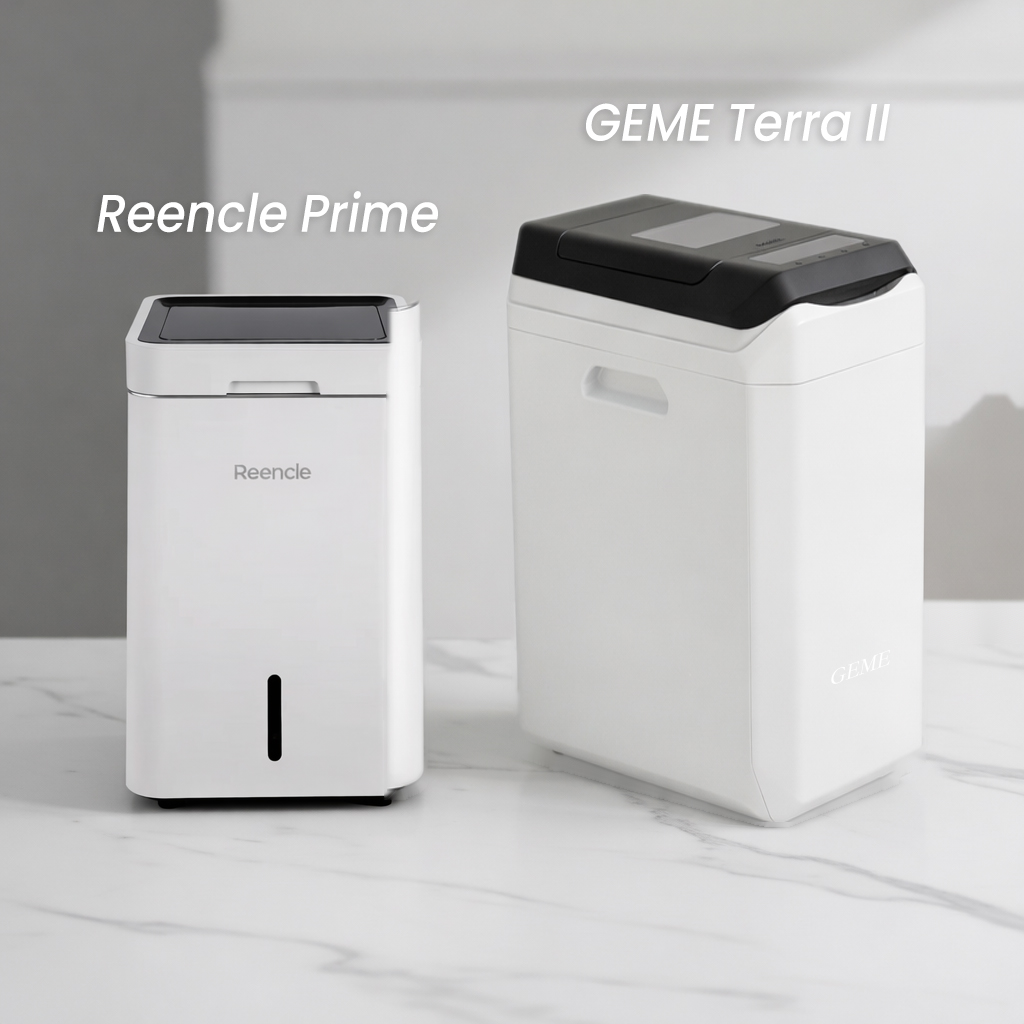
Reencle vs. GEME: The Ultimate Microbial Composter Showdown
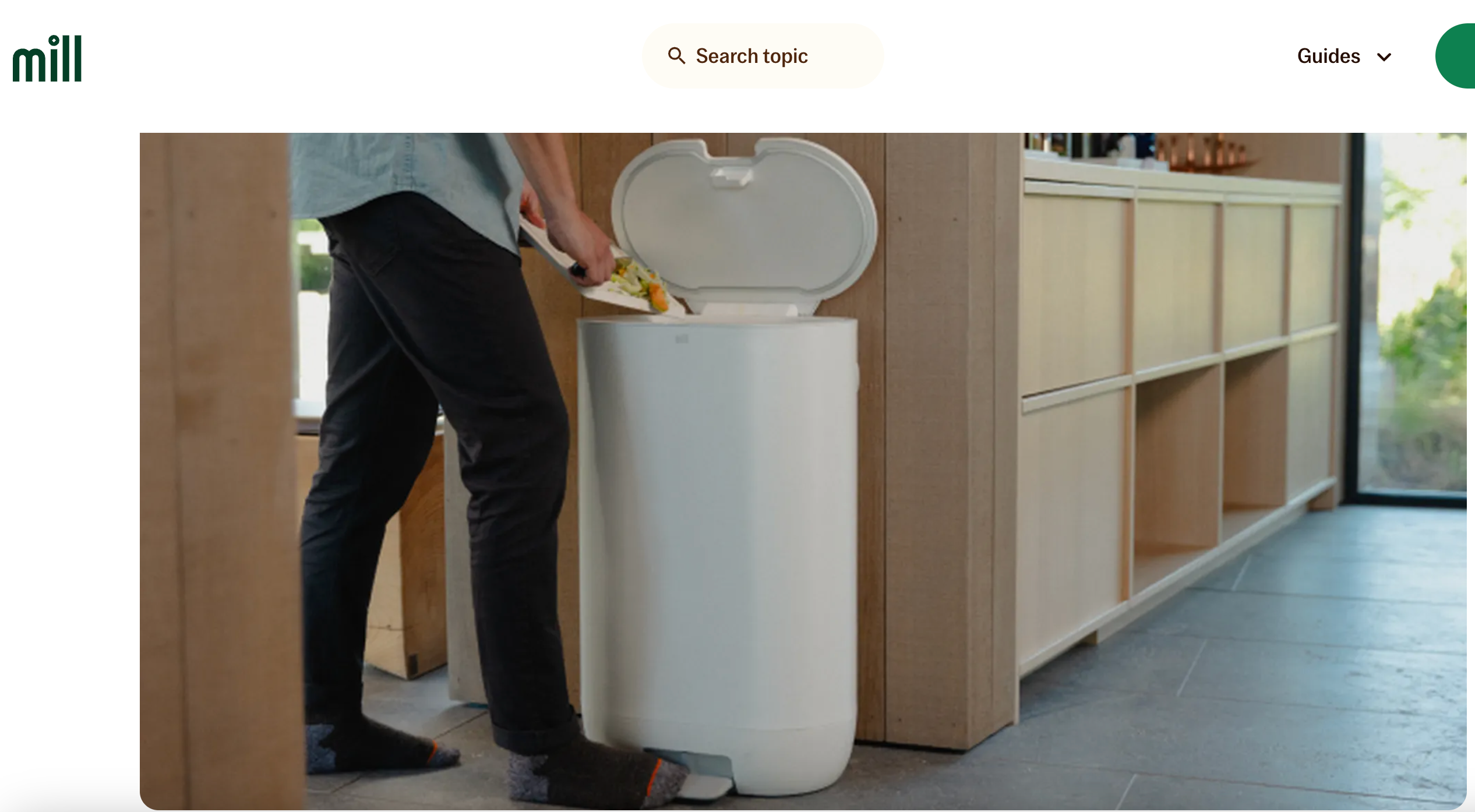
Does Mill Composter Really Compost? Honest Review & Best Kitchen Composter Guide 2026
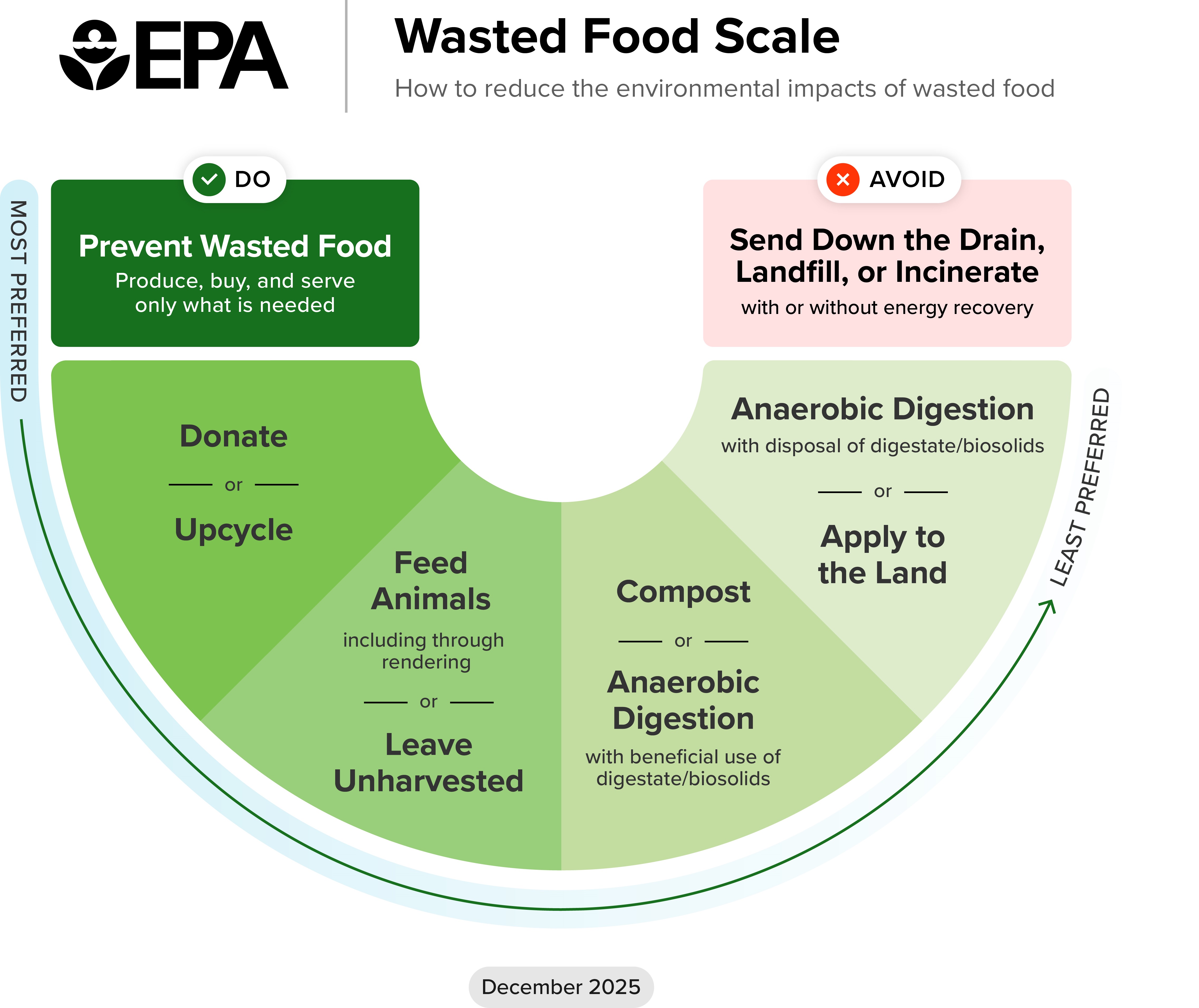
How to Reduce Food Waste at Home (Best Solution 2026)

McDonald’s Free Caviar Kits Raise Concerns of Food Waste | 2026 Composting Insights

Winter Composting Crisis: How the 2026 Bomb Cyclone Makes Indoor Composting Essential

Zero-Waste Lifestyle Starts in Your Kitchen: How to Reduce Food Waste with GEME Terra 2 (Best Kitchen Composter Guide)
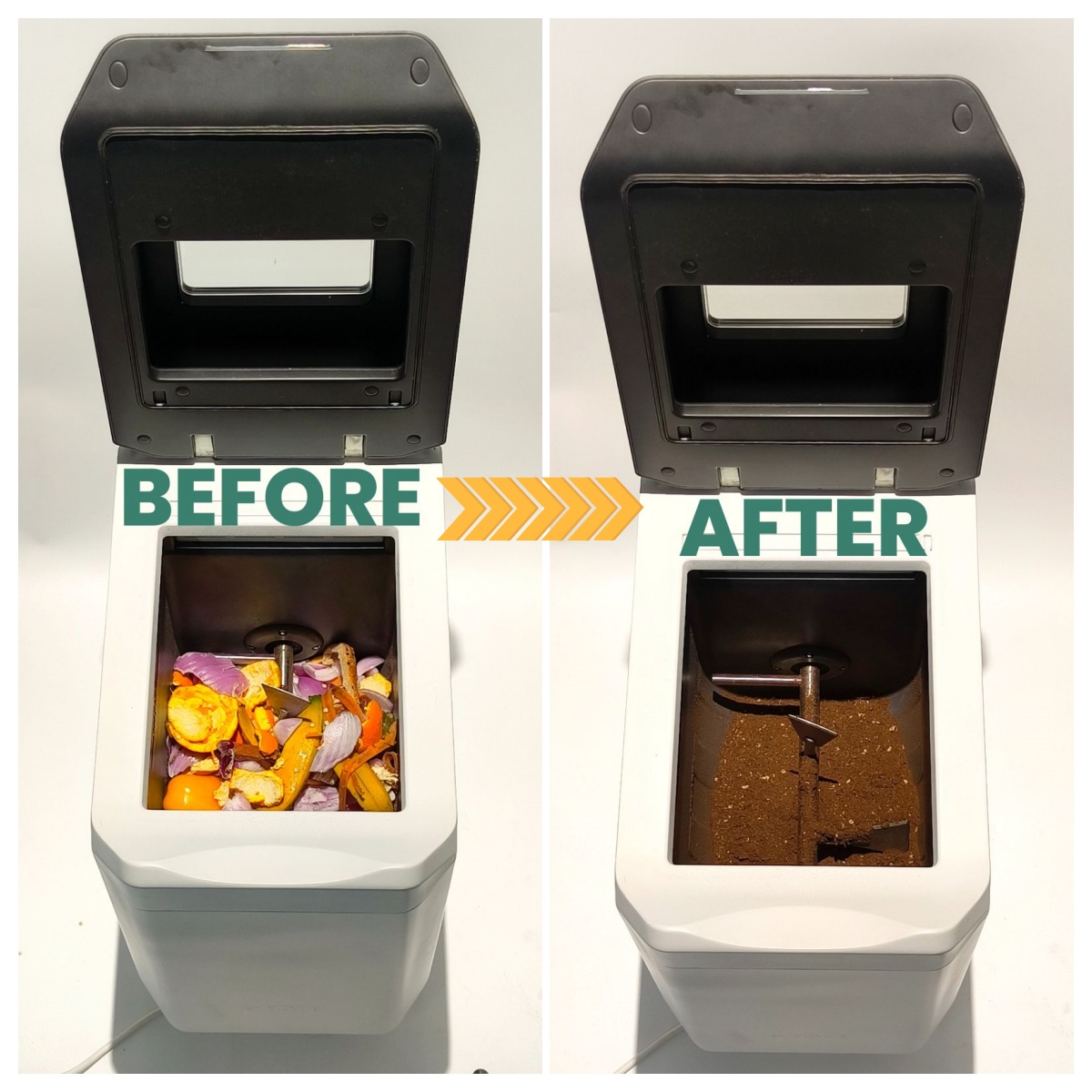
Does the Lomi Composter Really Compost? Lomi vs GEME Terra 2
Top 5 Kitchen Composters in 2026
Best Kitchen Composters in 2026: GEME Terra II Redefines “Real Compost”
GEME Terra 2 vs Reencle Composter: 2 different Microbial Composting Approaches
GEME Terra 2 vs Mill Composter: The 2026 Decision Guide
The Best Electric Kitchen Composter of 2026

Mastering the GEME Cycle: An Agronomist’s Guide to Continuous-Flow Compost Application
Geme Terra 2 vs Lomi: Which Countertop Composter Is Better for a Zero Waste Home?
Electric Compost Bin Filters Cost: GEME vs Lomi vs Mill vs Reencle
Bio-Composting Breakthroughs: GEME Terra 2 Debuts, An Easier & Smarter Way To Compost At Home
Can You Compost Bread?
Can I Compost Spoiled or Moldy Fruit Like Grapes? Here's A Practical Guide
Composting Basics: Backyard Compost Pile VS GEME Electric Composter

How Can We Make Bananas Last Longer?

How Long Do Apples Last in The Fridge? An Ultimate Guide For You to Keep Apples Fresh
The Best Kitchen Composter For Reducing Food Waste | Which One is Your Favourite?
Ready to transform your gardening game? Subscribe to our newsletter for expert composting tips and sustainable gardening advice.