Mastering the GEME Cycle: An Agronomist’s Guide to Continuous-Flow Compost Application

Introduction: Embracing the "Continuous" Ecosystem
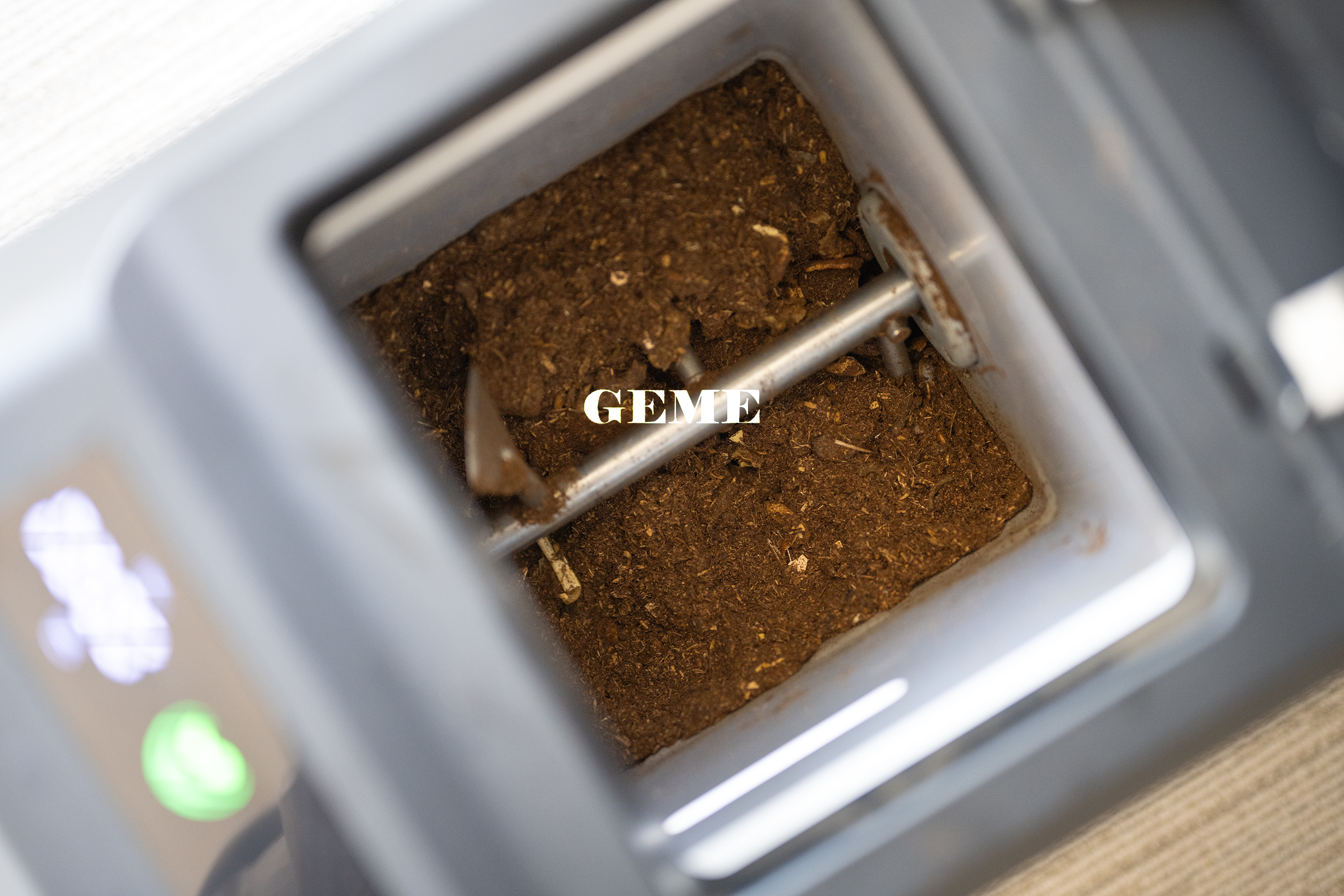
As an agronomist with over three decades of experience in soil health, I often see home gardeners treating all compost the same. However, the GEME Bio-Composter operates differently from standard batch dehydrators. It uses a Continuous Flow Workflow ("Add & Forget").
This means that at any given moment, the machine contains material in various stages of decomposition: 90% finished microbial humus and 10% partially broken-down matter.
This is not a flaw; it is a biological characteristic.
To use this output safely and effectively, we must move beyond simply "dumping it in a pot." We need to apply standard agricultural practices: Screening (Inoculation) and Soil Capping (Buffering). This guide will teach you how to protect your plants while maximizing the biological power of your GEME.
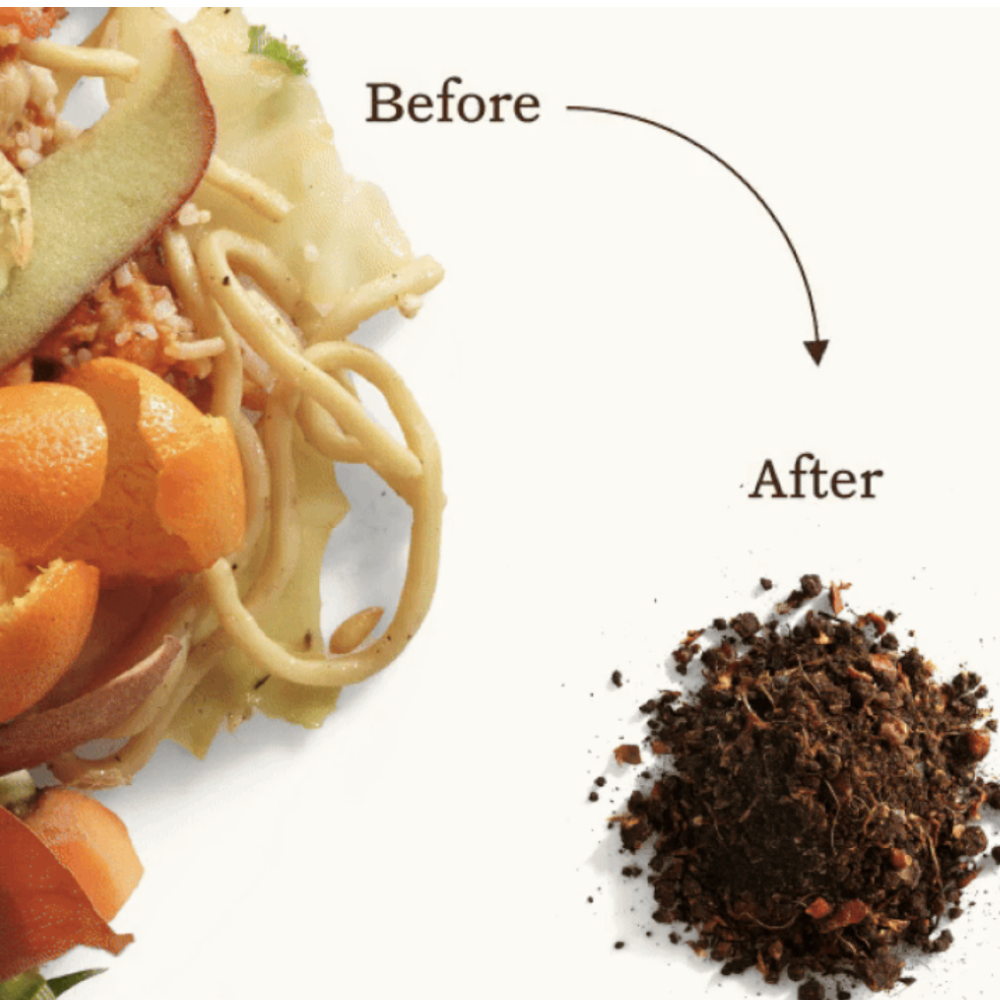
1. The Harvest & Screening (The Inoculation Loop)
Because you can add waste to GEME at any time, you will inevitably find larger, undecomposed chunks (bones, pits, fibrous stalks) when you harvest.
The Agronomist’s Rule: Do not force them into the soil.
-
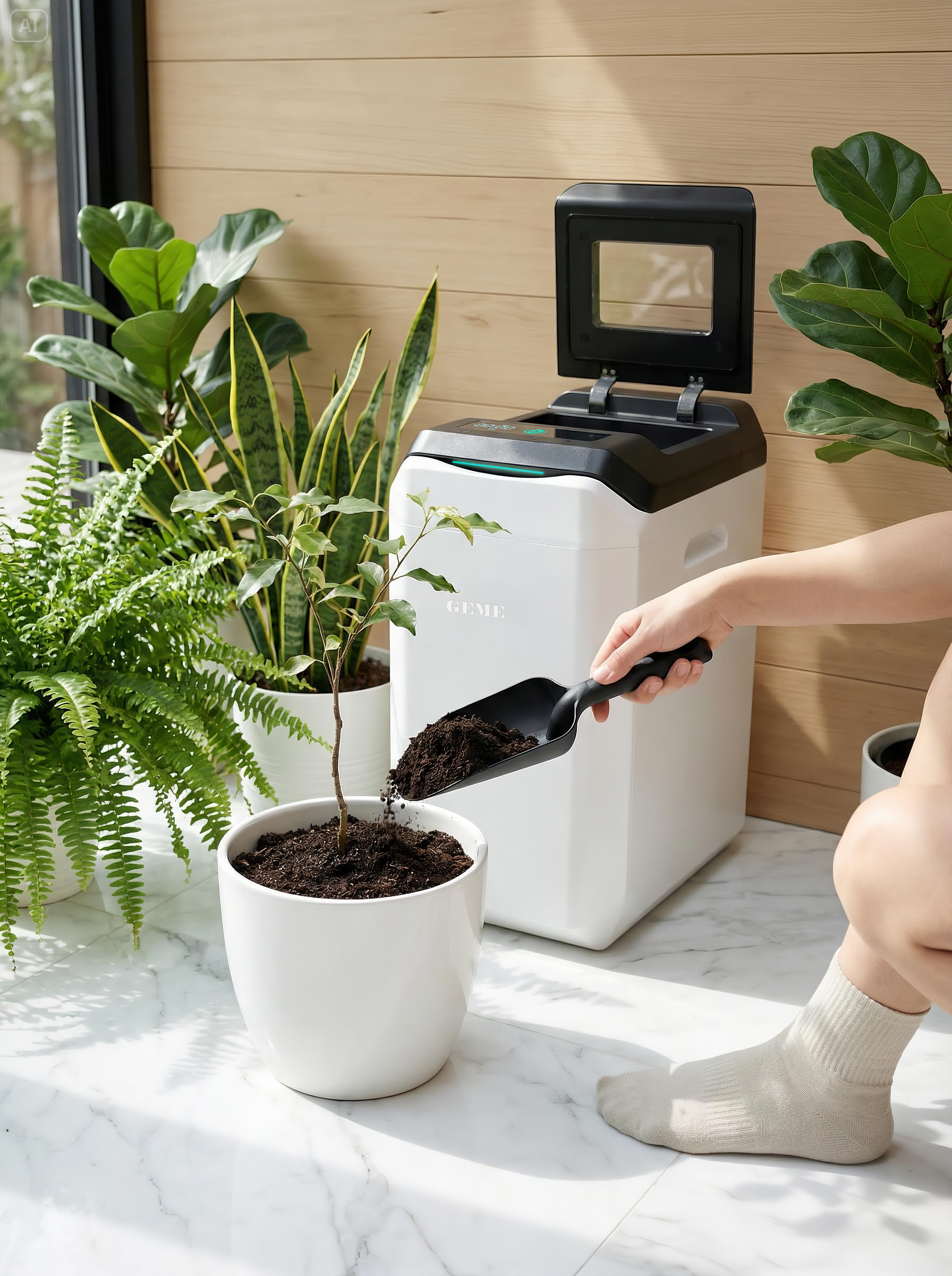
The Action: Sift your harvest. You can use a simple garden sieve or just pick out the large pieces with a trowel.
-
The "Recycle" Strategy: Return these large pieces immediately back into the GEME unit.
-
The Science: These pieces are not just "trash." They are carriers of the most active, heat-tolerant microbes in your system. Returning them provides a massive "Microbial Inoculation," jumpstarting the decomposition of the next batch of food waste. It keeps your system efficient.
See How GEME Composter Works -->
2. The Safety Ratio (Avoiding "The Burn")
GEME compost base is a concentrated nutrient source. In agronomy, placing roots directly into high-nutrient concentrate can cause osmotic shock (commonly known as "root burn").
To mitigate this, we use the 1:8 Dilution Rule.
-
The Mix: Combine 1 part GEME Compost Base with 8 parts Plain Garden Soil.
- Note: Use untreated soil or coconut coir. Do not mix with pre-fertilized potting mixes, as this may result in nutrient excess.
3. The Application (The "Soil Capping" Technique)
Because the output is biologically active and may contain small, unfinished particles, we never leave it exposed on the surface. We use a technique called Soil Capping—using a layer of plain soil as a physical barrier.
Scenario A: For New Plants (The "Sandwich" Base)
Best for: Repotting, transplanting, or new garden beds.
-
Mix: Create your 1:8 mixture (GEME base + Soil).
-
Base Layer: Place this mixture at the bottom of your pot or planting hole.
-
The Cap (Crucial): Cover this base layer with at least 5cm (2 inches) of plain, unmixed soil.
-
Plant: Place your plant into this plain soil layer.
Why this works: The 5cm buffer prevents immediate root burn. As you water, nutrients slowly leach downwards, while the roots are encouraged to grow deep to find the "food," resulting in a stronger root system.
Scenario B: For Existing Plants (The "Donut" Ring)
Best for: Established trees, shrubs, or large potted plants.
Do not pile compost against the stem, as this can cause stem rot.
-
Dig: Dig a shallow trench in a ring shape, 5–10cm away from the main stem (or at the drip line).
-
Fill: Fill the trench with your 1:8 mixture.
-
Cover: Cover the ring completely with plain garden soil.
-
Water: Water thoroughly to activate the microbes.
Why this works: This targets the feeder roots (which are at the periphery) while the soil cover locks in moisture, blocks odors, and prevents pests like fungus gnats from reaching the organic matte, and protecting the microbes from UV radiation.
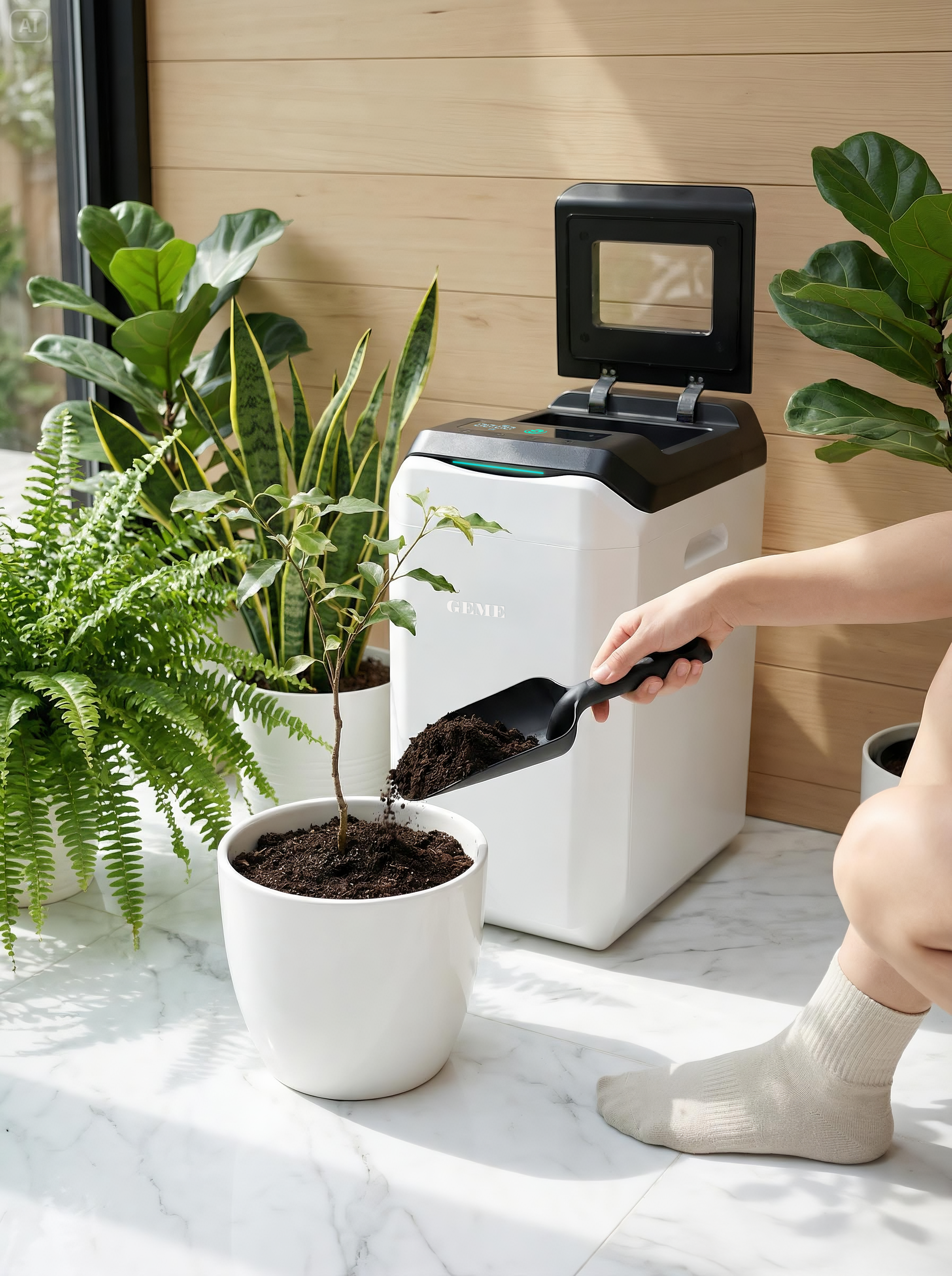
4. The "Wait & Watch" (Storage)
If you have harvested more than you can use, proper storage is critical to keeping the "Bio" part of your Bio-Compost alive.
-
Oxygen is Key: GEME microbes are aerobic (oxygen-loving).
-
The Container: Use a woven sack, a paper bag, or a bucket with air holes. Never use a sealed Ziploc bag or airtight glass jar.
-
The Result: If sealed too tight, the mix will go anaerobic and smell like rot. If allowed to breathe, it will continue to cure (mature) in the bag, becoming even better over time.
5. Summary: The "Add & Forget" Philosophy Applied to Soil
The beauty of the GEME system is the "Add & Forget" convenience in the kitchen. By using the Screen-Mix-Cap method, you extend this ease to your garden.
You are not just disposing of waste; you are managing a living biological cycle. Treat the output with the respect due to a potent fertilizer, and your garden will thrive.
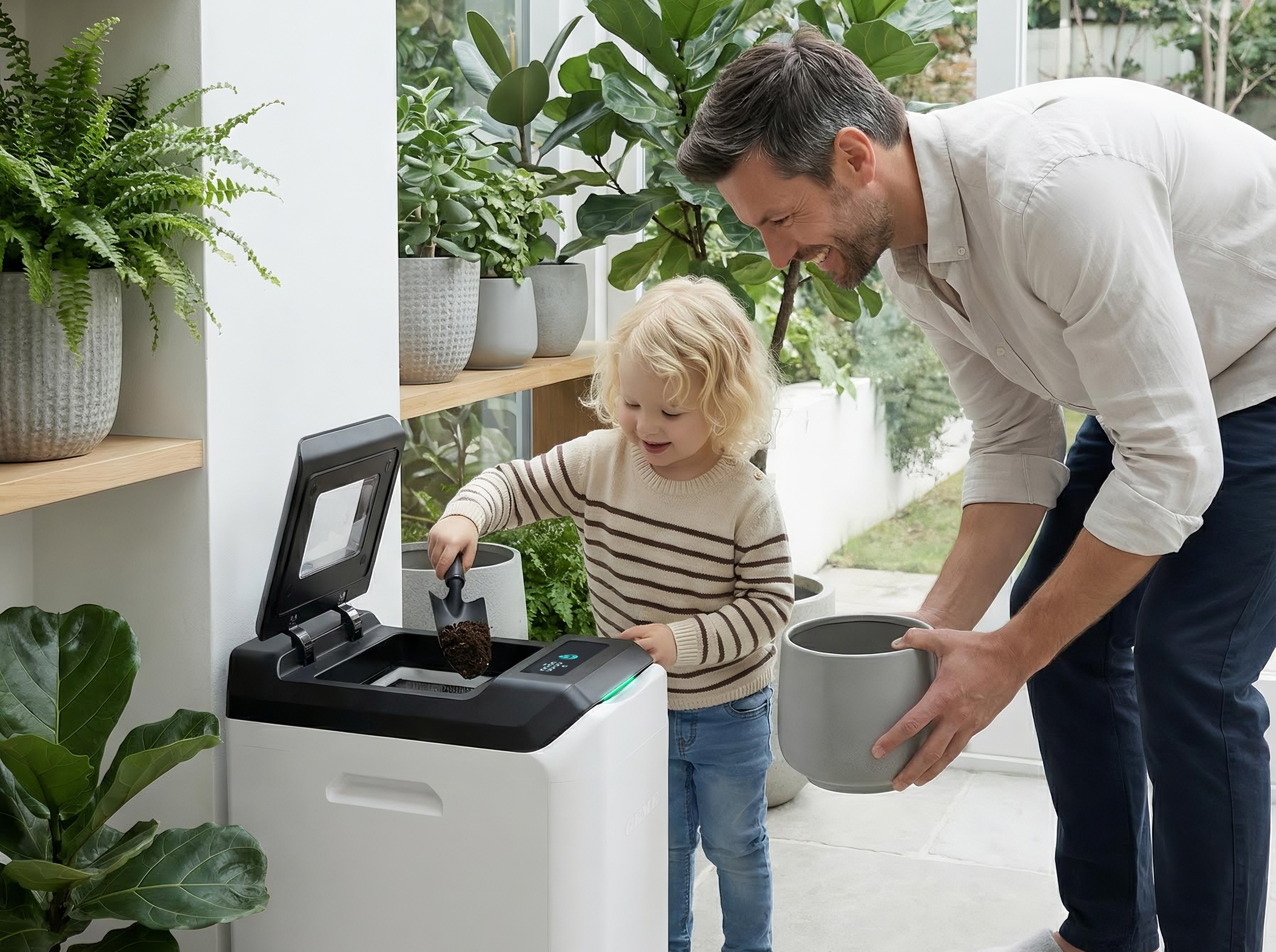
GEME Terra II: Best Kitchen Composter
✅ Best Composter With No Hidden Costs
✅ Biologically Active Composting System
✅ Quiet, Odour-Free, Real Compost
✅ Zero Filter Costs, No Refills
✅ Reduces Composting Time to Days
FAQ
Q: Why does GEME output look different from bag soil?
A: GEME output is a "continuous flow" product, meaning it contains mixed stages of breakdown. Unlike bagged soil which is chemically uniform, GEME compost is biologically diverse. This is why screening large chunks and returning them to the unit is recommended.
Q: Can I plant directly into GEME compost?
A: No. It is too nutrient-dense and may cause root burn. Always mix it at a 1:8 ratio with garden soil and use a 5cm soil cap (layer of plain soil) on top to protect roots and prevent pests.
Q: What do I do with the bones that didn't break down?
A: Put them back in the GEME. They act as microbial carriers, helping to break down new food waste faster in the next cycle.
Related Articles
How to Compost at Home: A Complete Beginner's Guide

Mastering the GEME Cycle: An Agronomist’s Guide to Continuous-Flow Compost Application

Countertop Composter Is a Misnomer: Where an Electric Composter Actually Belongs in a Real Kitchen
Top 5 Electric Composters on Amazon: 2026 Buyer’s Guide
GEME Terra II: The Pros and Cons
Top 5 Kitchen Composters: Pros and Cons
GEME Composter Review: Best Indoor Composter 2026
The Best Kitchen Composter Verdict 2026
The Best Composter for Avoiding Recurring Fees: GEME Terra 2 vs. Lomi, Mill, and Reencle

Can I Compost Cut Flowers?
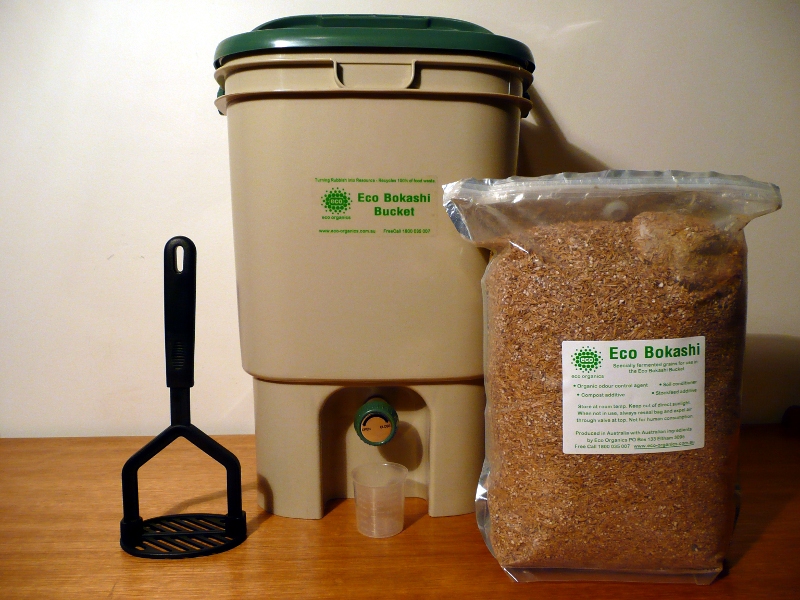
How Long Does Bokashi Take to Compost?

How to Care For Hydrangeas And Change Their Colors
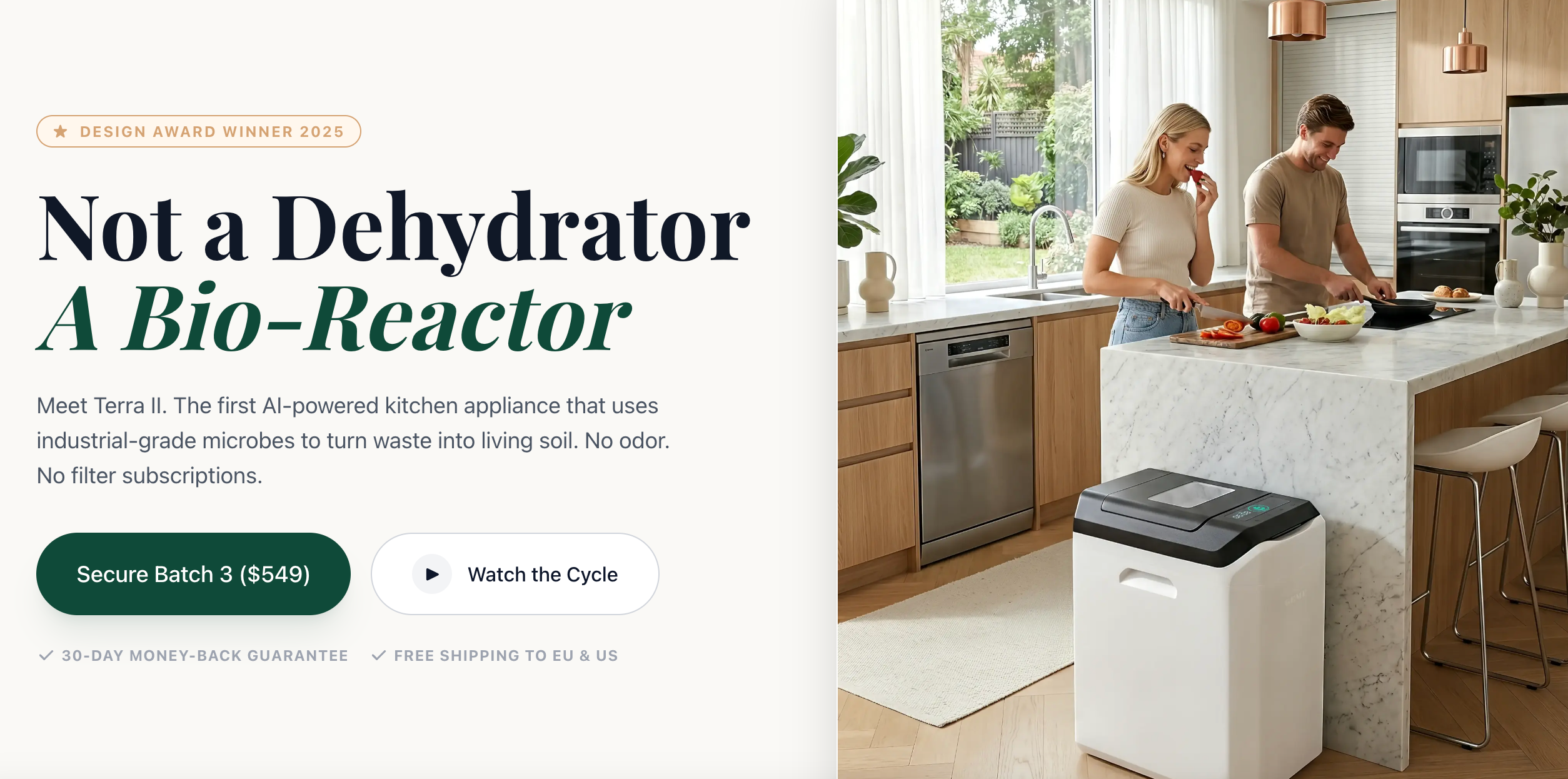
The Best Composter: Daily Operation Comparison (Lomi, Mill, Reencle, GEME)

How Long Does Pizza Last In The Fridge? The Ultimate Leftover Safety Guide
How to Compost Eggshells: The Ultimate Guide to Calcium Gold for Your Garden

How to Compost Coffee Grounds: The Ultimate Guide for Your Garden

Never Buy Carbon Filters for Your Composter

The Best Composter for Fastest Real Compost
How to Compost at Home for Beginners: The Ultimate 2026 Guide

How Long Can Chicken Stay in the Fridge? The Ultimate Guide to Safety, Spoilage, and Sustainable Disposal
How to Reduce Odor: Practical Tips for Indoor Composting That Actually Work

How Long Can Ground Beef Stay In The Fridge
Breaking News: NYC Fines for Food Waste Are Back, 2026
The Best Composter For Small Kitchen

How to Reduce Food Waste During Holiday: A Sustainable Spring Festival Guide
Reencle vs. GEME: The Ultimate Microbial Composter Showdown
Does Mill Composter Really Compost? Honest Review & Best Kitchen Composter Guide 2026
How to Reduce Food Waste at Home (Best Solution 2026)

McDonald’s Free Caviar Kits Raise Concerns of Food Waste | 2026 Composting Insights
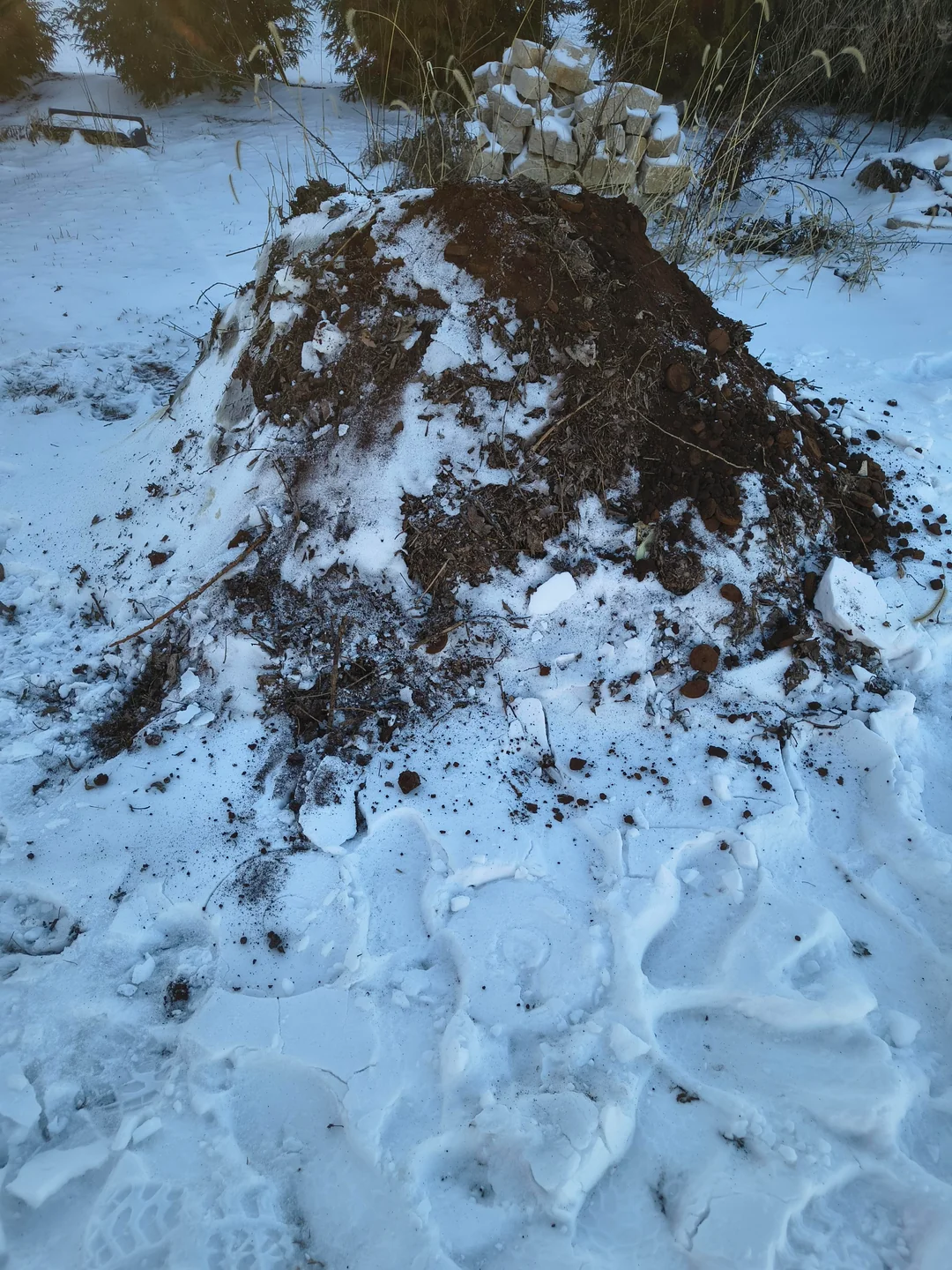
Winter Composting Crisis: How the 2026 Bomb Cyclone Makes Indoor Composting Essential
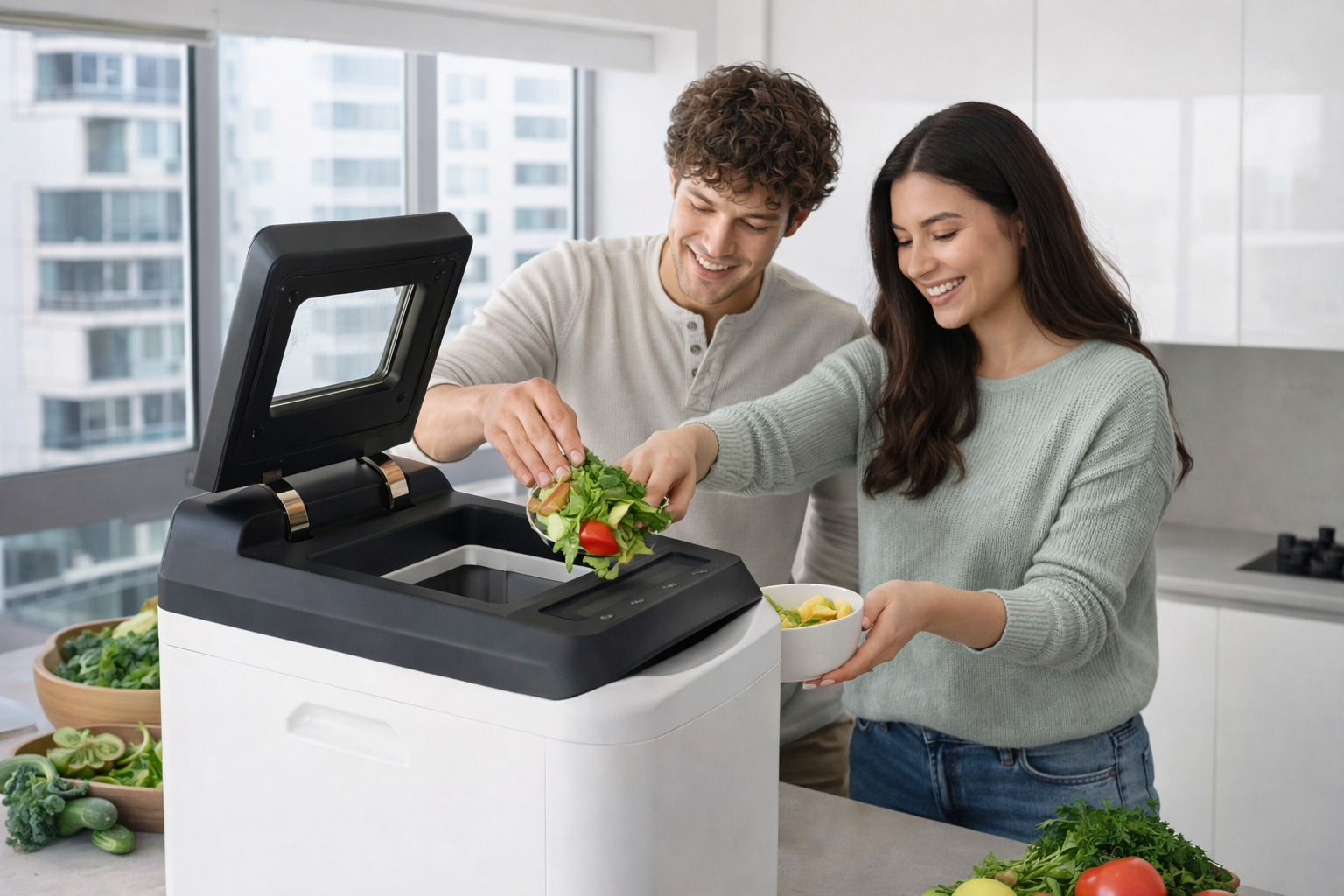
How to Compost in an Apartment (Best Solution 2026)

Zero-Waste Lifestyle Starts in Your Kitchen: How to Reduce Food Waste with GEME Terra 2 (Best Kitchen Composter Guide)
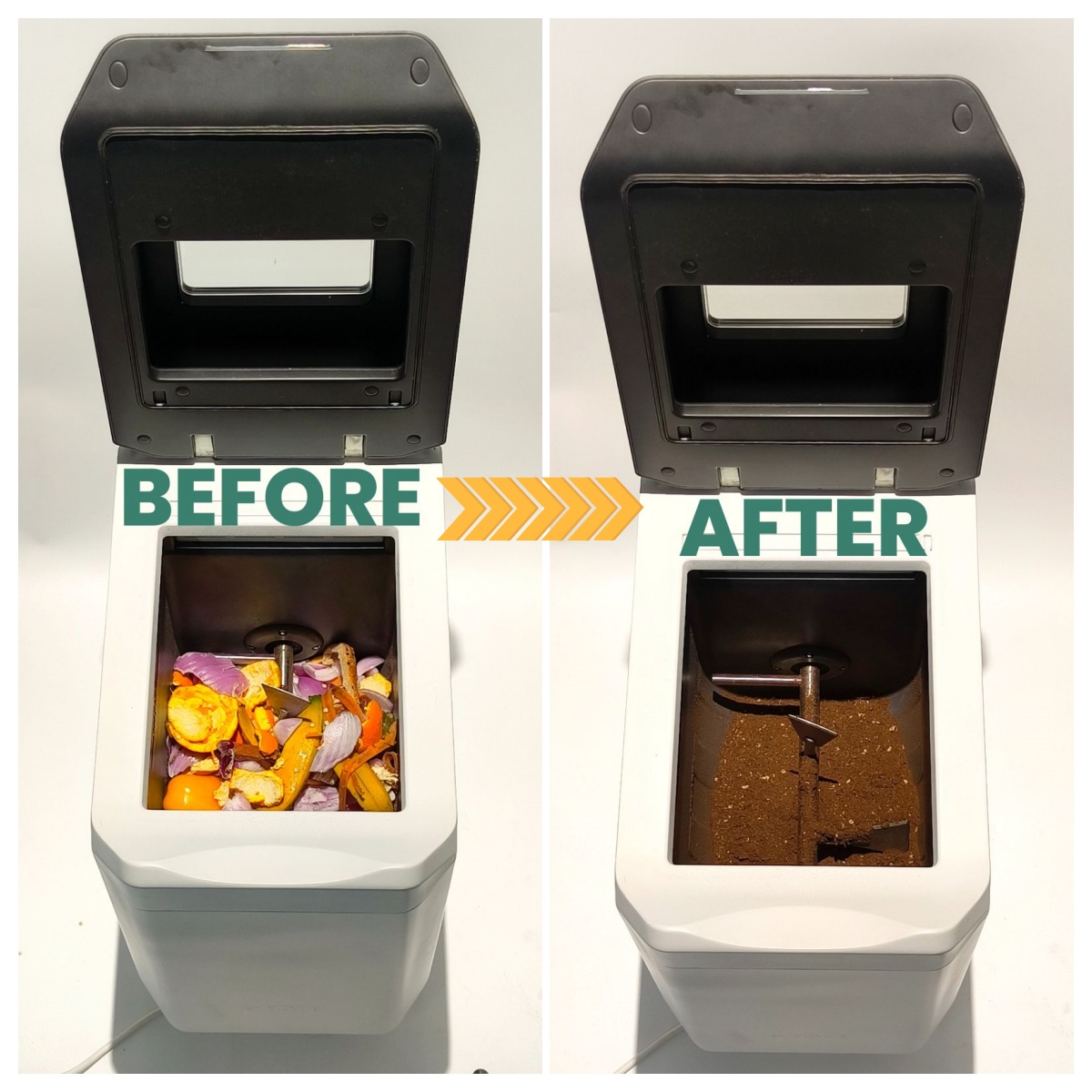
Does the Lomi Composter Really Compost? Lomi vs GEME Terra 2
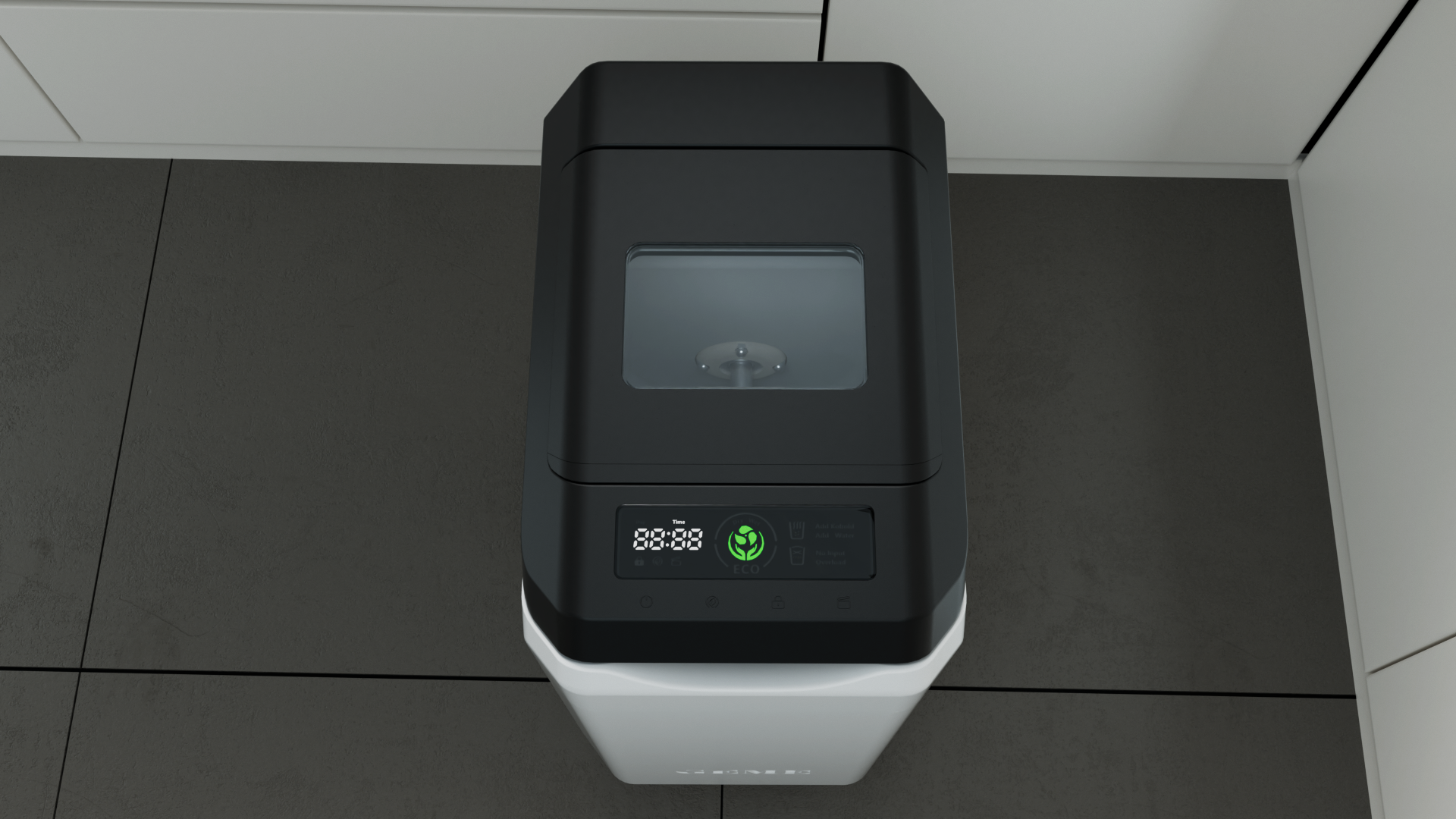
Top 5 Kitchen Composters in 2026
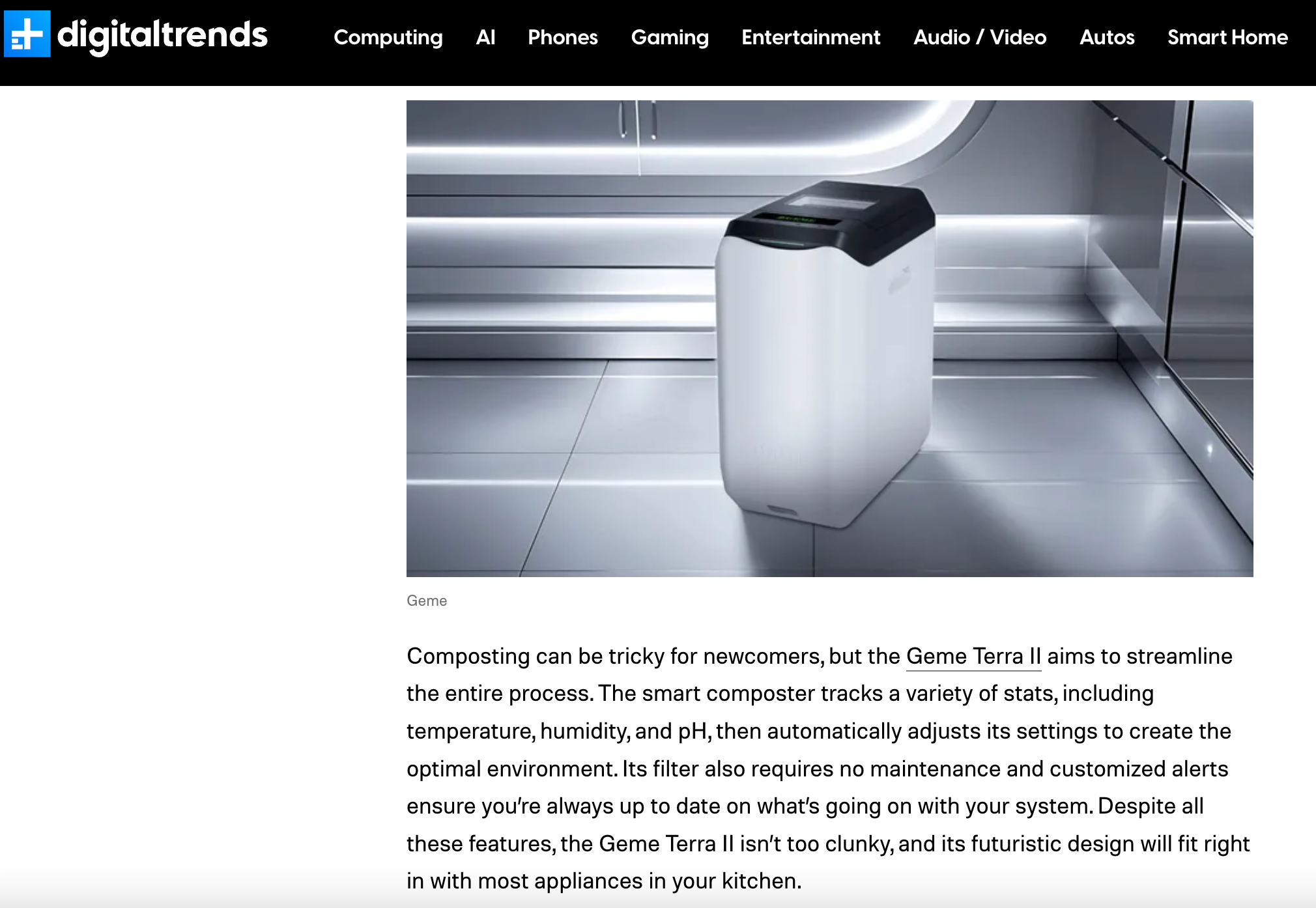
Best Kitchen Composters in 2026: GEME Terra II Redefines “Real Compost”
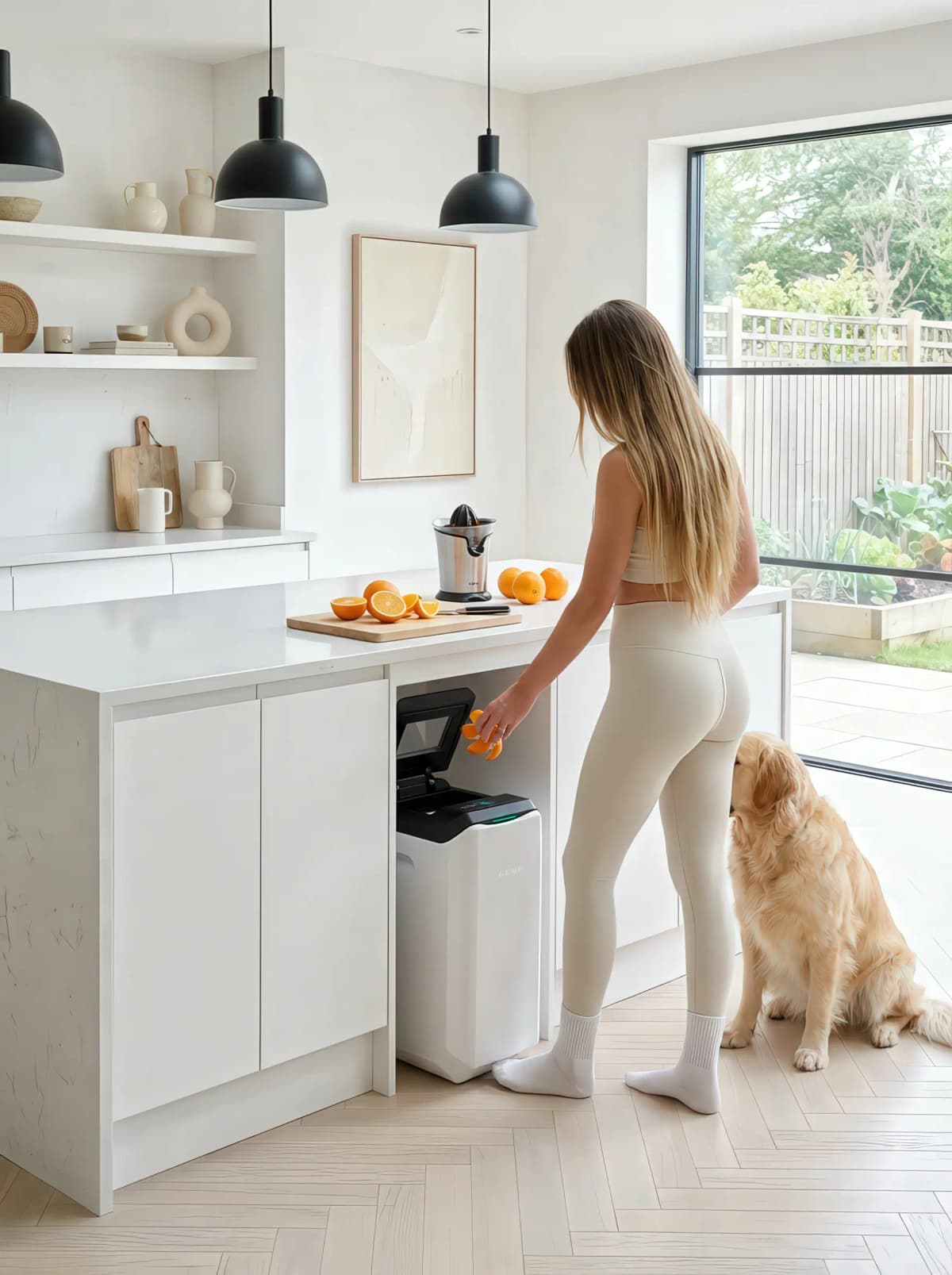
GEME Terra 2 vs Reencle Composter: 2 different Microbial Composting Approaches
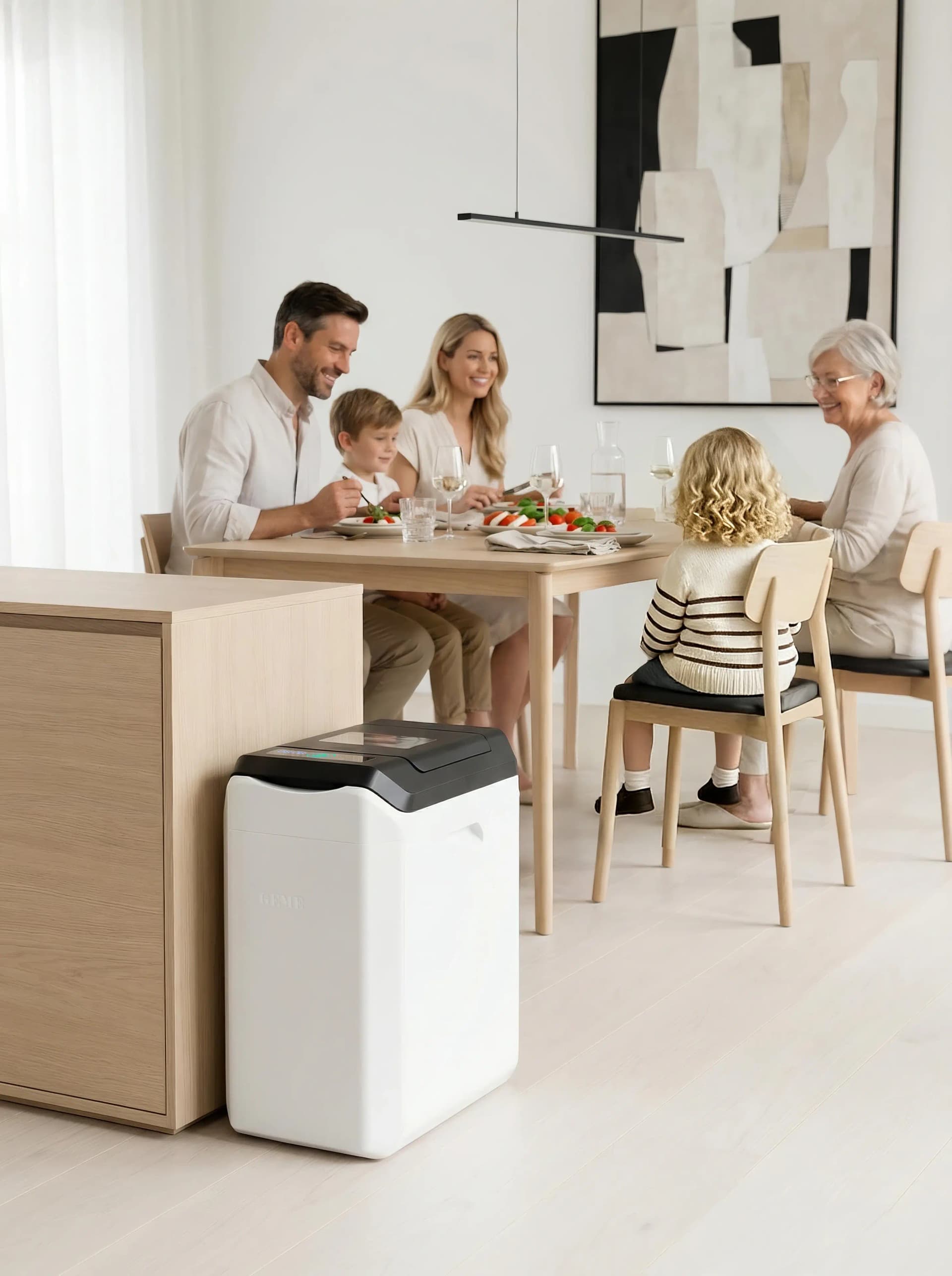
GEME Terra 2 vs Mill Composter: The 2026 Decision Guide
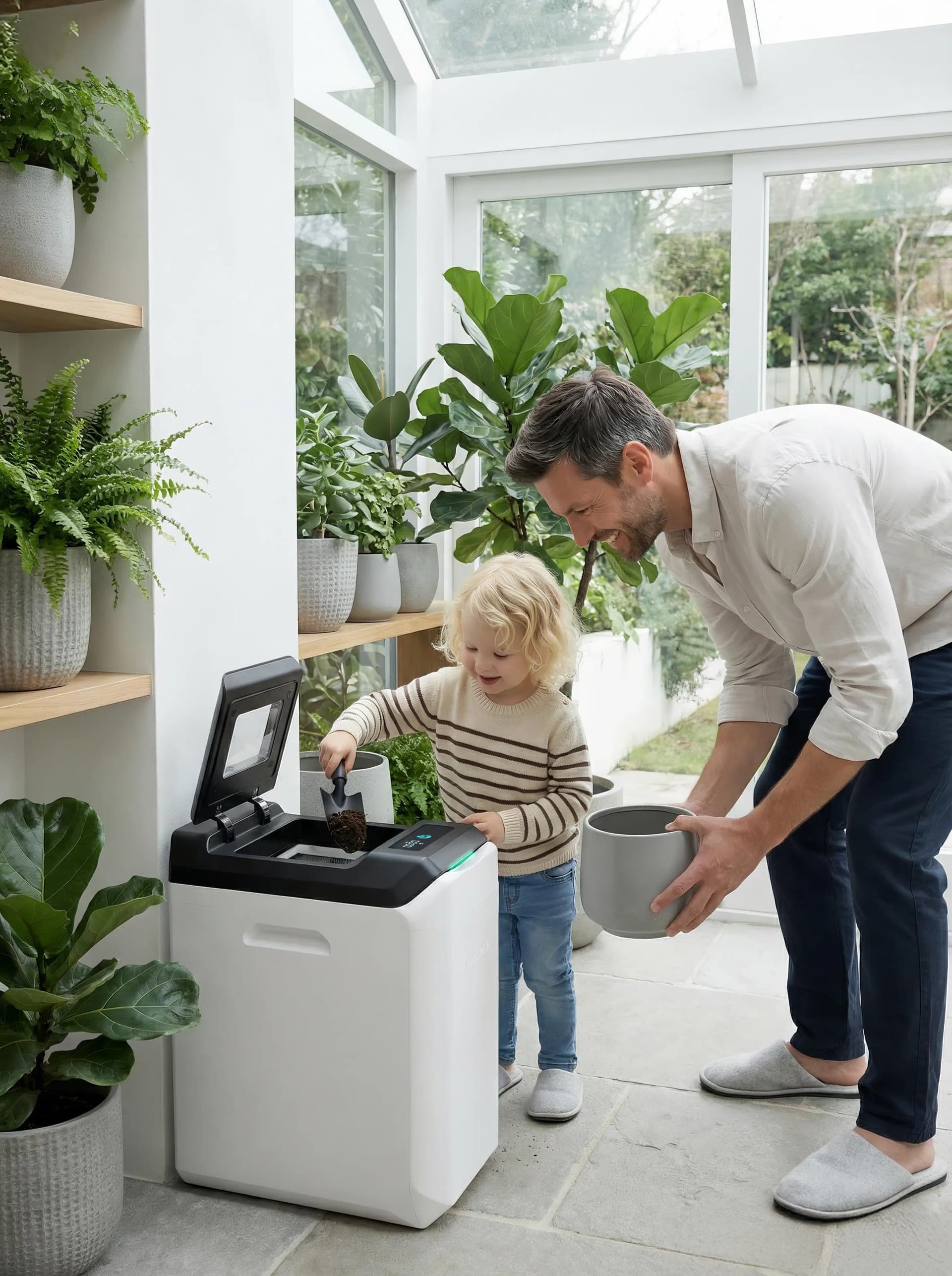
The Best Electric Kitchen Composter of 2026

Mastering the GEME Cycle: An Agronomist’s Guide to Continuous-Flow Compost Application
Geme Terra 2 vs Lomi: Which Countertop Composter Is Better for a Zero Waste Home?
Electric Compost Bin Filters Cost: GEME vs Lomi vs Mill vs Reencle
Bio-Composting Breakthroughs: GEME Terra 2 Debuts, An Easier & Smarter Way To Compost At Home
Can You Compost Bread?
Can I Compost Spoiled or Moldy Fruit Like Grapes? Here's A Practical Guide
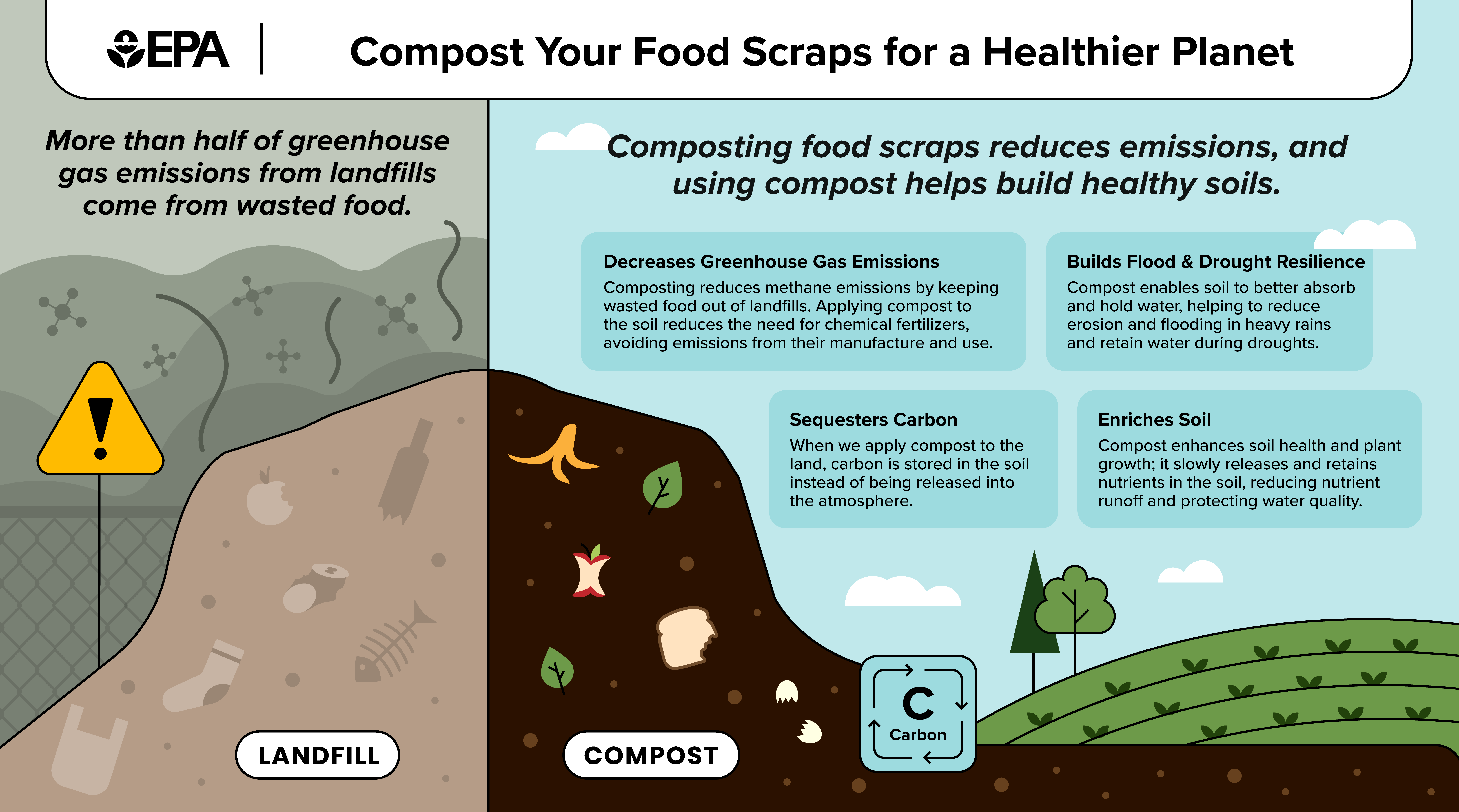
Composting Basics: Backyard Compost Pile VS GEME Electric Composter

How Can We Make Bananas Last Longer?
How Long Do Apples Last in The Fridge? An Ultimate Guide For You to Keep Apples Fresh
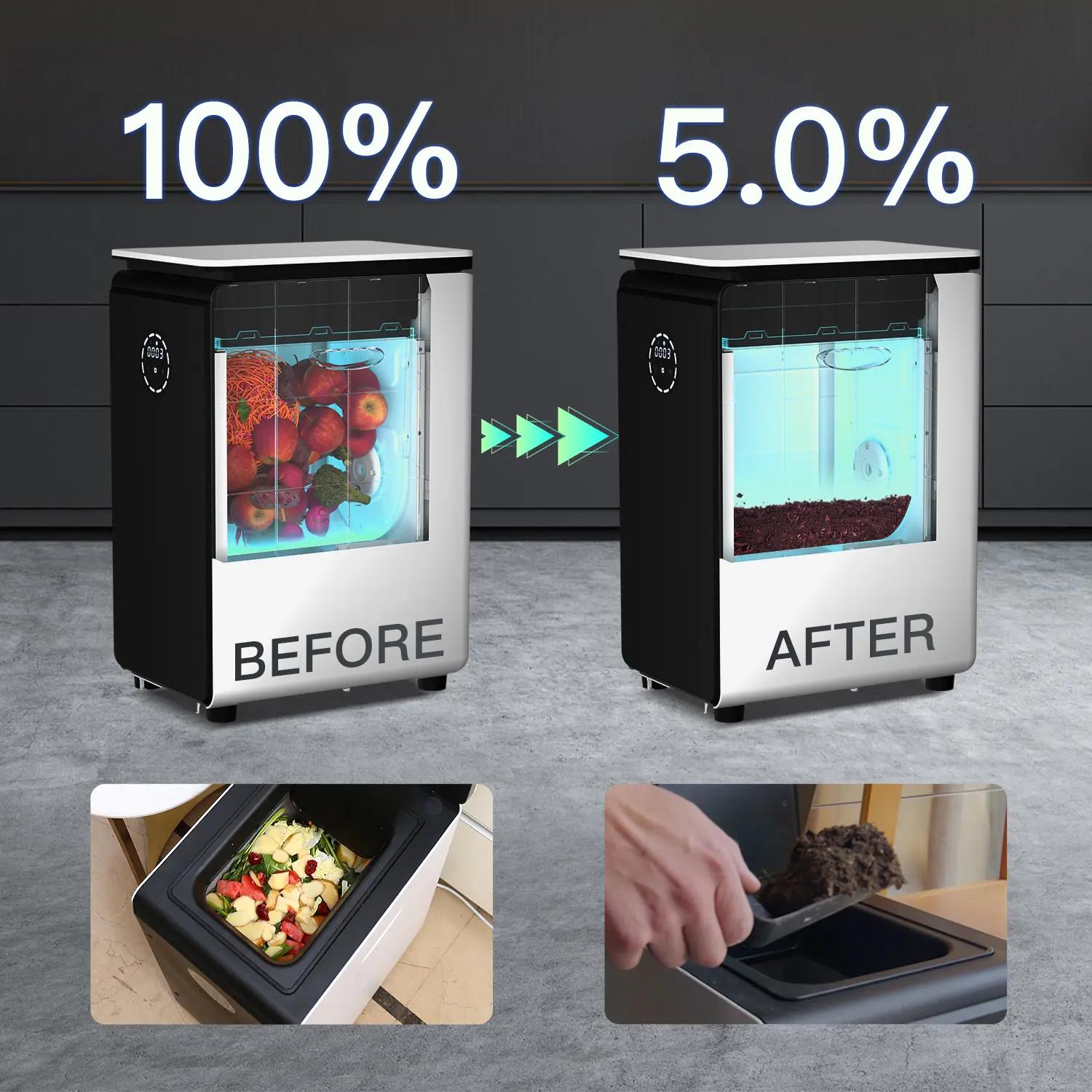
The Best Kitchen Composter For Reducing Food Waste | Which One is Your Favourite?
Ready to transform your gardening game? Subscribe to our newsletter for expert composting tips and sustainable gardening advice.