GEME Terra 2 vs Reencle Composter: 2 different Microbial Composting Approaches

You’re not buying a kitchen composter because you love appliances. You’re buying it because your trash can smells like a crime scene by day two, and you’re tired of carrying wet scraps outside like a sad raccoon. So, let’s do this properly.
This is a buyer-first comparison between GEME Terra II and Reencle Prime—two microbial composters (yes, Reencle is microbial). The real difference is: Which one fits your life with less effort, less refills, and fewer “why is it wet?” moments.
If you want the short answer: most households should buy Terra II because it’s built around higher daily capacity and lower maintenance, and that’s what makes people actually keep using a composter.
The 90-Second Truth
1. Output expectation matters more than speed
Two machines can reduce volume quickly, but still produce very different “end states” (finished compost vs. partially stabilized residue that benefits from curing).
2. Daily capacity and routine should match your kitchen
Reencle commonly recommends an optimal daily input of ~0.7 kg (max ~1.0 kg), whereas GEME Terra II's max daily input can be up to ~2.0 kg. If your household produces more scraps, “continuous handling” and capacity become decision drivers.
3. Maintenance isn’t just cleaning, it’s consumables
Reencle documentation commonly recommends carbon filter replacement every ~9–12 months, depending on use. (For any brand, ongoing costs add up and should be evaluated as TCO.) GEME Terra II doesn't have any ongoing consumables.
Quick Comparison Summary
| Dimension | GEME Terra 2 | Reencle Prime |
|---|---|---|
| Core approach | Continuous composting workflow (positioned as “real composting”) | Warm microorganism-based composting (~55–60°C) |
| Best fit for | Daily cooks who want a steady “waste-to-soil” habit | Users who want warm, microbe-driven processing with a defined daily input guidance |
| Daily input guidance | ~2.0 kg/day | Optimal ~0.7 kg/day; max ~1.0 kg/day |
| Odor control & consumables | Permanent Metal-ion filter (no replacements or purchases of filter required) | Carbon filter typically replaced ~9–12 months |
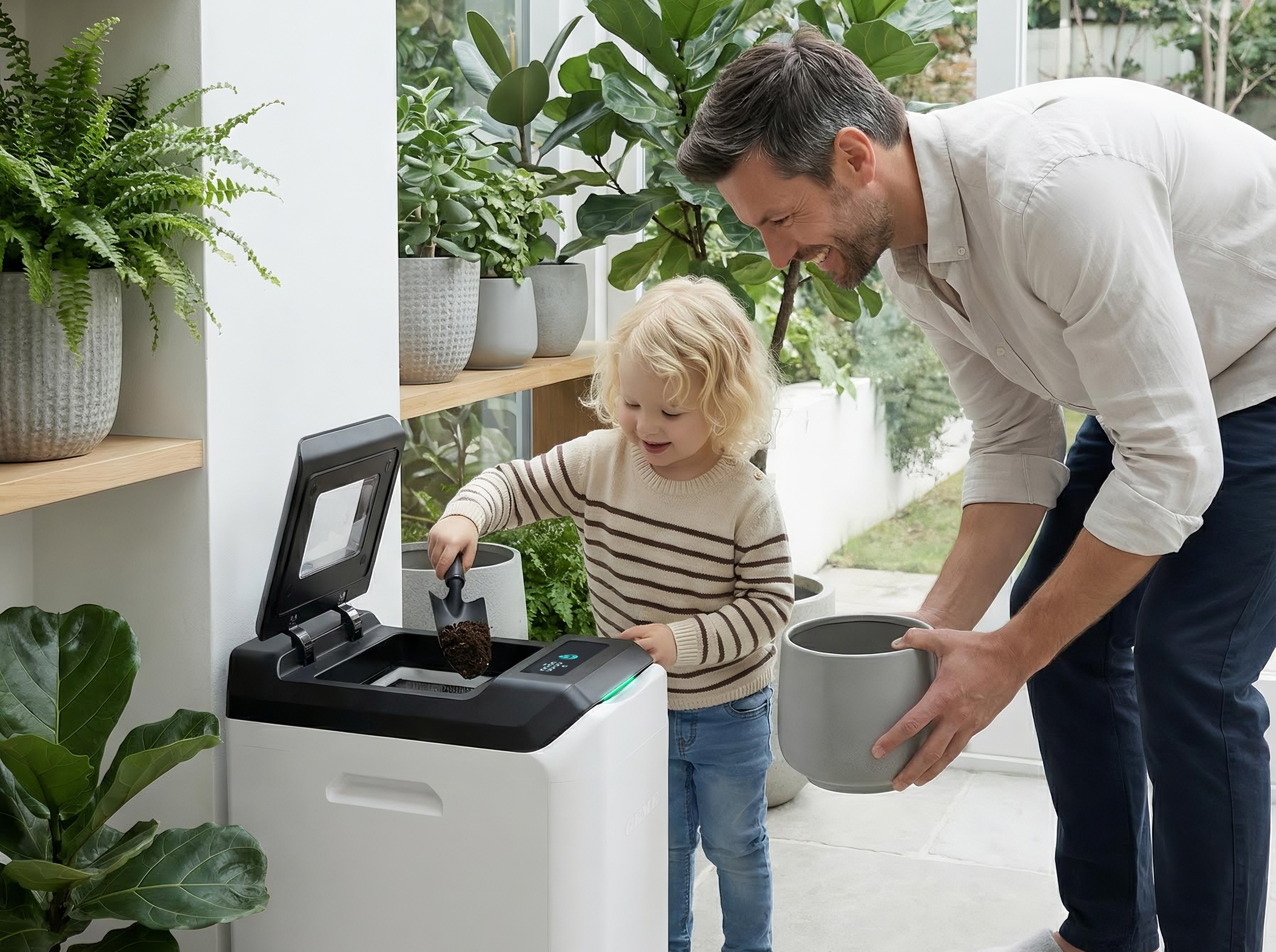
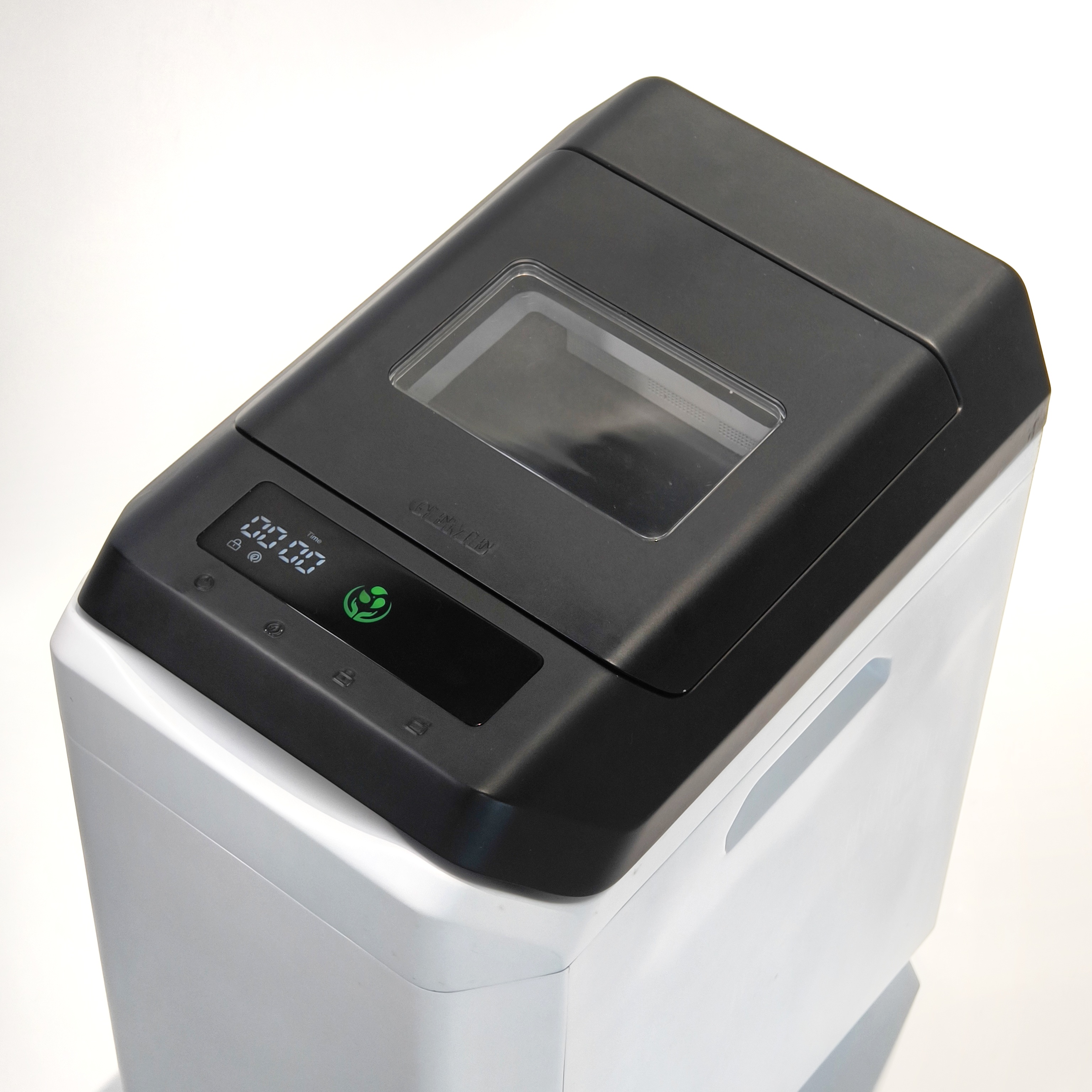
GEME Terra II Composter
✅ Zero Filter Costs, No Refills
✅ Quiet, Odour-Free, Real Compost
✅ Rich Compost Output For Garden Soil & Plants
✅ Reduce Landfill Waste & Greenhouse Gases
What “Real Compost” Means (and why buyers get confused)
A lot of “kitchen composting” content mixes these ideas:
-
Volume reduction (it looks smaller)
-
Moisture reduction (it looks drier)
-
Biological stabilization (it stops smelling and becomes soil-friendly)
-
Maturity (it behaves like compost in soil, not just “dried scraps”)
A fair comparison must separate marketing terms from user outcomes:
-
What does the output look like after a week?
-
Does it need curing time?
-
How often do you harvest?
-
How stable is it for soil use?
GEME: Terra 2 is built around “real compost” and a continuous routine. Reencle: Reencle describes microbe-based composting at a warm temperature band, not simple dehydration.
Core Technology Difference
How GEME Terra 2 Works
GEME Terra 2 uses a biological composting process that mimics natural soil ecosystems:
-
Microbial decomposition
-
Continuous oxygen circulation
-
Low-temperature operation
-
Natural moisture regulation
Food waste is broken down gradually, resulting in actual compost suitable for soil use. Because the system runs continuously, users can add scraps at any time — even during operation.
How Reencle Prime Works (based on their published docs)
Reencle presents its process as:
-
composting with microorganisms
-
operating in a warm internal range around 55–60°C to support decomposition
-
with recommended daily input guidance (optimal ~0.7 kg/day; max ~1.0 kg/day)
This is important because it’s different from “high-heat sterilize + dry.” If you’re evaluating systems, ask: Is the machine trying to keep microbes active—or cook them off? Reencle explicitly argues for microbe-friendly conditions versus dehydrator-style sterilization.
How fast does food waste disappear? (Decomposition Speed)
Reencle Prime
-
Standard cycle: ~24 Hours.
-
Continuous processing.
GEME Terra 2
-
Rapid breakdown: 6–8 Hours.
-
Continuous processing.
-
Benefit: Faster turnover for next meal.
GEME Terra 2 is designed for a 6-8 hour visible breakdown cycle; Reencle operates on a standard 24-hour digestion cycle. Faster turnover means higher effective daily capacity.
What powers the breakdown? (Biology)
Reencle Prime
-
Synthetic / Artificial microbes.
-
Lab-formulated for home stability.
GEME Terra 2
-
Natural / Industrial-Verified Kobold.
-
Adapted from large-scale biological treatment.
-
Benefit: Robust digestion of tough scraps.
Reencle uses synthetic biology; GEME uses industrial-grade natural microbes. If you want verified industrial power at home, GEME is the choice. Learn about Kobold →
Same 14L, different build? (Density & Weight)
| Reencle Prime | GEME Terra 2 | |
|---|---|---|
| Weight | ~9 kg | ~12 kg |
| Build | Lightweight consumer chassis | Dense insulation for thermal stability |
While both cite ~14L volume, GEME is 3kg heavier (~12kg vs 9kg), utilizing denser materials for thermal retention and stability.
Compost Output — What Do You Actually Get?
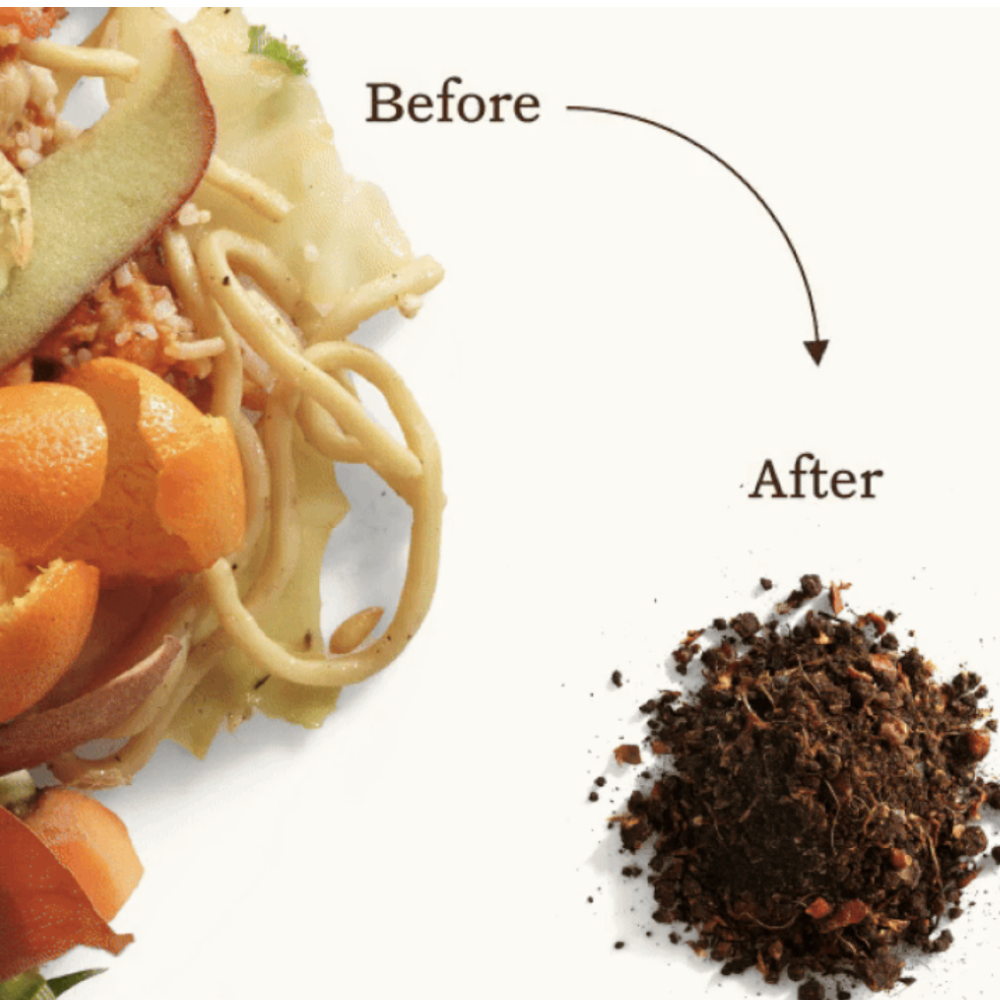
Terra 2 Output
-
Up to 95% volume reduction
-
Compost can be harvested every 1–2 months
-
Suitable for gardens, planters, or soil blending
-
No secondary processing required
This makes Terra 2 appealing to users who want true waste-to-soil conversion at home.
Reencle Output
-
Dry, lightweight residue
-
Reduced odor and volume
-
Requires further composting if soil use is desired
For users without gardening needs, this may be sufficient, but it’s important to understand the distinction.
Capacity & Daily Use Experience
Continuous vs Batch Processing
GEME Terra 2
-
Published capacity: up to 2kg per day
-
Waste can be added anytime
-
Designed for daily cooking households
Reencle
-
Cycle-based processing
-
Waste is added, then processed as a batch
-
Less flexible during active cycles
Why This Matters
Households that cook frequently tend to prefer continuous systems, while light-use kitchens may be comfortable with batch-style processing.
Filters, Maintenance & Long-Term Cost
Reencle user manuals recommend annual carbon filter replacement. GEME uses a permanent metal-ion filter designed for the machine's lifetime.
GEME Terra 2 Ownership Model
-
One-time purchase
-
Permanent metal-ion catalytic filter
-
No mandatory subscriptions
-
Minimal ongoing costs
Reencle Maintenance Model
-
Replaceable carbon filters
-
Periodic maintenance required
-
Long-term costs depend on usage and filter replacement frequency
Click here to Calculate Your Cost
Which One Should You Choose?
Choose Reencle if you're OK with:
-
Hundreds of dollars filter costs
-
Taking care of your composter all the time
-
Lab-constrained microbes rather than a living system
Choose GEME Terra 2 if:
-
You want fast & real compost
-
You want the "Add & Forget" style, then AI finish the rest
-
You prefer ownership without recurring fees
GEME Terra II Composter
✅ Zero Filter Costs, No Refills
✅ Quiet, Odour-Free, Real Compost
✅ Rich Compost Output For Garden Soil & Plants
✅ Reduce Landfill Waste & Greenhouse Gases
Common Buyer Misunderstandings
1. “All kitchen composters make compost”
Not true. Many systems dry or grind waste but stop short of biological composting.
2. “Faster processing is always better”
Speed often comes at the cost of compost maturity and soil usability.
3. “Maintenance costs are minor”
Filters and consumables add up over time.
FAQ
1. Does Reencle make real compost?
Reencle primarily dries food waste. The output may require further composting before soil use.
2. Is GEME Terra 2 suitable for apartments?
Yes. It’s designed for indoor, floor-standing use with low noise.
3. How often do you empty Terra 2?
Typically every 1–2 months, depending on usage.
4. Does Terra 2 require filter replacement?
No. The filter is permanent.
Final Decision
If your goal is true composting with minimal long-term cost,
GEME Terra 2 offers a more complete waste-to-soil solution.
If your goal is clean, fast waste reduction with automation,
Reencle may better match your expectations.
Practical Decision Rules
-
The "Pet Owner" Rule If you have pets in the kitchen, GEME's intentional foot-switch prevents accidental openings better than a motion sensor.
-
The "Heavy Chef" Rule If you cook daily for 3+ people, GEME's 2kg capacity handles the load better than Reencle's 0.7kg standard recommendation.
-
The "Mobility" Rule If you need to move the unit frequently, Reencle (9kg) is lighter and easier to lift than GEME (12kg).
Verified Sources (Pricing & Specs)
[1] Lid Mechanism Specs. Reencle Prime product page (Motion Sensor) vs GEME Terra 2 manual (Foot Switch). Accessed Jan 2026.
[2] Filter Maintenance. Reencle User Manual (p.14: "Replace filter every 9-12 months"). GEME Technology Page ("Permanent Filter"). Accessed Jan 2026.
[3] Physical Specs. Net Weight: Reencle (~9kg) vs GEME (~12kg). Daily Capacity: Reencle (~0.7kg/1.5lb) vs GEME (~2kg). Accessed Jan 2026.
[4] Activation Process. Reencle Setup Guide (Water Mix Required) vs GEME Quick Start (Dry Pour). Accessed Jan 2026.
[5] Breakdown Speed. GEME Technical Data Sheet (6-8 hours for visible reduction) vs Reencle Standard Cycle (~24 hours). Accessed Jan 2026.
Related Articles
Mastering the GEME Cycle: An Agronomist’s Guide to Continuous-Flow Compost Application
GEME Terra 2 vs Mill Composter: The 2026 Decision Guide
The Best Electric Kitchen Composter of 2026

Mastering the GEME Cycle: An Agronomist’s Guide to Continuous-Flow Compost Application
Geme Terra 2 vs Lomi: Which Countertop Composter Is Better for a Zero Waste Home?
Electric Compost Bin Filters Cost: GEME vs Lomi vs Mill vs Reencle
Bio-Composting Breakthroughs: GEME Terra 2 Debuts, An Easier & Smarter Way To Compost At Home
Can You Compost Bread?
Can I Compost Spoiled or Moldy Fruit Like Grapes? Here's A Practical Guide
Composting Basics: Backyard Compost Pile VS GEME Electric Composter

How Can We Make Bananas Last Longer?

How Long Do Apples Last in The Fridge? An Ultimate Guide For You to Keep Apples Fresh
The Best Kitchen Composter For Reducing Food Waste | Which One is Your Favourite?
Ready to transform your gardening game? Subscribe to our newsletter for expert composting tips and sustainable gardening advice.