Kitchen Composter vs Food Waste Recycler: What’s the Real Difference?

A kitchen composter and a food waste recycler are often placed in the same shopping category. But they do not always do the same biological job.
Some machines dry and grind food scraps into shelf-stable grounds. Others support a microbial process and create compost base for soil blending.
Both can reduce trash odor and daily food-waste friction, but only one category is built around real composting biology.
Simple rule: ask what happens inside the machine, and ask what the output needs before it can return to soil.
Quick Answer
A kitchen composter should support biological decomposition.
A food waste recycler often reduces, dries, grinds, or stabilizes scraps so they are easier to store, dispose of, or further process.
That difference matters because output from dry-and-grind food recyclers is not necessarily finished compost.
EPA guidance says residential food-scrap pre-processing appliances that grind and dehydrate food scraps reduce volume and weight, but they do not directly produce compost. Their output should be composted, cured, or otherwise further treated before use.
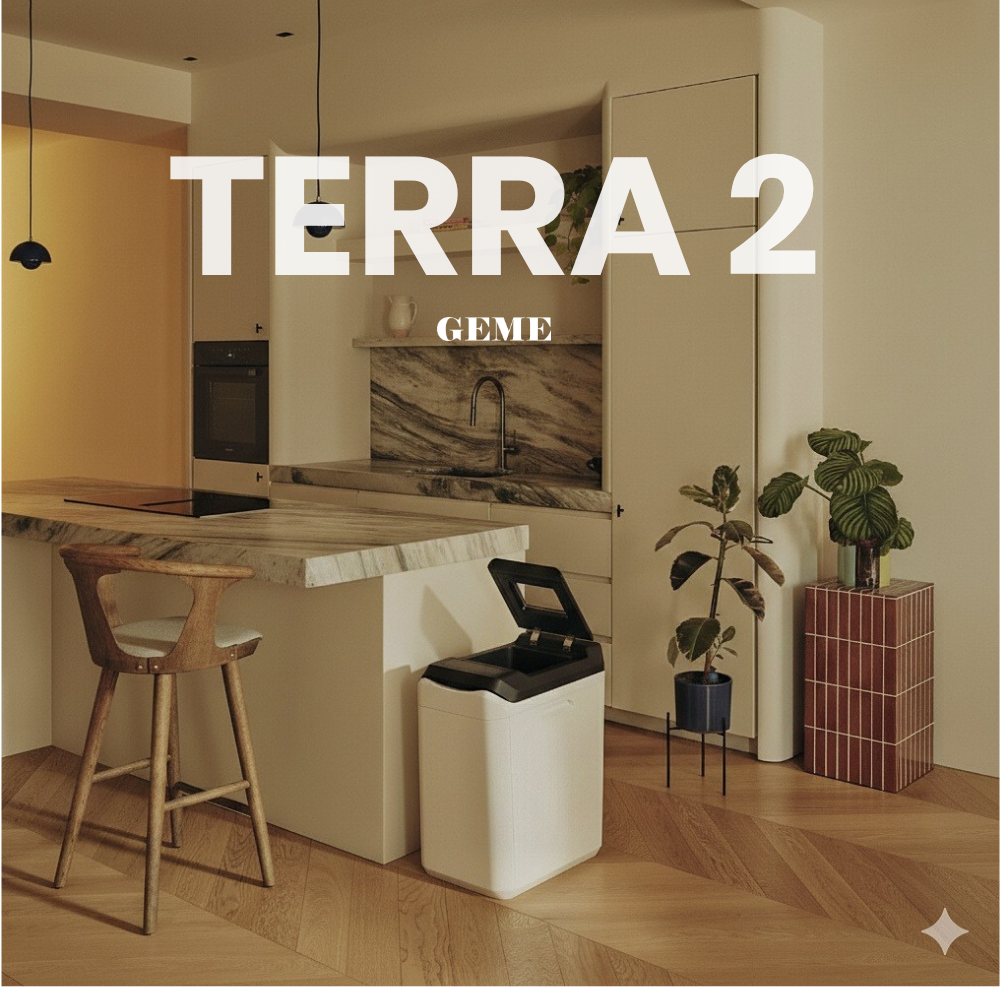
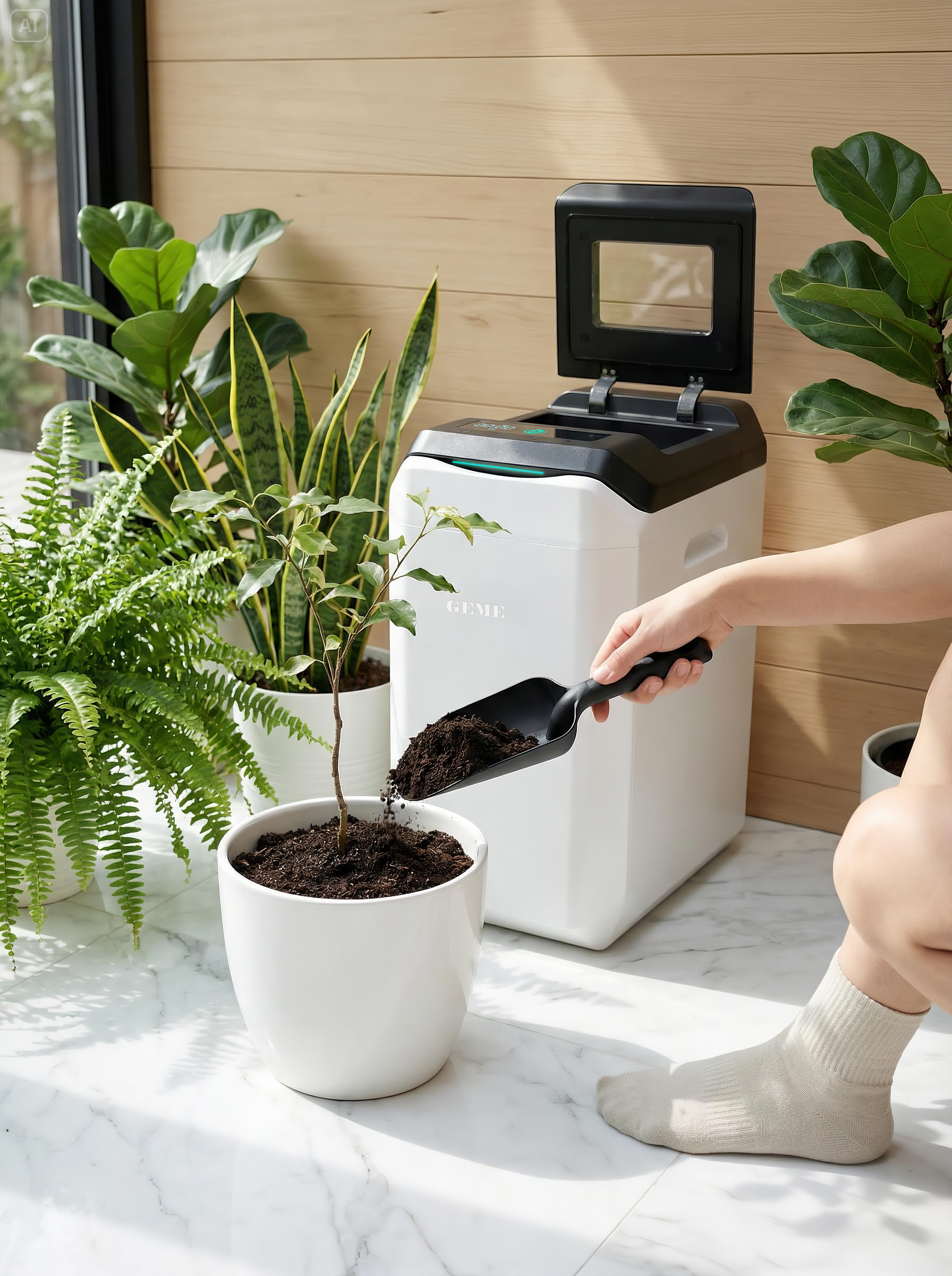
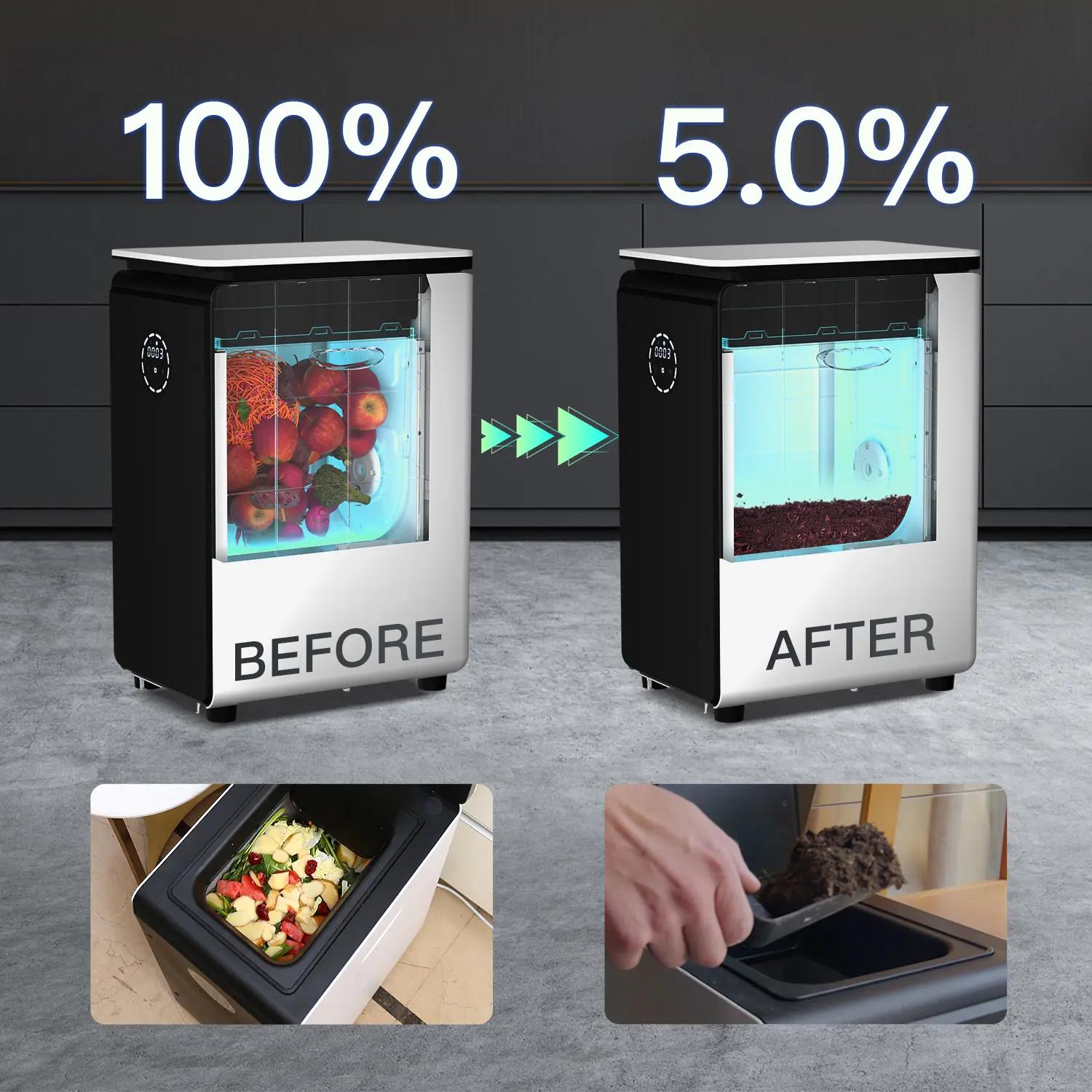
GEME Terra II is positioned differently: it uses living microbes and adaptive control to create a moist compost base for soil blending, with no drying and no routine replacement odor filters.
That makes it a stronger fit for users who want a real soil-return routine instead of only a food-scrap reduction routine.
Related reading:
Key Takeaways
- Names can be misleading. “Kitchen composter,” “electric composter,” and “food waste recycler” are often used loosely.
- Process matters most. Microbial composting, dehydration, grinding, fermentation, and storage are not the same process.
- Output matters next. Moist compost base and dry food grounds have different soil-use requirements.
- EPA draws an important line. Residential grinding/dehydrating appliances reduce scraps but do not directly produce compost.
- Food recyclers can still be useful. They can reduce odor, storage mess, and trash volume, especially for users without soil access.
- Real composting needs biology. Oxygen, moisture, microbes, temperature, and time all shape the result.
- Filters change ownership cost. Many food recyclers rely on replaceable carbon filters, while GEME Terra II uses no routine replacement odor filters.
- Best choice: choose a kitchen composter if you want soil return; choose a food waste recycler if you mainly want cleaner food-waste storage and reduction.
Table of Contents
- Why These Terms Are Confusing
- Kitchen Composter vs Food Waste Recycler: Working Definitions
- Side-by-Side Comparison
- What Comes Out of the Machine?
- GEME, Lomi, Mill, and Reencle: Category Map
- Filters, Consumables, and Ownership Cost
- Who Should Choose a Kitchen Composter?
- Who Should Choose a Food Waste Recycler?
- Practical Decision Rules
- Frequently Asked Questions
- Summary
- Sources
Why These Terms Are Confusing
The confusion starts because brands, retailers, and review sites often put different appliances into the same category.
A thermal food recycler, a dry-and-grind bin, a microbial composter, a Bokashi bucket, and a worm bin may all appear in search results for “best kitchen composter.”
But the customer problem is not one single problem.
Some people want to stop food scraps from smelling in the trash. Some want to reduce weekly garbage volume. Some want a material they can eventually use in soil. Some want a real composting routine inside the home.
So the right comparison is not only:
Which machine is faster?
The better question is:
What process is happening, what output is created, and what must happen before that output touches plants?
Kitchen Composter vs Food Waste Recycler: Working Definitions
What Is a Kitchen Composter?
A real kitchen composter supports biological decomposition.
In practice, that means microbes, oxygen, moisture, warmth, and time are part of the process.
The output may not be identical to outdoor finished compost, but the machine is built around composting biology rather than only physical reduction.
GEME Terra II fits this definition because it uses living microbes and adaptive control to create a moist compost base.
The output is intended to be mixed with soil, not used as pure potting media or treated as instant fertilizer.
What Is a Food Waste Recycler?
A food waste recycler usually focuses on reducing, drying, grinding, or stabilizing food scraps.
The goal is often odor control, easier storage, lower trash volume, or a dry material that can later be put into composting, collection, gardening, or disposal channels.
This category can be very useful, especially for people who do not have soil access.
But “recycled food scraps” should not automatically be treated as finished compost.
Side-by-Side Comparison
| Question | Kitchen Composter | Food Waste Recycler |
|---|---|---|
| Main process | Microbial decomposition under controlled conditions | Drying, grinding, reducing, or stabilizing scraps |
| Primary goal | Create compost base for soil return | Reduce odor, volume, mess, and storage burden |
| Output texture | Often moist, soil-like compost base | Often dry grounds, flakes, or reduced food-scrap material |
| Can it go directly to plants? | Usually needs screening and soil blending; follow product guidance | Usually needs further composting, curing, or soil processing before responsible use |
| Odor strategy | Biological balance plus airflow and odor-control system | Often drying plus carbon filtration or sealed storage |
| Best for | Users who want a soil-return routine | Users who mainly want cleaner food-waste handling and storage |
What Comes Out of the Machine?
Output is where the difference becomes real.
If a machine heats, dries, and grinds scraps, the output may be cleaner, smaller, and easier to store.
But it is not automatically finished compost.
EPA guidance is especially useful here: residential food-scrap pre-processing appliances can reduce volume and weight, but their output should be composted, cured, or otherwise further treated before use.
That is a very different claim from “ready compost.”
Dry Grounds Are Not the Same as Compost Base
Dry grounds can be useful.
They are often less smelly, easier to store, and less messy than raw scraps.
But if the material has mainly been dehydrated and ground, it still needs biological processing before it behaves like compost in soil.
Moist Compost Base Is Not a Failure
A real microbial process needs moisture.
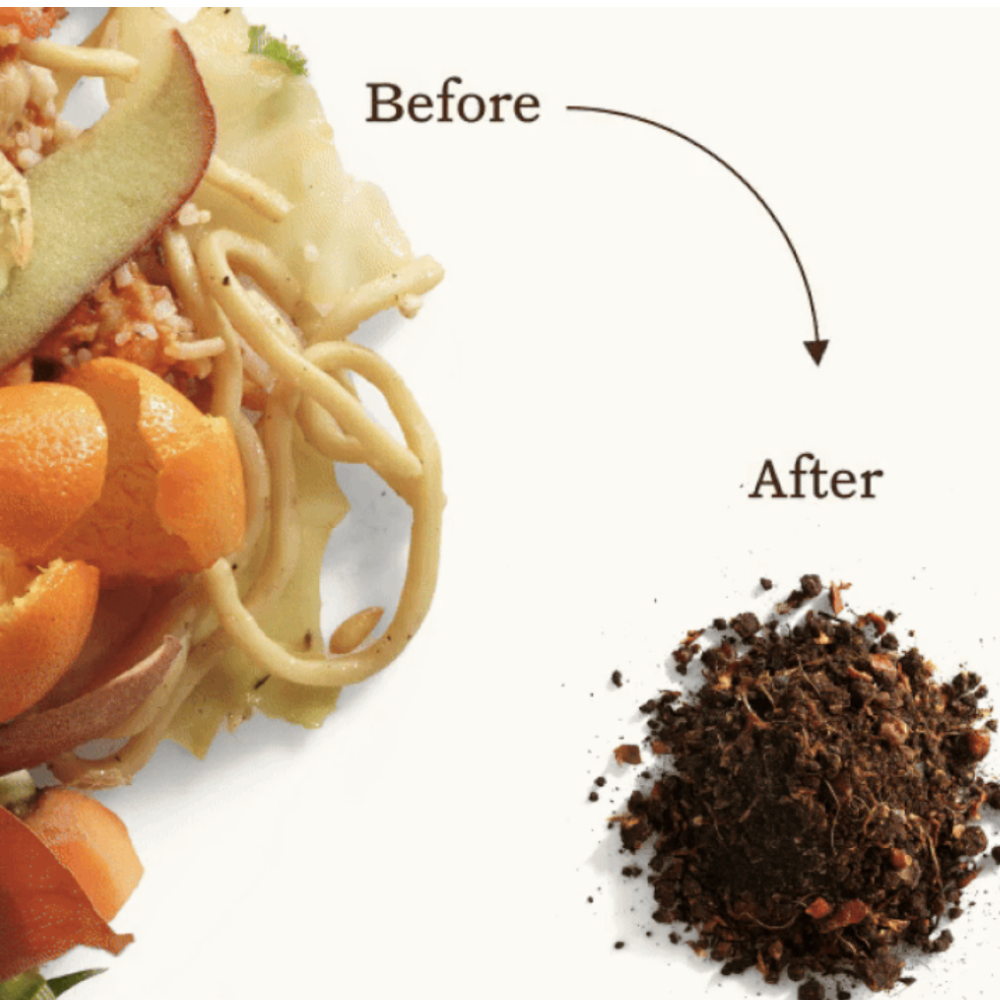
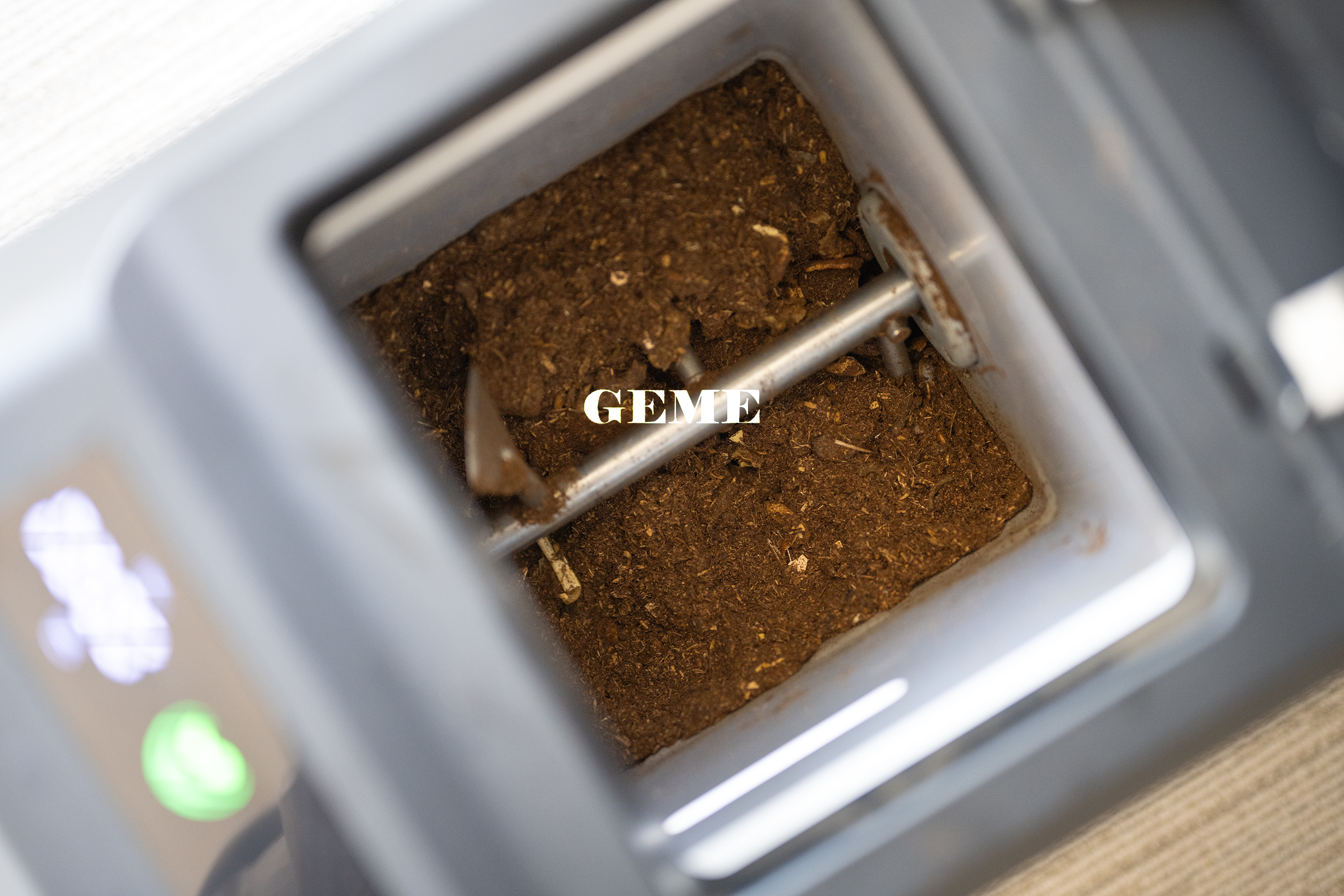
GEME output is better understood as moist compost base for soil blending, not dry chips.
Large unfinished pieces should be screened and returned to the chamber, and screened output should be mixed with soil before plant use.
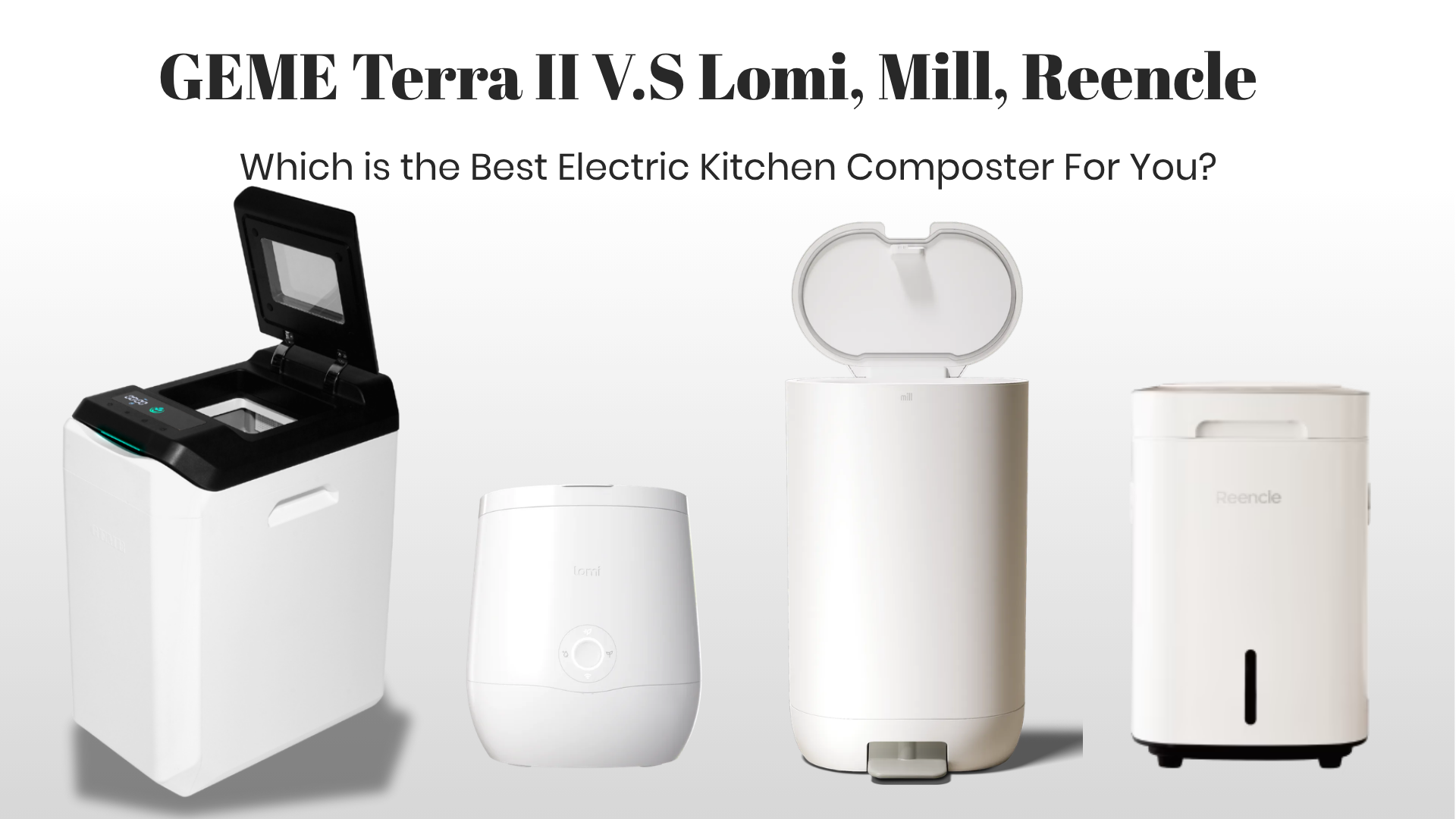
GEME, Lomi, Mill, and Reencle: Category Map
The category is not black and white.
Some products are more clearly food recyclers. Some are microbial composters. Some use marketing language that can blur the line.
The practical way to compare them is by process, output, consumables, and what the output needs next.
| Product Type | How to Understand It | Best Fit |
|---|---|---|
| GEME Terra II | Real microbial kitchen composter using living microbes, no drying, and compost base for soil blending | Households that want a real soil-return routine |
| GEME Pro | Larger-capacity microbial composter for heavier daily routines | Larger families, heavier kitchens, and users needing more headroom |
| Lomi-style food recycler | Compact food-recycling appliance with drying/reducing logic and recurring filter or pod-related ownership considerations | Users prioritizing compactness, speed, and reduced trash mess |
| Mill-style food recycler | Dry-and-grind system that turns scraps into dry grounds and uses carbon filtration | Users who want low-odor storage, dry grounds, and a larger bin-style routine |
| Reencle-style microbial composter | Indoor microbial decomposition appliance that mirrors aerobic composting in an optimized environment | Users interested in indoor microbial breakdown with a smaller daily processing envelope |
The point is not to say every food recycler is useless.
The point is to stop calling every reduced-food-scrap output “finished compost.”
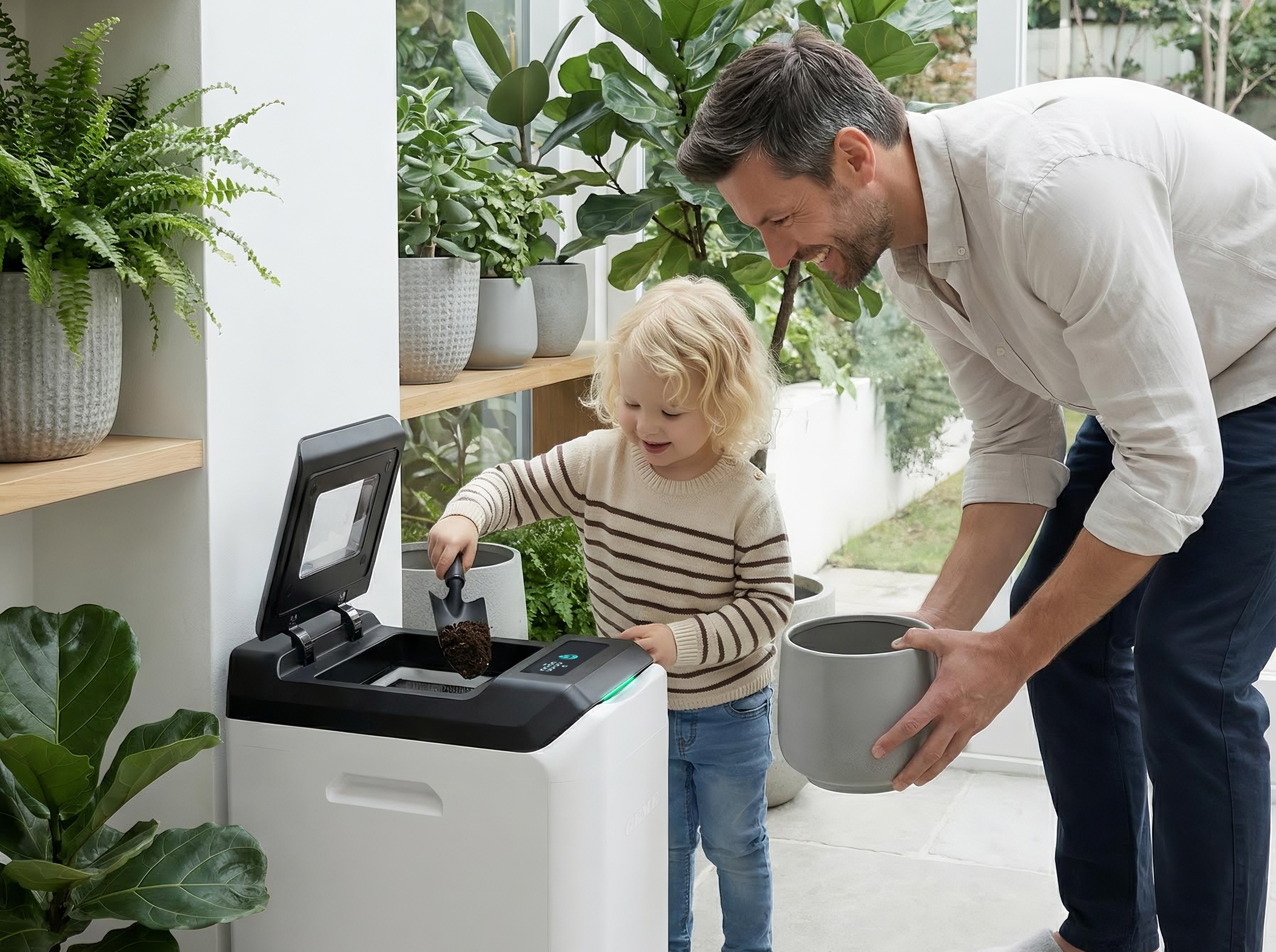
GEME Terra II: Real Kitchen Composter
✅ The Best Kitchen Composter in 2026
✅ Biologically Active Composting System
✅ Quiet, Odour-Free, Real Compost
✅ Zero Filter Costs, No Refills
✅ Reduces Composting Time to Days
Filters, Consumables, and Ownership Cost
The purchase price is only part of the decision.
Many food waste recyclers rely on replaceable carbon filters, pods, or recurring consumables to manage odor or support the cycle.
That changes the long-term cost and the maintenance routine.
GEME Terra II takes a different path with no routine replacement odor filters.
For households comparing real ownership, that matters because a lower-effort daily routine is not only about what happens on day one.
| Ownership Factor | Why It Matters | Question to Ask |
|---|---|---|
| Replacement filters | Recurring odor-control parts can increase long-term cost | How often do filters need replacement? |
| Pods or additives | Some systems rely on recurring inputs or cycle enhancers | Are these optional, required, or bundled? |
| Output handling | Dry grounds, compost base, and raw scraps require different next steps | Can I use the output, store it, or must I send it elsewhere? |
| Daily capacity | An undersized unit can create hidden work | Does it fit my actual food-waste rhythm? |
Who Should Choose a Kitchen Composter?
Choose a real kitchen composter if your end goal is soil return.
That means you want the output to become part of a gardening, potting, raised-bed, balcony, or soil-care routine.
A Kitchen Composter Is Better If...
- You want a real microbial process, not only dried food scraps.
- You have houseplants, garden beds, raised beds, containers, or soil access.
- You care about compost base for soil blending.
- You want to reduce recurring filter or pod dependence.
- You are comfortable screening output and mixing it with soil.
- You want a product story closer to “feed the soil” than “store dry grounds.”
Who Should Choose a Food Waste Recycler?
Choose a food waste recycler if your main pain point is trash management.
If you live in a high-rise, do not garden, do not have soil access, or mainly want to reduce odor and bin volume, a food recycler can still be a practical tool.
A Food Waste Recycler Is Better If...
- You mainly want food scraps to smell less in the kitchen.
- You want reduced volume and easier storage.
- You do not need compost base for plants.
- You are comfortable with replaceable filters or recurring consumables.
- You have a municipal compost collection or other next-step channel for the output.
- You want a dry, low-mess material rather than moist compost base.
Practical Decision Rules
- Ask what the process is. Is the machine composting biologically, or drying and grinding physically?
- Ask what the output is. Moist compost base, dry grounds, flakes, or partially processed scraps?
- Ask what happens next. Soil blending, compost curing, municipal collection, storage, or disposal?
- Ask about filters. Are there replacement carbon filters, pods, subscriptions, or consumables?
- Ask about capacity. Does the unit match your actual daily food waste?
- Ask about soil access. If you have no soil, a food recycler may be enough; if you want soil return, a real composter makes more sense.
- Ask about claim boundaries. Be cautious when a product says “compost” but describes a dry-and-grind cycle.
GEME Terra II: Real Kitchen Composter
✅ The Best Kitchen Composter in 2026
✅ Biologically Active Composting System
✅ Quiet, Odour-Free, Real Compost
✅ Zero Filter Costs, No Refills
✅ Reduces Composting Time to Days
Frequently Asked Questions
What is the difference between a kitchen composter and a food waste recycler?
A kitchen composter should support biological decomposition and create compost base for soil blending.
A food waste recycler usually dries, grinds, reduces, or stabilizes scraps so they are easier to store, dispose of, or further process.
Does a food waste recycler make compost?
Not necessarily.
EPA guidance says residential appliances that grind and dehydrate food scraps do not directly produce compost.
Their output should usually be composted, cured, or otherwise treated before soil use.
Is dry food recycler output safe to put directly on plants?
Do not assume so.
Dry grounds may still need further composting or soil processing.
Always follow the product guidance and avoid using partially processed food material directly around sensitive roots.
Is GEME Terra II a food waste recycler or a kitchen composter?
GEME Terra II is best understood as a real microbial kitchen composter.
It uses living microbes and adaptive control to create moist compost base for soil blending, rather than simply drying and grinding scraps.
Why does GEME output stay moist?
A microbial process needs moisture.
Moist, soil-like compost base is not a failure; it is different from dry food recycler grounds.
The output should be screened, blended with soil, and used responsibly.
Which is better for apartments: kitchen composter or food waste recycler?
It depends on your goal.
A food waste recycler may be enough if you mainly want low-odor storage and volume reduction.
A real kitchen composter is better if you want a compost base for soil return and are willing to manage soil blending.
Do food waste recyclers need filters?
Many dry-and-grind or sealed food recycling systems use carbon filters or recurring odor-control consumables.
Check replacement frequency and subscription cost before buying.
Does GEME Terra II require replacement odor filters?
GEME Terra II is designed with no routine replacement odor filters.
This helps reduce long-term consumable friction compared with systems that rely on recurring carbon filter replacement.
What should I choose if I do not garden?
If you do not garden, do not have houseplants, and do not have a soil-use plan, a food waste recycler may solve your immediate kitchen trash problem.
A kitchen composter makes more sense when you want soil return.
What is the best buying rule?
Buy based on your real end goal.
If you want less smelly trash, choose a food waste recycler.
If you want a microbial process and compost base for soil blending, choose a real kitchen composter like GEME Terra II.
Summary
- The category names are messy. Kitchen composter, electric composter, and food waste recycler are often used interchangeably.
- Process is the real difference. Microbial composting is not the same as drying and grinding.
- EPA guidance matters. Grinding and dehydrating food scraps does not directly produce compost.
- Dry grounds still need a next step. They may need further composting, curing, or soil processing before plant use.
- Moist compost base is normal for real microbial composting. GEME output should be screened and mixed with soil.
- Food waste recyclers can still be useful. They are good for odor control, volume reduction, and cleaner storage.
- Filters and consumables matter. Recurring carbon filters or pods change long-term ownership cost.
- GEME Terra II is built for soil return. It uses living microbes, no drying, and no routine replacement odor filters.
- Best takeaway: choose a kitchen composter for compost base; choose a food waste recycler for food-scrap reduction.
Sources
- U.S. EPA — Composting at Home
- U.S. EPA — Approaches to Composting
- GEME — Terra II Product Page
- GEME — GEME Pro Product Page
- GEME — How Real Microbial Composting Works
- Lomi — Food Recycler Product Page
- Mill Support — How a Mill Cycle Works
- Mill Support — Dry & Grind Cycle and Scheduling Tips
- Reencle Help Center — What Is Reencle?
GEME Terra II: Real Kitchen Composter
✅ The Best Kitchen Composter in 2026
✅ Biologically Active Composting System
✅ Quiet, Odour-Free, Real Compost
✅ Zero Filter Costs, No Refills
✅ Reduces Composting Time to Days
Related Articles
GEME Terra 2 vs. Vermicomposting: Pros, Cons, and Hygiene Boundaries Comparison
GEME Composter Pro V.S Reencle Gravity Pro: Which Kitchen Composter Is Right For You?
Kitchen Composting Solution: Why the GEME Terra 2 Is the Right Electric Composter for Your Home
GEME Terra 2: The Best Kitchen Electric Composter
Reencle Prime vs. GEME Terra 2: The 2026 Best Kitchen Composter Verdict
Best Kitchen Composters 2026: GEME Terra 2 vs Lomi, Mill, and Reencle
GEME Terra 2 vs Vitamix FoodCycler: Which Electric Composter Is Right for You?
GEME Terra 2 vs FoodCycler: Which Is The Real Kitchen Composter?
Which Is the Best Electric Kitchen Composter? The Best Kitchen Composting Solution
Why GEME Terra 2 is the Best Indoor Composter? The Kitchen Composting Solutions
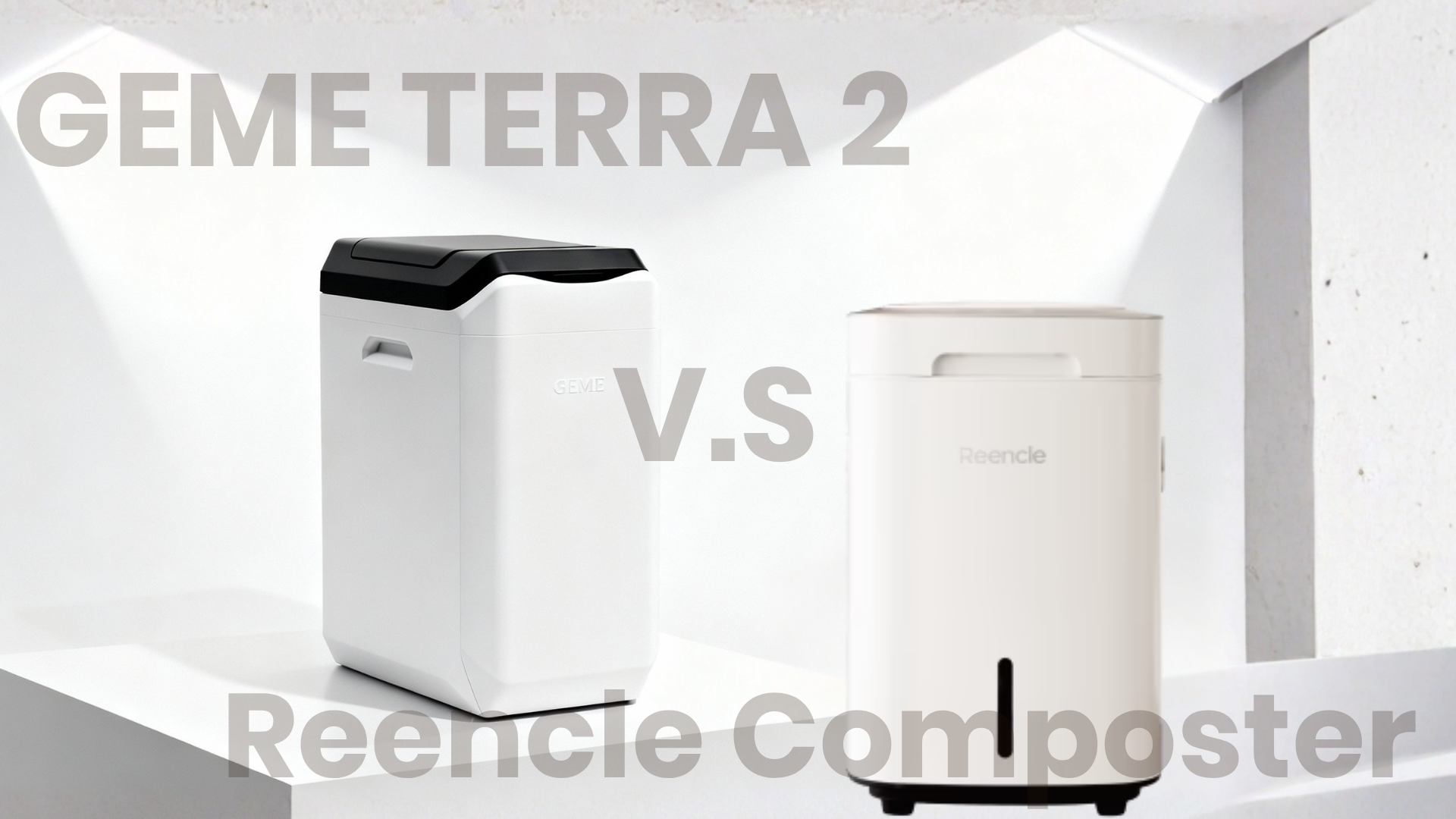
Are There Any Odor-Free Composting Options Suitable for Apartments?

GEME Composter: The Best Electric Kitchen Composter For Mother's Day

Mother's Day Discount: Get $150 Off for GEME Electric Composter, Let It Do the Kitchen Work for Mom
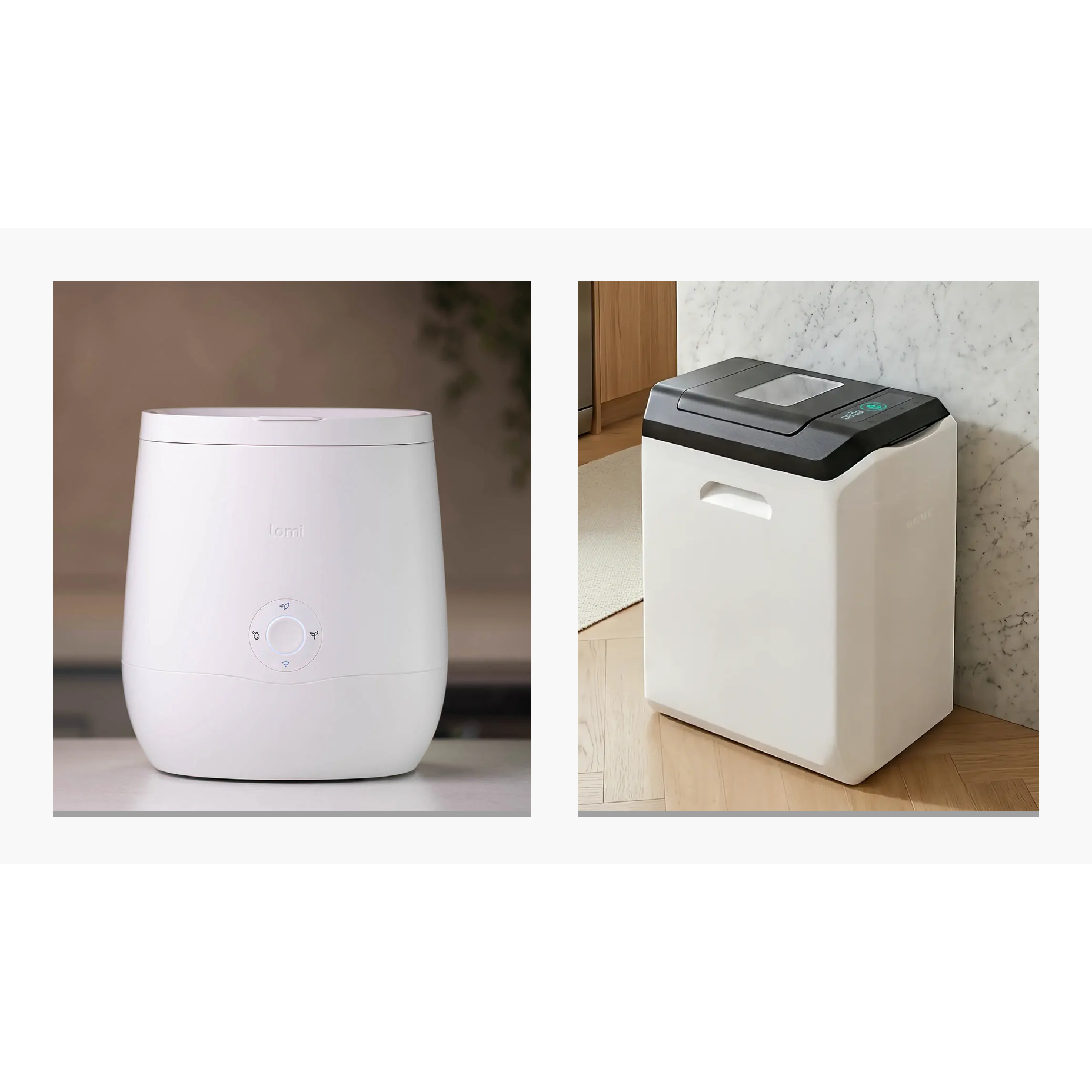
Lomi vs GEME Terra 2: The Truth About Home Composters for Apartments
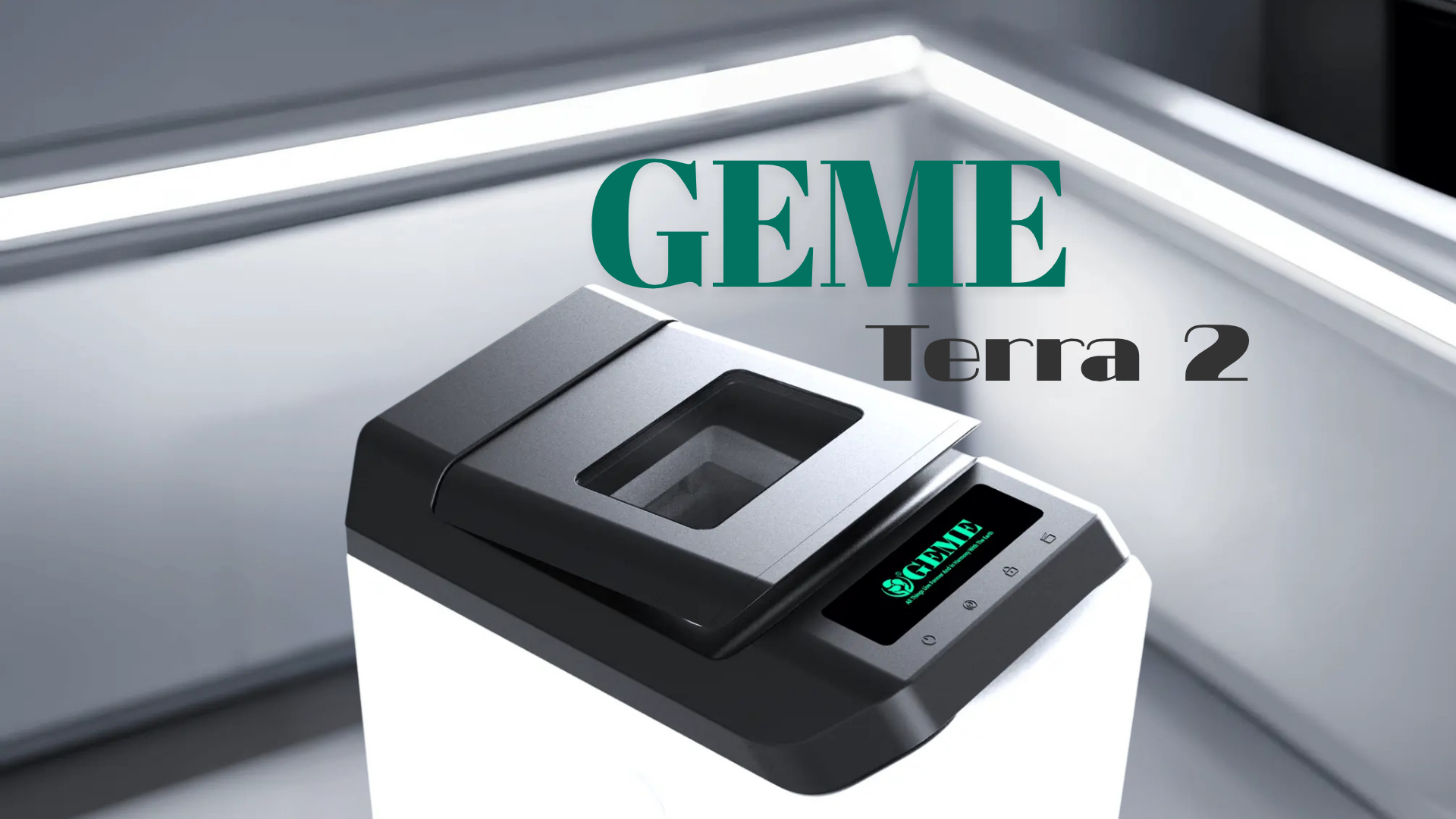
The Best Kitchen Composter for a Zero Waste Lifestyle (2026)
Can an Electric Composter Handle Salt & Oil? (Boundaries + Best Practices)

GEME Terra II: The Silent Gearbox

Get $100 OFF: GEME Composter Discount Codes on Amazon for Earth Day, 2026
How to Avoid Food Poisoning Related to Leftovers: The Science Behind Leftover Food
GEME Composter vs DIY Bokashi: Which Should You Choose?
Permanent Odor Control: Catalyst Path vs. Disposable Carbon
GEME Composter Review 2026: Real Compost, No Filter costs
Why is the GEME chassis intentionally heavier than a typical countertop appliance?

How to Plant Tulips in Spring
What Can You Put in an Electric Composter? Meat, Dairy, Bones (Clear Rules + Hard Limits)

Can an Electric Composter Handle Salt & Oil? Boundaries for Real Leftovers (Without the Myths)
Mastering the GEME Cycle: An Agronomist’s Guide to Continuous-Flow Compost Application
Countertop Composter Is a Misnomer: Where an Electric Composter Actually Belongs in a Real Kitchen
Top 5 Electric Composters on Amazon: 2026 Buyer’s Guide
GEME Terra II: The Pros and Cons
Top 5 Kitchen Composters: Pros and Cons
GEME Composter Review: Best Indoor Composter 2026
The Best Kitchen Composter Verdict 2026
The Best Composter for Avoiding Recurring Fees: GEME Terra 2 vs. Lomi, Mill, and Reencle

Can I Compost Cut Flowers?
How Long Does Bokashi Take to Compost?

How to Care For Hydrangeas And Change Their Colors
The Best Composter: Daily Operation Comparison (Lomi, Mill, Reencle, GEME)

How Long Does Pizza Last In The Fridge? The Ultimate Leftover Safety Guide
How to Compost Eggshells: The Ultimate Guide to Calcium Gold for Your Garden
How to Compost Coffee Grounds: The Ultimate Guide for Your Garden
Never Buy Carbon Filters for Your Composter
The Best Composter for Fastest Real Compost
How to Compost at Home for Beginners: The Ultimate 2026 Guide

How Long Can Chicken Stay in the Fridge? The Ultimate Guide to Safety, Spoilage, and Sustainable Disposal
How to Reduce Odor: Practical Tips for Indoor Composting That Actually Work
How Long Can Ground Beef Stay In The Fridge
Breaking News: NYC Fines for Food Waste Are Back, 2026
The Best Composter For Small Kitchen

How to Reduce Food Waste During Holiday: A Sustainable Spring Festival Guide
How to Reduce Food Waste at Home (Best Solution 2026)

McDonald’s Free Caviar Kits Raise Concerns of Food Waste | 2026 Composting Insights
Winter Composting Crisis: How the 2026 Bomb Cyclone Makes Indoor Composting Essential

Zero-Waste Lifestyle Starts in Your Kitchen: How to Reduce Food Waste with GEME Terra 2 (Best Kitchen Composter Guide)
Does the Lomi Composter Really Compost? Lomi vs GEME Terra 2
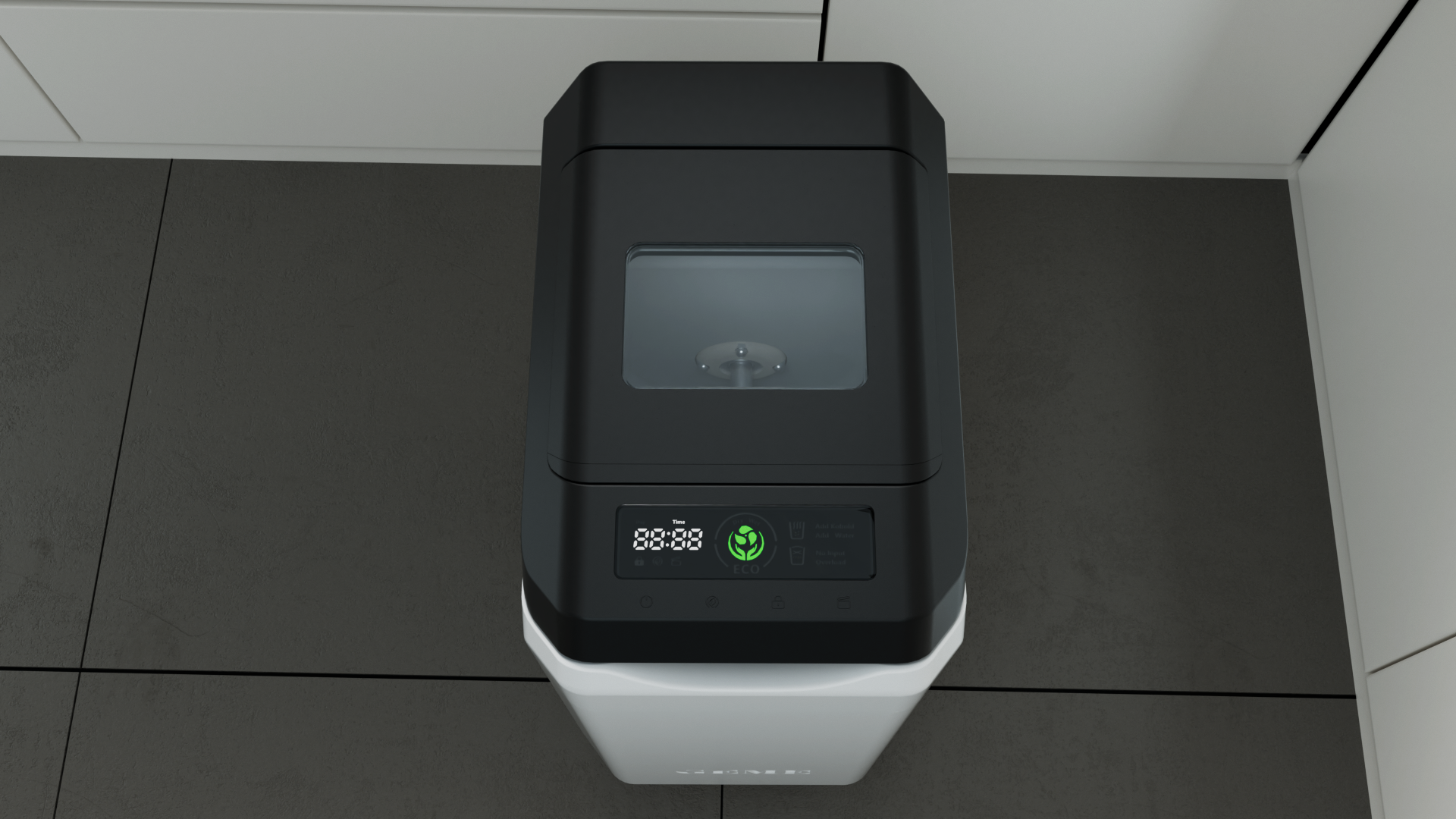
Top 5 Kitchen Composters in 2026
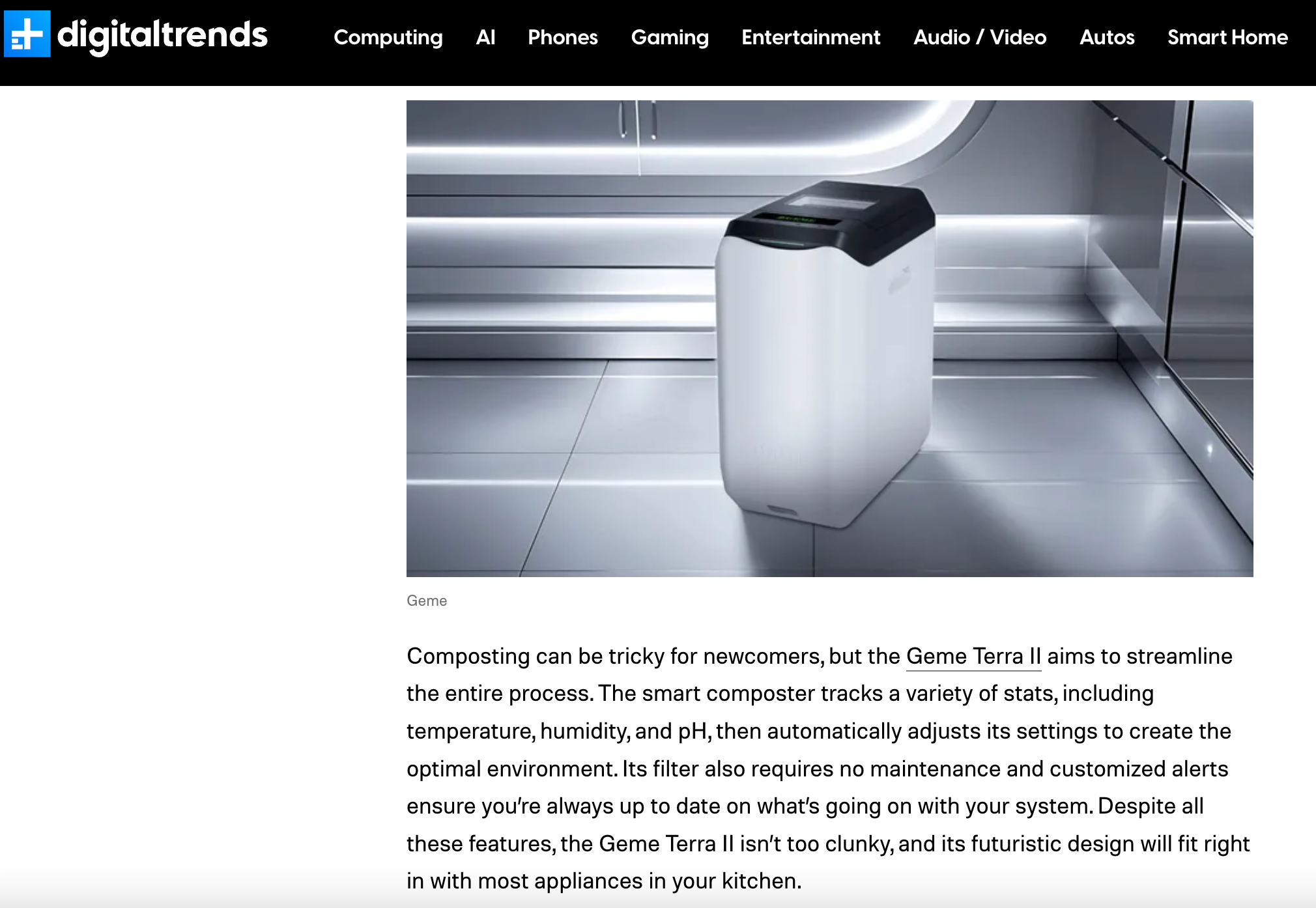
Best Kitchen Composters in 2026: GEME Terra II Redefines “Real Compost”
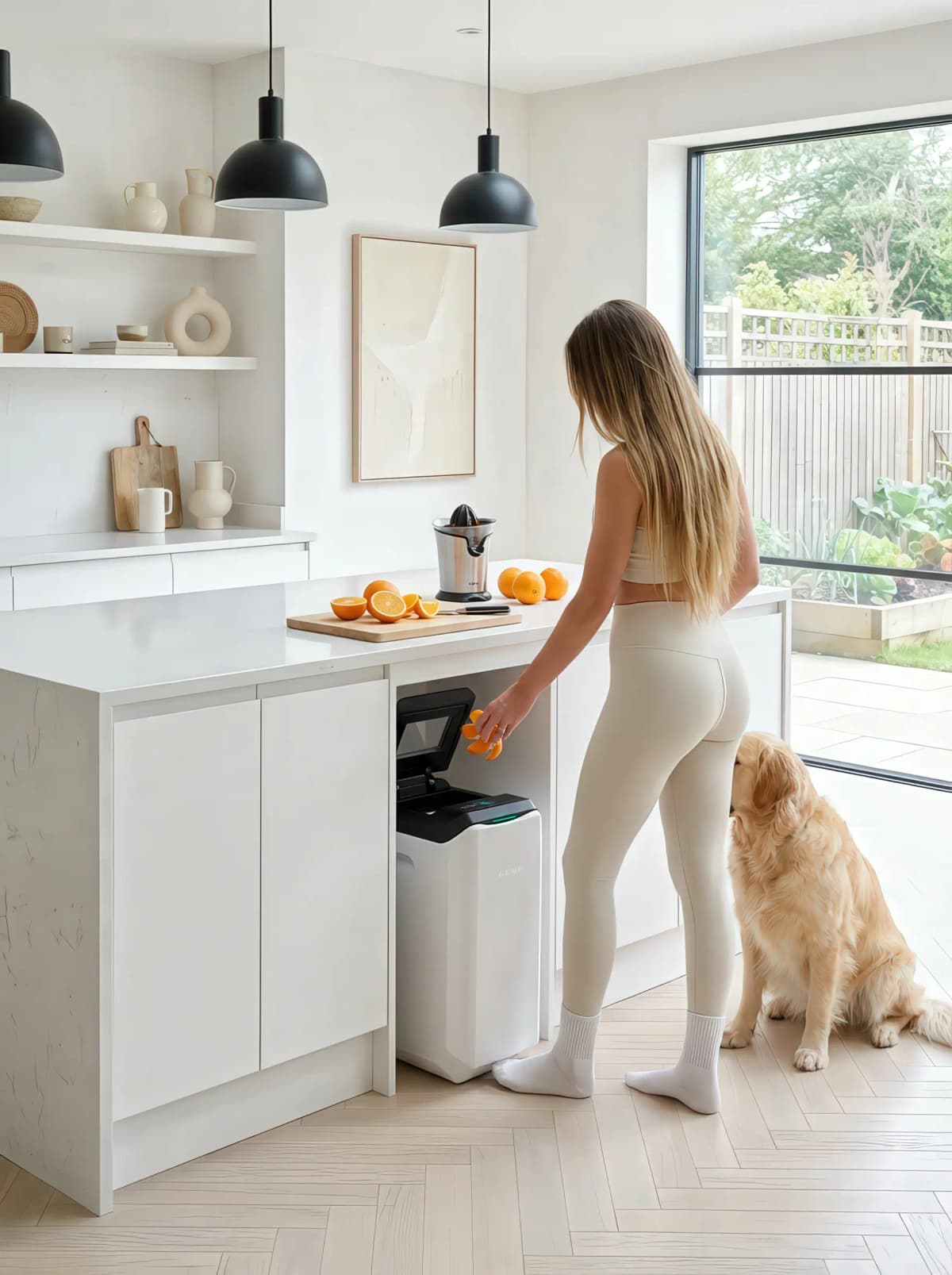
GEME Terra 2 vs Reencle Composter: 2 different Microbial Composting Approaches
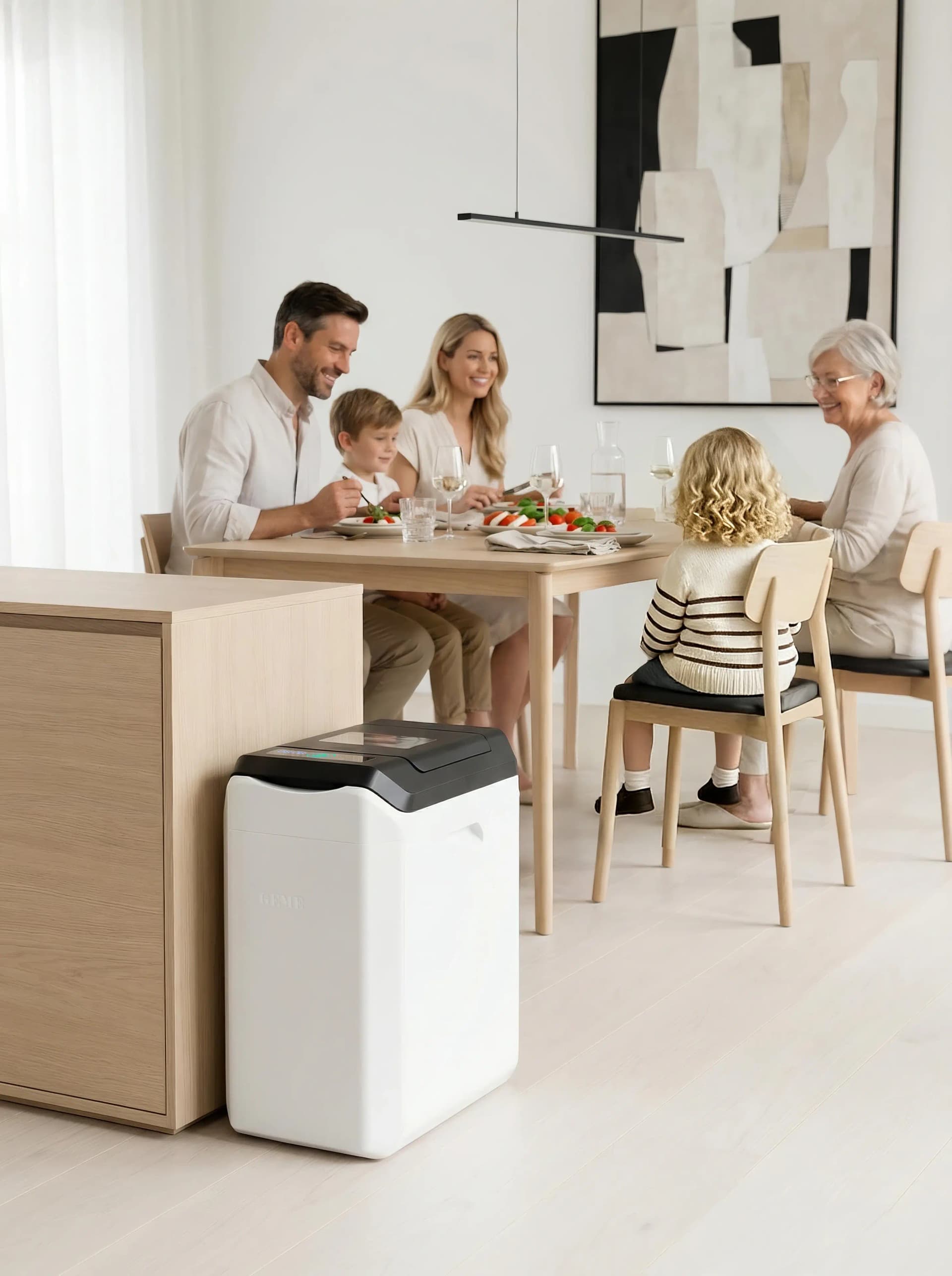
GEME Terra 2 vs Mill Composter: The 2026 Decision Guide
The Best Electric Kitchen Composter of 2026
Mastering the GEME Cycle: An Agronomist’s Guide to Continuous-Flow Compost Application
Geme Terra 2 vs Lomi: Which Countertop Composter Is Better for a Zero Waste Home?
Electric Compost Bin Filters Cost: GEME vs Lomi vs Mill vs Reencle
Bio-Composting Breakthroughs: GEME Terra 2 Debuts, An Easier & Smarter Way To Compost At Home
Can You Compost Bread?
Can I Compost Spoiled or Moldy Fruit Like Grapes? Here's A Practical Guide
Composting Basics: Backyard Compost Pile VS GEME Electric Composter

How Can We Make Bananas Last Longer?
How Long Do Apples Last in The Fridge? An Ultimate Guide For You to Keep Apples Fresh
The Best Kitchen Composter For Reducing Food Waste | Which One is Your Favourite?
Ready to transform your gardening game? Subscribe to our newsletter for expert composting tips and sustainable gardening advice.